 Article | 5 min
 The Northwest Coast Basketry Project
Museum conservators and Indigenous weavers learn from each other and find common ground in the study of woven belongings.
April 29, 2026
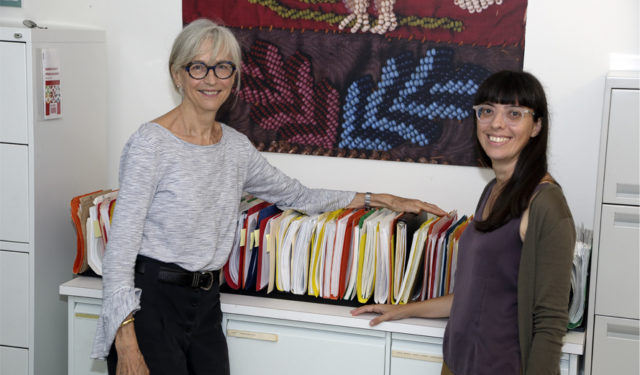
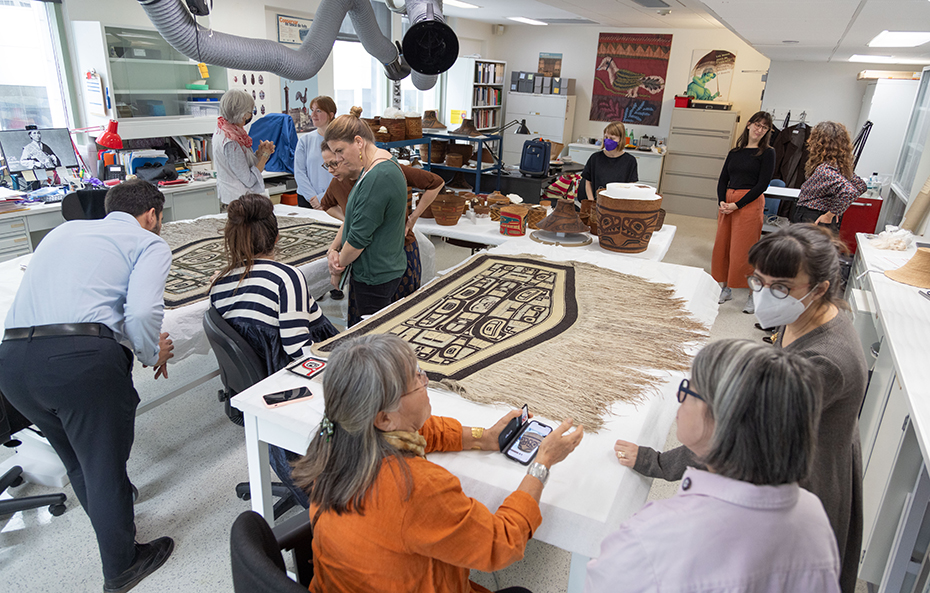
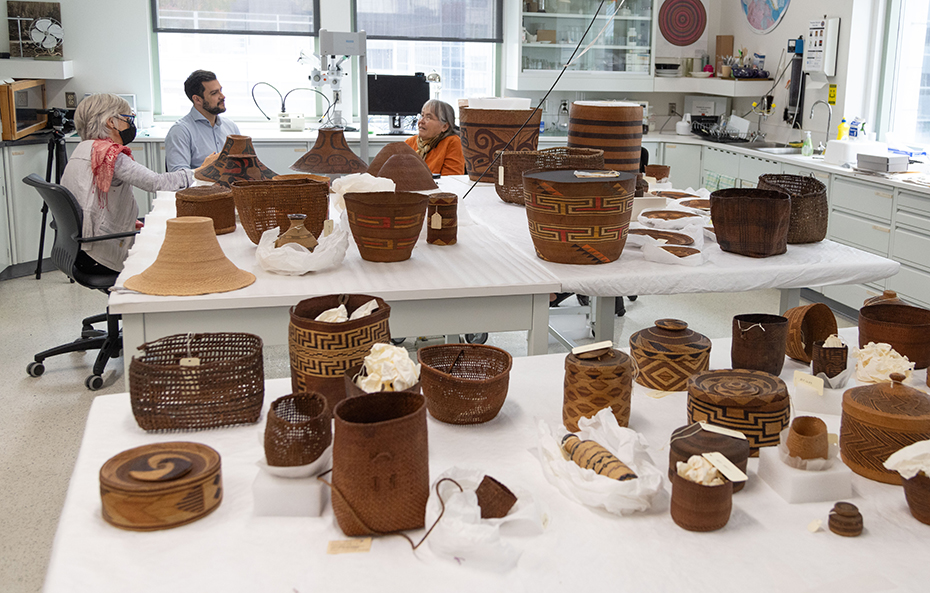
A gathering in the McCord Stewart Museum conservation studio during the fall of 2023 saw the culmination of six years of meticulous planning by conservators in that museum and the Musée du quai Branly – Jacques Chirac in Paris. Master Haida basket maker Isabel Rorick and Meghann O’Brien, a weaver of Haida, Kwakwaka’wakw and Irish ancestry, were leading a group of conservation and research staff through the first of two week-long workshops of discovery and study at each museum—one in October in Montreal, and the other in Paris in April 2024.
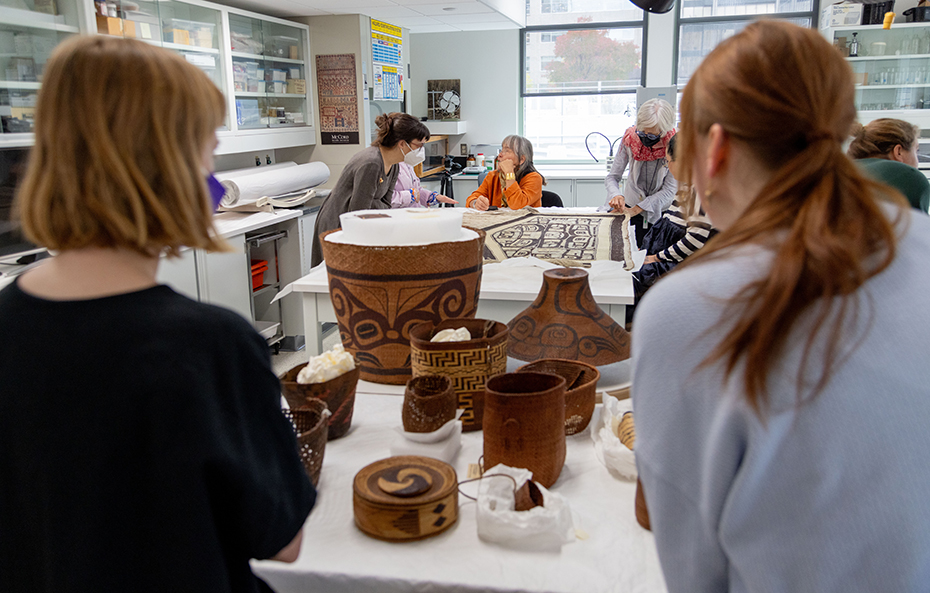
The excitement of all the participants was palpable from the start, as we, the McCord Stewart conservators, welcomed our guests and introduced them to an impressive number of baskets and other woven objects placed on tables and multi-tiered carts in the space.
The Belongings
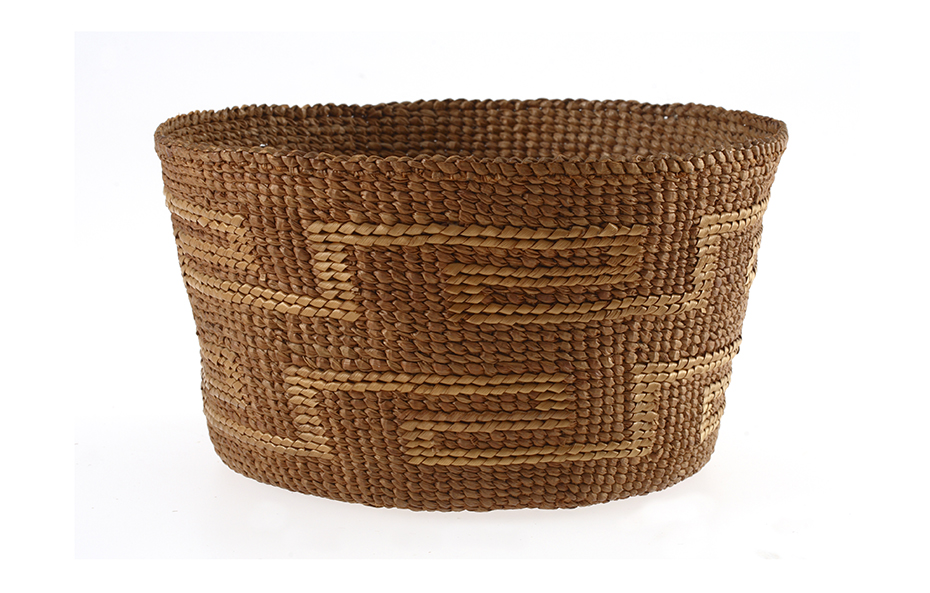
The McCord Stewart Museum houses a superb collection of Indigenous woven belongings from the Northwest Coast of North America. Although highly valued, these baskets, mats and garments have seldom been treated and exhibited, and conservators at the Museum have long felt that they deserve more attention.
Conservators are particularly attracted to these pieces because of their history, their beauty, and the sophisticated use of materials and technologies in their fabrication. We were thrilled to have the opportunity to learn from the deep knowledge and experience of the weavers and to share our practice with other conservators working in this specialized area.
Family ties and mentorship
After a short welcoming ceremony performed by Isabel Rorick, the weavers launched into an impromptu study of the baskets, accompanied by wide-ranging commentary. Our discussions were rich and informative as the weavers spoke eloquently about the pieces surrounding us. Their comments revealed a profound connection to the Northwest Coast ecosystem in their lives and their work, especially in explanations about the complexities involved in harvesting and preparing materials before the weaving starts.
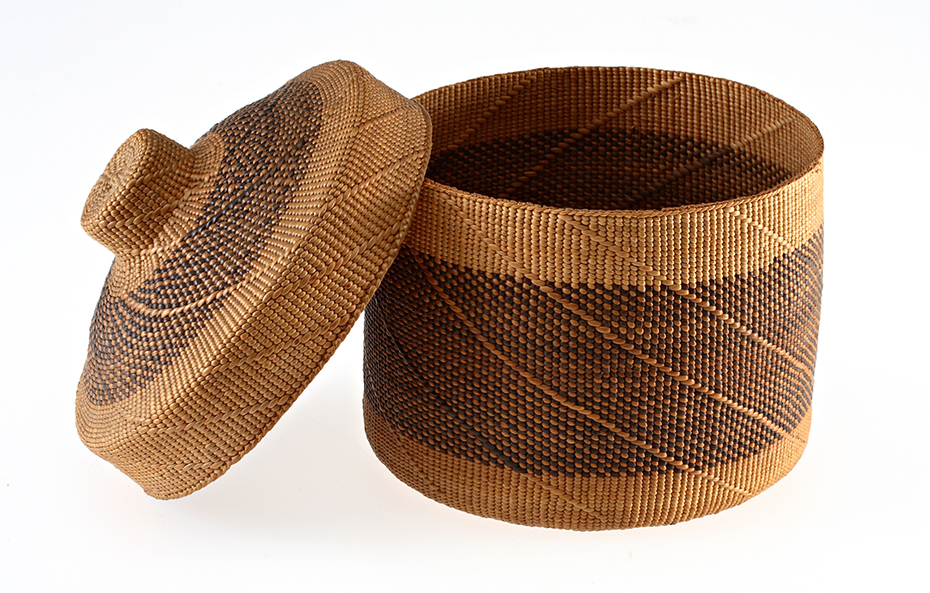
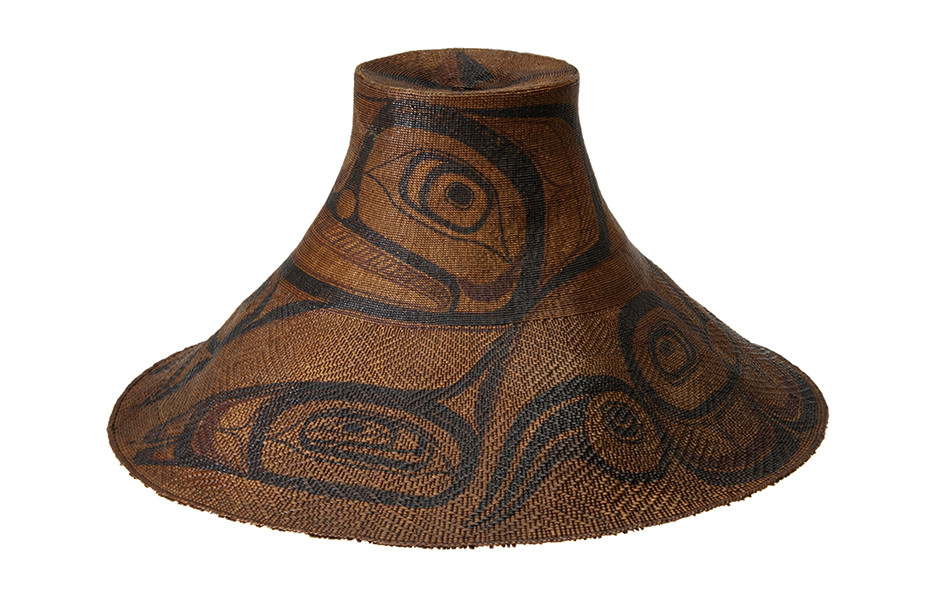
The weavers discussed the links between family ties, mentorship and history in their cultures and the ways in which meaning and material are expressed in each piece. In fact, Isabel Rorick, whose family boasts a continuous line of generations of Haida artists and weavers, has a very personal connection to the collection. Her great-grandparents, Charles Edenshaw, carver and painter, and Isabella Edenshaw, weaver, were the joint creators of a hat and a basket on one of the tables.
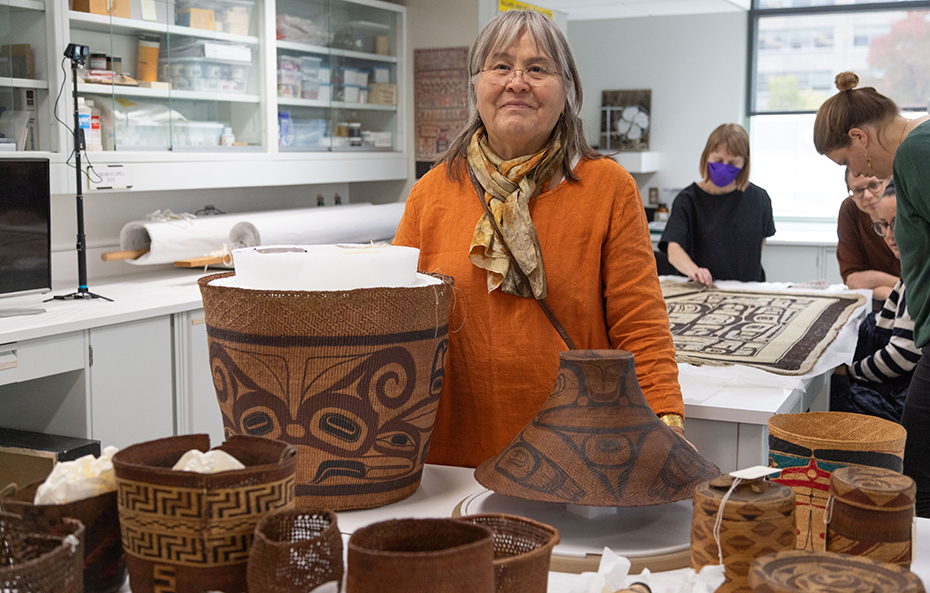
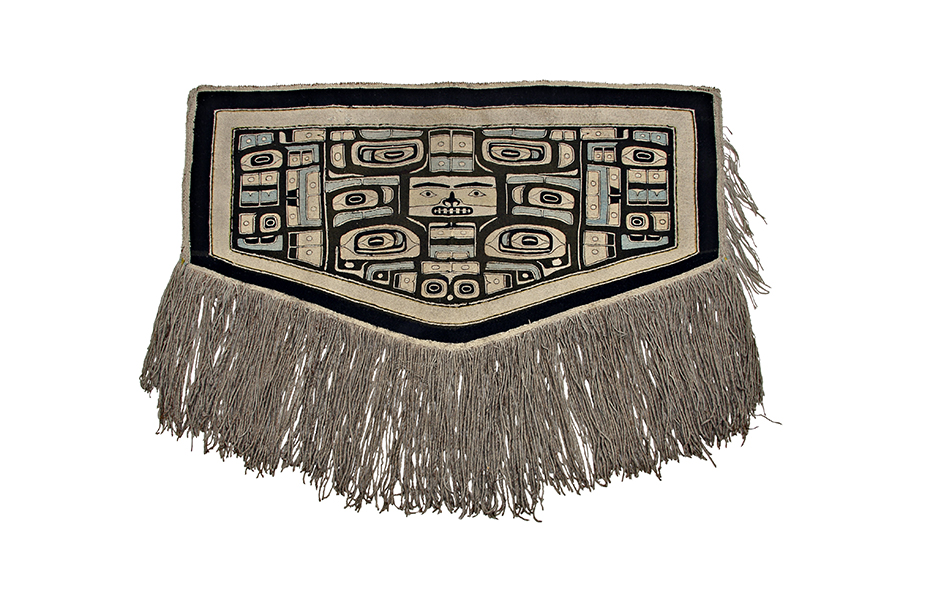
Isabel spoke to the making of these two objects, among the most prized in the collection, and took a moment to recount the history of her family’s art practice—painting, sculpture and weaving. During the days that followed, more woven pieces were brought to the conservation space, including additional hats, two Chilkat blankets and a rare cedar bark cape.
Commonalities in ways of thinking
Conservators and museum researchers also talked about their work over the course of the workshop. We discussed several important conservation treatments at the McCord Stewart Museum that spoke to the conservation process, the extent of intervention on individual pieces, and the ethical questions raised during treatment. We also presented information on the content and the history of the Indigenous Cultures collection, and shared technical analyses undertaken to investigate materials, technique or provenance.
The workshops highlighted the importance of dialogue between conservators and people from the originating communities of museum collections. Over the course of the two sessions, participants grew to know each other better and to appreciate the very different perspectives brought to the table. By the end of the project, the weavers had a better understanding of the way belongings from their communities are preserved and used in museums, and conservators understood in a concrete way how important it is to place Indigenous communities and perspectives at the very centre of conservation processes.
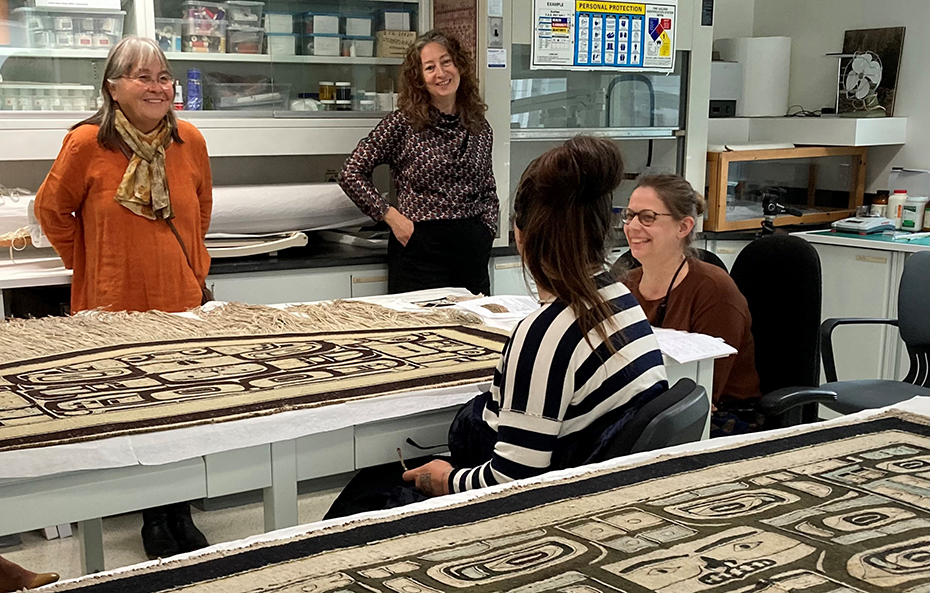
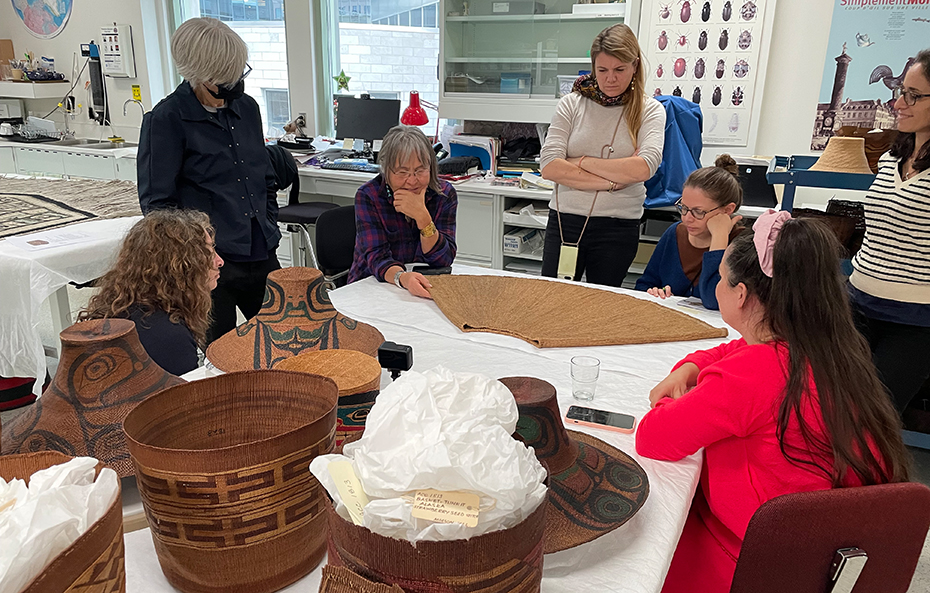
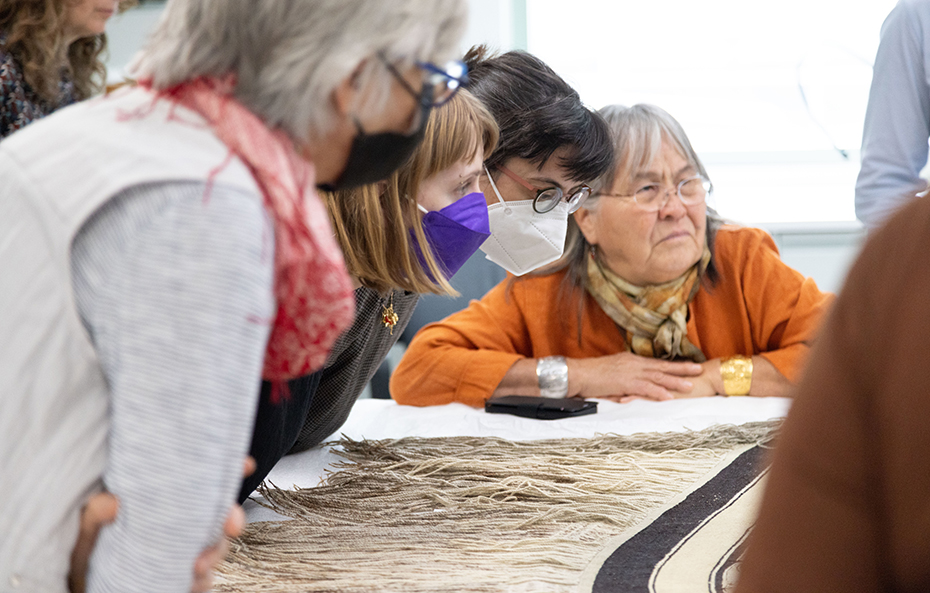
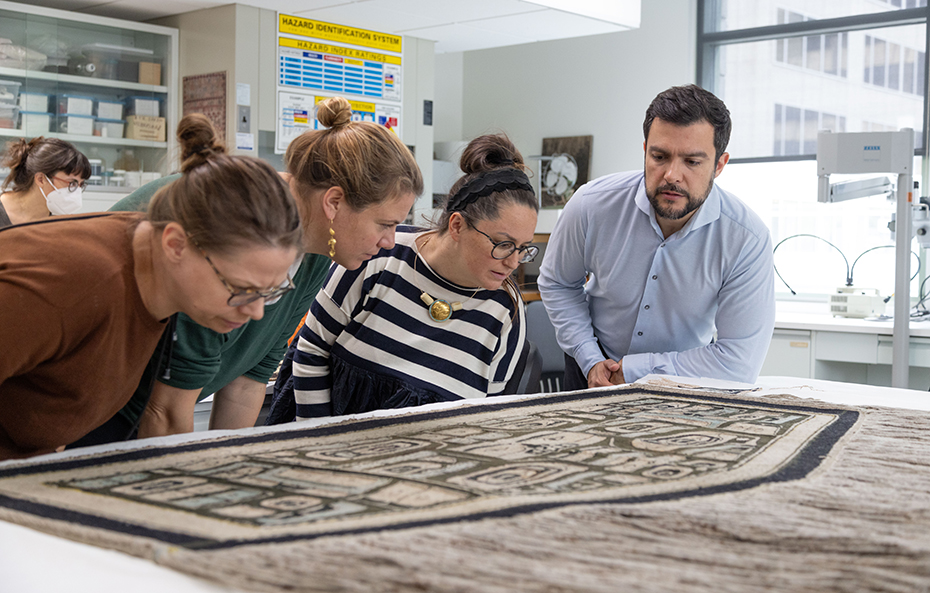
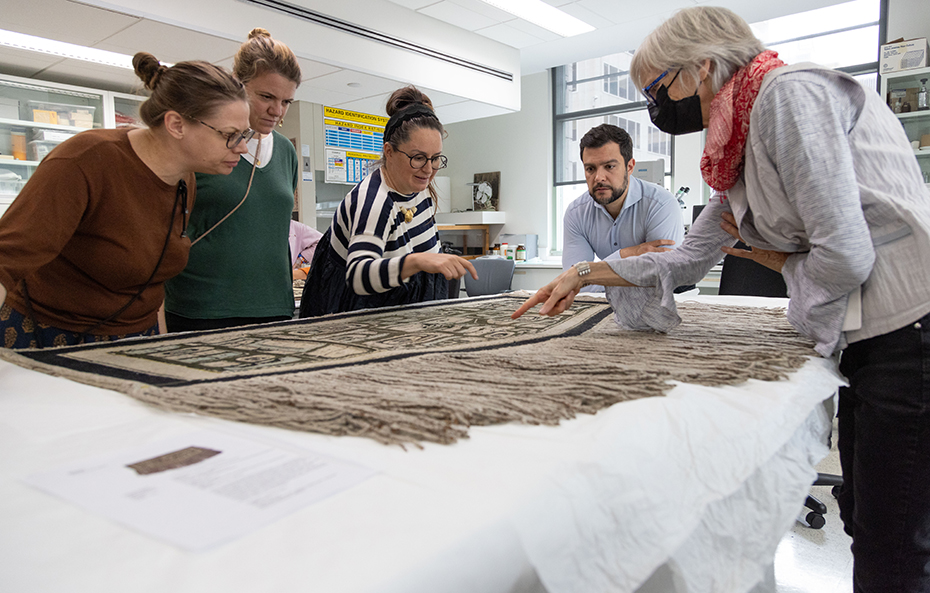
But we also discovered that it was not difficult to find commonalities in our ways of thinking. Both weavers and conservators are deeply thoughtful about the materials they use in their work, and both spend a lot of time immersed in their craft, be it creation or preservation. The weavers appreciated the care and long-term attention that conservators bring to collections, while conservators valued the traditions and measured processes involved in weaving. These common realities provided the ground for meaningful exchanges between all participants.
Emotions and conversations
Over the course of the workshops, we also experienced the difficult emotions and conversations that arise from a history of museums acquiring collections in the context of a colonial relationship. This relationship, which exists to this day, was at the root of much of our discussion, and led to some difficult questions, from the most basic to the more complex. Who are the rightful stewards of Indigenous collections? How can we balance the preservation of living belongings, which change over time, with the historic and educational function of museum objects, which are meant to be maintained in a static state? Can contemporary conservation practice contribute in a meaningful way to this reflection?
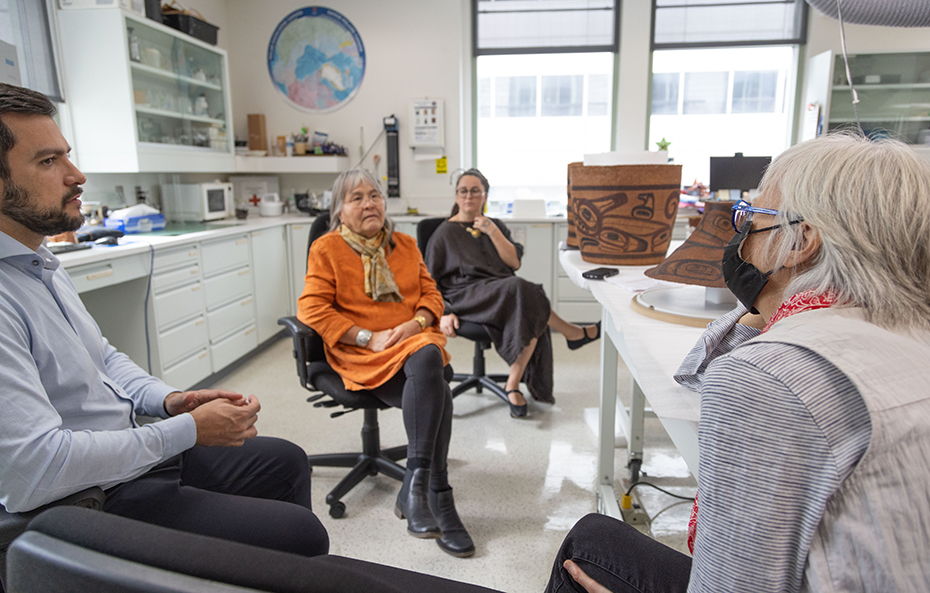
These questions ultimately led the participants to engage in more personal and empathetic conversations. We got to know each other better during the two sessions, and to trust each other more. We all agreed that we will need time for this exchange to develop further, and that what we had accomplished during the workshops was only the beginning of an ongoing process. With that said, conservators are well aware that it is difficult and time-consuming to secure funding for projects such as this one, but these initiatives are necessary for us to fulfil our continuous commitment to the collections and the source communities.
The practice of McCord Stewart Museum conservators has already evolved to include questioning, at a basic level, certain tenets of conservation practice when applied to the preservation of Indigenous material culture. While this shift has been happening over the last number of years, the workshop confirmed that continuing to engage meaningfully in other perspectives can only improve our conservation practice.
About the author



 Video
Video