 Article | 8 min
 Gabor Szilasi – 1928-2026
The Museum pays tribute to photographer Gabor Szilasi, whose sensitive eye left a lasting mark on the history of photography in Quebec and Canada.
May 25, 2026
The Museum pays tribute to photographer Gabor Szilasi, whose sensitive and profoundly human gaze left a lasting mark on the history of photography in Quebec and Canada. His work revealed the beauty of everyday life and the dignity of the communities he photographed.
| Discover his photographs on Online Collections |
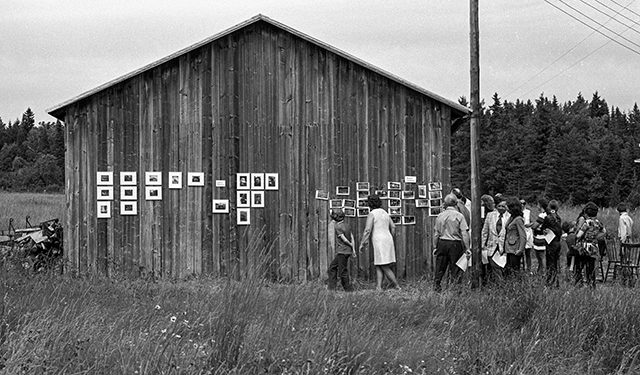
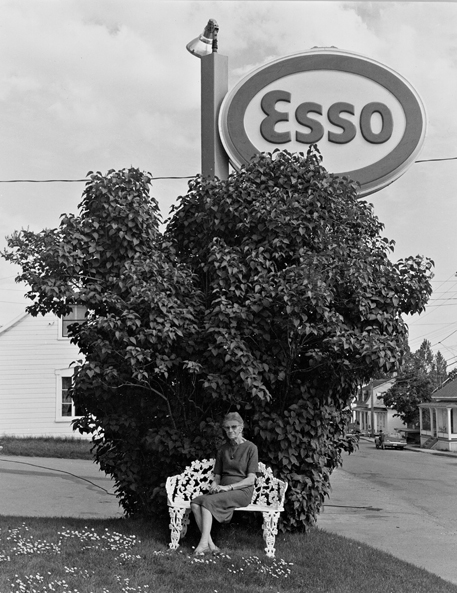
The Museum had the privilege of presenting three exhibitions dedicated to his work, La Beauce (1974), Gabor Szilasi – The Eloquence of the Everyday (2010) and Gabor Szilasi – The Art World in Montreal, 1960–1980 (2017), allowing the public to discover the breadth of his contribution and the accuracy of his vision. These exhibitions have highlighted an exceptional career, driven by great artistic rigour and a sincere attachment to the people and places he immortalized.
Gabor Szilasi – The Art World in Montreal, 1960–1980
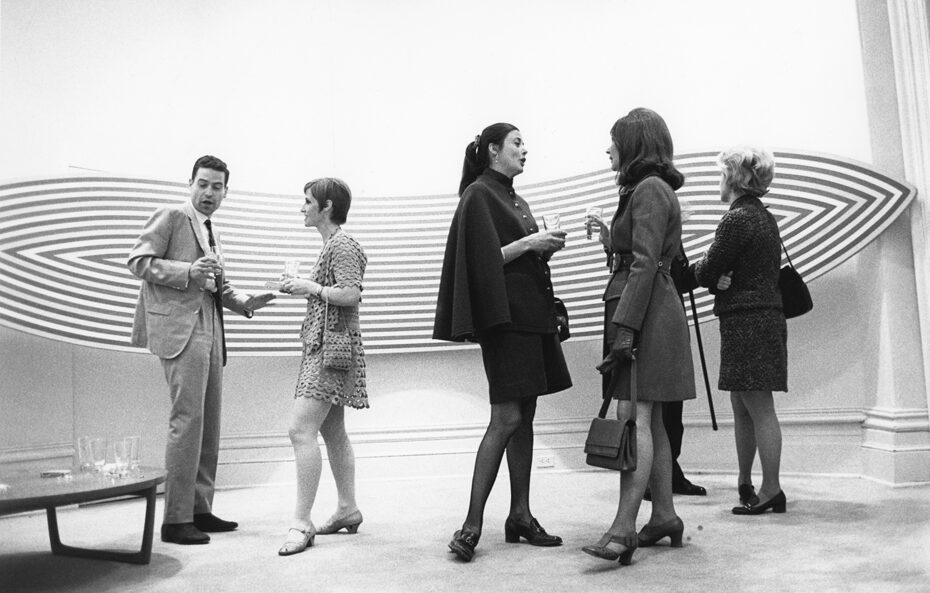
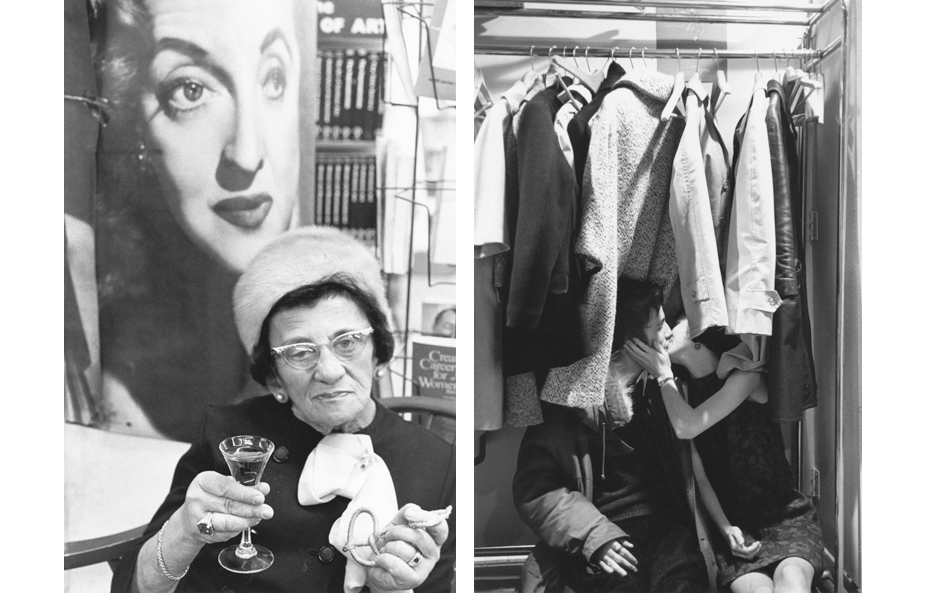
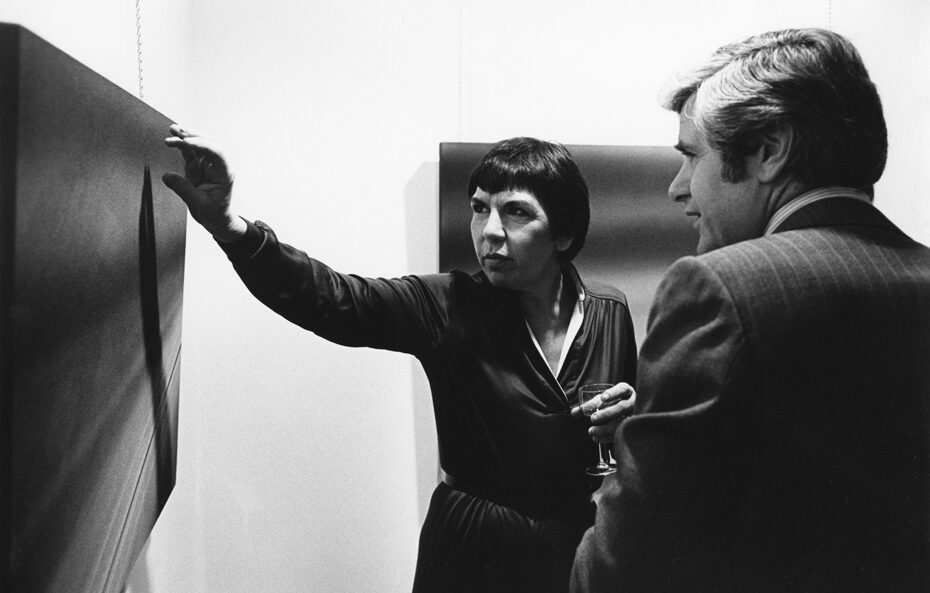
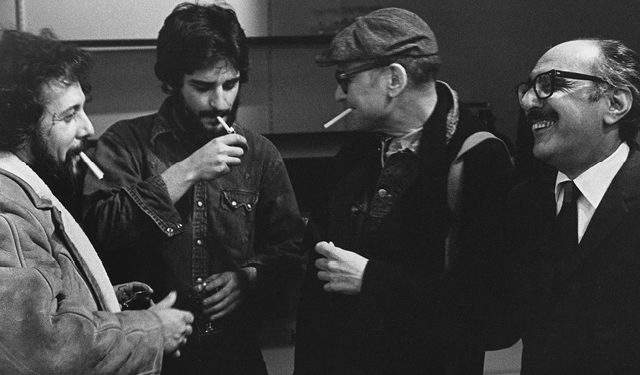
Born in Hungary in 1928, Gabor Szilasi immigrated to Canada in 1957. Soon after settling in Montreal, he began to photograph the many art openings that he and his wife, artist Doreen Lindsay, regularly attended.
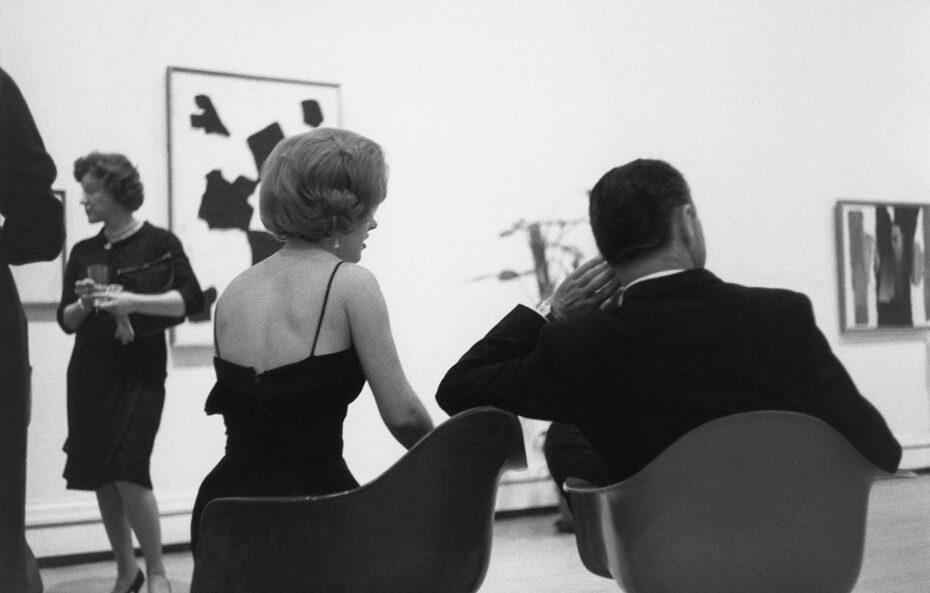
Over the next few decades he produced an extensive photographic record of the individuals that made up Montreal’s visual arts community, a number of whom would shape the history of art in Canada. Photographing openings may at first have helped him integrate into the local art scene, but it evolved into a way of acknowledging the affective relationships that bound him to his adopted city.
| Explore video content dedicated to Gabor Szilasi |
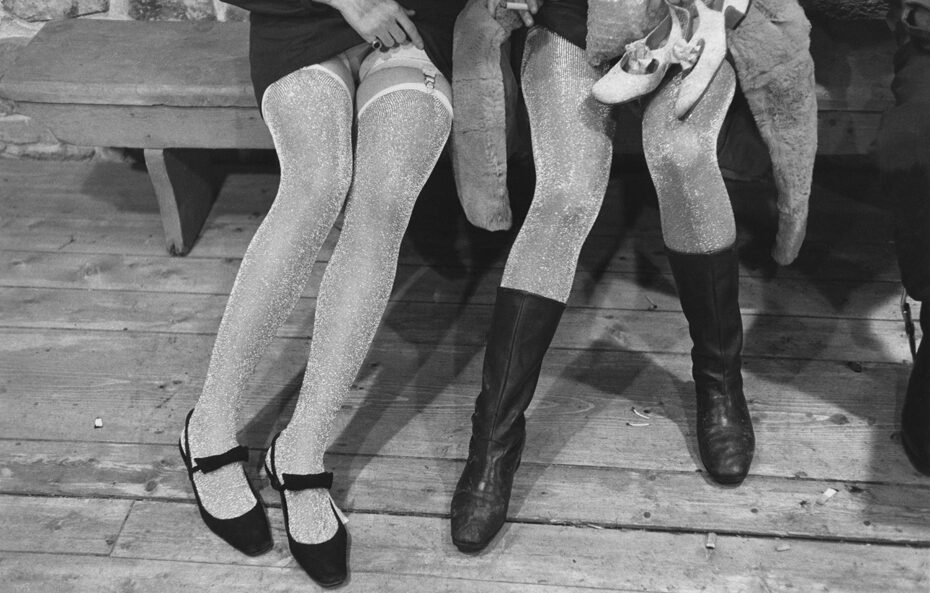
The hitherto unseen photographs, taken spontaneously by Szilasi at exhibition openings and other cultural events, revealed an art world that was febrile, intense, joyful and manifestly full of optimism at a time when the Quiet Revolution was overturning the traditional values of Quebec society and opening the way to an unprecedented freedom of expression. Unknowingly and unintentionally, Szilasi was sketching for posterity the portrait of a decisive era of contemporary art in Montreal.
A Conversation with Gabor Szilasi
Excerpts from an interview conducted by Zoë Tousignant on February 26, 20171
What prompted you to start taking photographs of Montreal art openings?
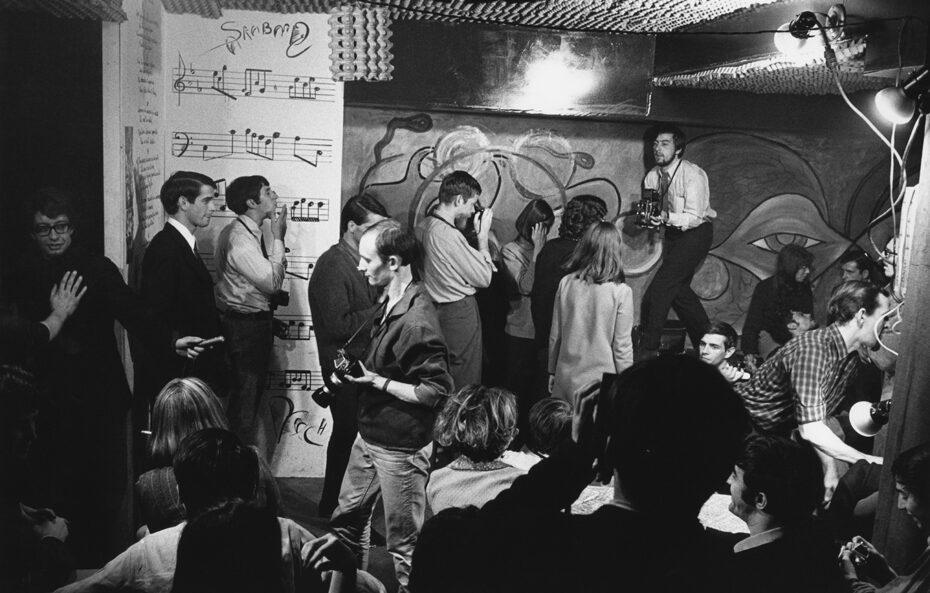
It was really through Doreen that I became interested in the art world in Montreal. I even remember it was at the opening of a Stanley Lewis exhibition, in 1959, that artist Nancy Petry introduced us. It was art in general that interested me—music, sculpture, painting, drawing. But when I began photographing vernissages, it wasn’t with the idea of taking a large number of photographs to make an exhibition or a book. I photographed openings because I was curious. I was very interested in the way artists live.
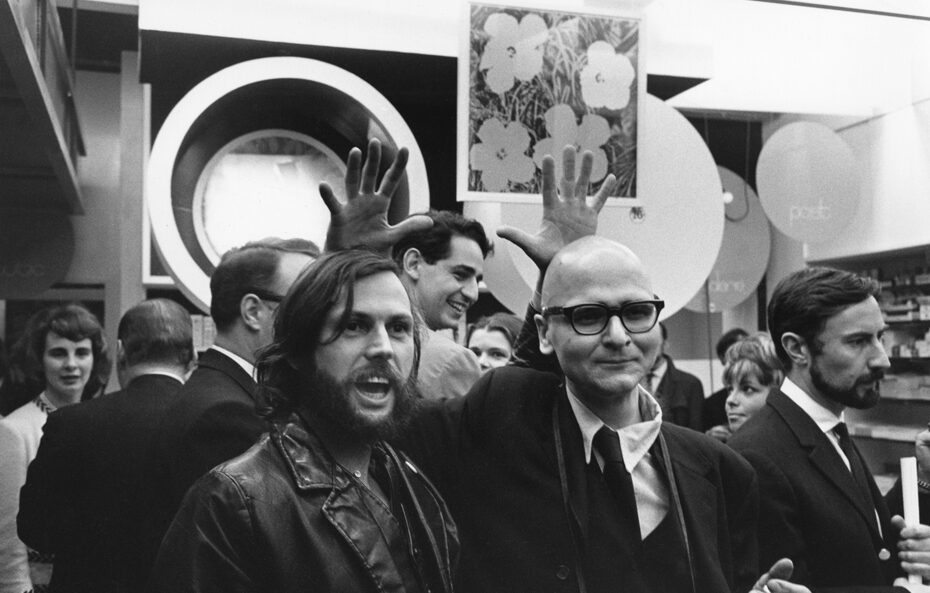
I also began making slides in artists’ studios and homes, photographing their works when they needed images for documentation purposes—grant applications, for example. This gave me the opportunity to enter the artists’ private spaces, to chat with them, even to make portraits
It was in this very innocent and intuitive way that I photographed artists, their works and their openings. And I took photos in all sorts of places, from quite humble venues to the big galleries on Sherbrooke Street. It was all the same to me.
Did your camera enable you to break through social barriers?
It’s true that photography gave me a reason to go into people’s places, to photograph a piece of furniture in a house or, in the case of artists, their works. This is one of the reasons I chose photography.
I’m very curious by nature—maybe too curious. Nosy even. And sometimes I’ve asked rather indiscreet questions, although it’s not the question but the answer that may be indiscreet.
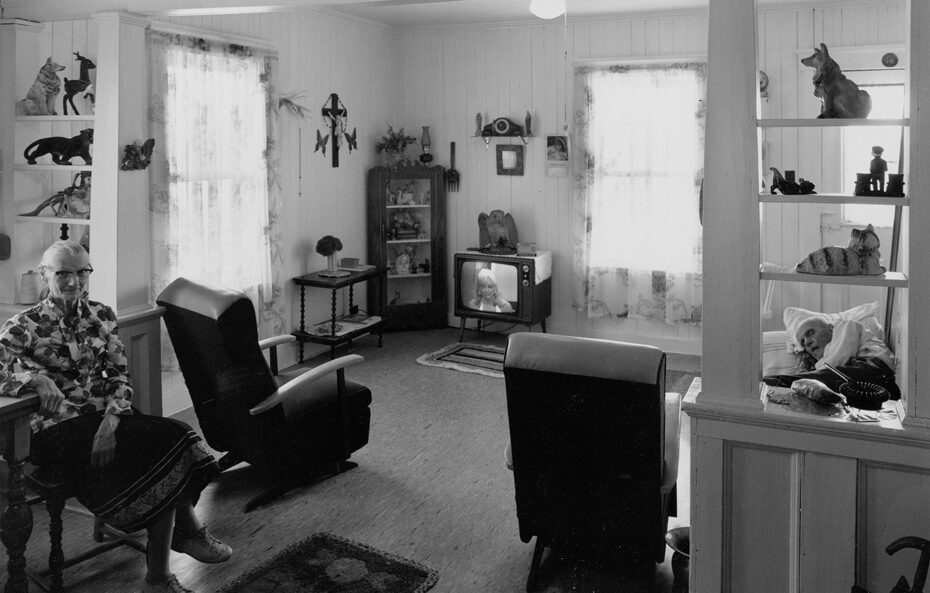
Really, I’m fascinated by people’s private lives. This is why, later, I made a series that combines black and white portraits and colour interiors. I wanted to see what motivates people, how they live, whether they’re artists or from other walks of life.
How did you take your vernissage photos from a technical point of view?
When I photograph people, they’re usually general shots of the surroundings that include the subject. Most of the time I work with ambient lighting. At openings, the most important thing was the amount of information captured. In other words, to really show people’s faces. So if there was a group of four or five people chatting, I’d work my way around and take several photos to make sure that each of them appeared in at least one of the images.
It was also important to show the exhibition itself, and sometimes it was difficult to photograph the people and the works at the same time. There was always the challenge of trying to show as much information as possible. But it was the people who interested me most.
Were you conscious at the time that you were documenting a history of art in Montreal?
No, when I was taking the photos in the 1960s and 1970s, I didn’t think they’d become a document on openings, on the lives of artists in Montreal. It wasn’t until sometime during the 1990s that I began to think I really ought to make an exhibition and a publication with these photos. And it took me another twenty-five years to actually do it!
I felt the need to show the Montreal public what was happening thirty or forty years ago. And then, my problem was that in all these openings, of course I knew the artists well, but because of memory problems, I recognize people but I forget their names. So I had to contact people around my own age, or younger, and show them the photos so they could help me identify the faces.
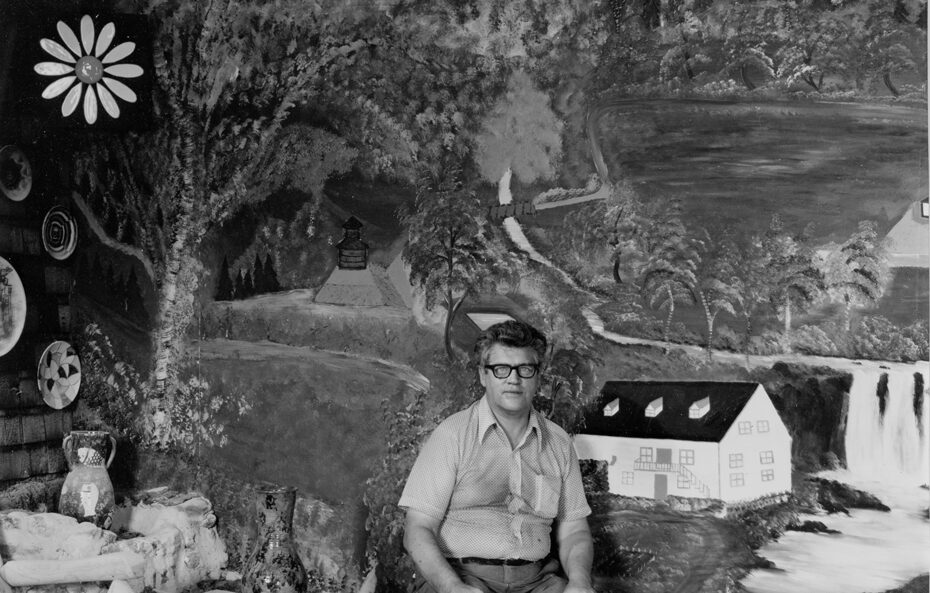
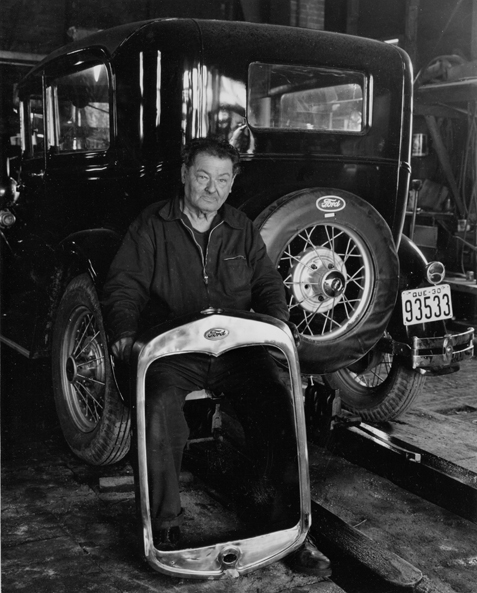
For me, a person’s name is very important. Even when I photographed in the country—in Charlevoix the Beauce, Abitibi—I took note of people’s names, and it was very important. Because it’s not just a person, but a specific person. When I worked in rural regions, on a second visit I would give out photographs. Because I believe we shouldn’t just take: the photo has to return to the community.
What’s the relationship between this corpus and the rest of your photographic practice?
I think what this series and the others have in common is my interest in people, in the human being. I knew how to start a conversation, how to approach artists. In general, I don’t find it difficult, as a photographer, to establish a connection. I don’t know why, it’s a matter of temperament. It’s important not to be pretentious, just to be natural. And I’m not aggressive by nature.
Do you agree that this is your most candid or spontaneous body of work?
I’ve also done a lot of large-format work, with a Linhof camera and 4 × 5 negatives, and it’s an entirely different approach. I’ve photographed artists in black and white with a 4 × 5 camera, and what’s interesting in that case is that you’ve got time to adjust the camera, to choose the frame. Despite this though—because I tend to be rather impatient—even when the camera was on a tripod and I could easily see the image on the focusing screen, I always operated as though it were 35 mm. I mean, I didn’t take much time to compose the image. I could have—but I didn’t.
Has the act of photographing art openings had an influence on the rest of your work?
Certainly, the fact that I photographed vernissages over a number of years, that I came into contact with artists’ philosophical approaches and with art produced by very different forms of expression, has had an influence on the way I see things.
So when I photographed other people, people not in the arts—the group known as Les Impatients, for example, who suffer from mental illnesses—I realized that even people who aren’t artists possess some artistic traits. I realized that there’s a kind of creativity in everyone, not used, but there.
You still go to many openings. What differences do you observe between the openings of today and those of the 1960s and 1970s?
I think the scene is still just as dynamic. But I wonder if there aren’t more politics in the contact between groups of artists today. The art world is much more lively than it was, thanks to the grant system and art schools. There are large numbers of artists coming out of art schools, and it makes it more competitive and political.
I still go to openings because I still like people—that has never changed. The world of vernissages still fascinates me, but I don’t feel the need to take photos … because I already have, I don’t know, tens of thousands of negatives—why make another!
From the 1990s on, there was an opening somewhere almost every day. I didn’t lose interest, but I preferred to photograph friends, people I was drawn to, but not necessarily in the arts. It was simply a change of direction.
Notes
1. Gabor Szilasi: The Art World in Montreal, 1960-1980, edited by Zoë Tousignant, 140-142. Montreal: McCord Museum, in collaboration with McGill-Queen’s University Press, 2019.

See also
 Video
Video
 Article