
Screening of Shifting Ground – Papa Nukunuku
Paid activity | Space limited, reservation required
For Indigenous History Month, the McCord Stewart Museum is hosting two evenings of screenings featuring video works by Māori and Moana Oceania artists originating from Aotearoa New Zealand, curated by Armando Perla and Karl Chitham. This presentation is part of the program for the 8th Contemporary Native Art Biennial (BACA), titled Iaohontso’ktá:tie / To Move Across the Land, and is offered in partnership with the Dowse Art Museum.
The works in Shifting Ground – Papa Nukunuku each respond to notions of instability and change, viewed through the unique perspectives of Aotearoa and Moana Oceania. This program highlights and explores some of the challenges Indigenous artists face when describing the tensions and beauty of identity and place during an extended period of intense uncertainty.
On the program
Come meet Armando Perla and Karl Chitham. A conversation will follow the screening of 10 short films. From 6 to 8 p.m.
Information
- Paid activity presented in English on June 20, 2026, at 6 p.m.
- Space limited, reservation required
- Duration: 120 minutes
- Location: J. Armand Bombardier Theatre
Admission fees
- General admission: $5
- Free for Members of Indigenous communities
- Free for Exclusive Access Museum members
On the program
Epifania
By Edith Amituanai, Aotearoa (Samoan) 2022, 8 min 30 sec
Original version in English (Single channel video with sound.)
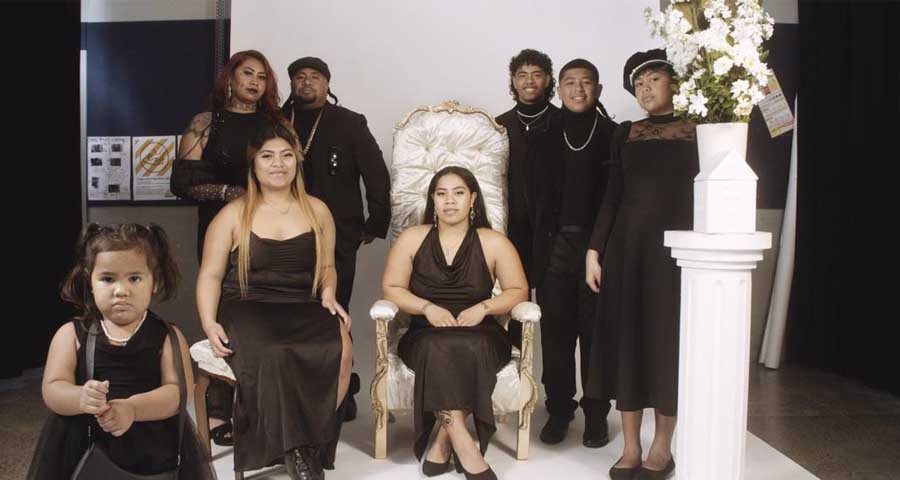
Epifania tells the story of Epifania Fa‘asavalu, a young Aotearoa New Zealand-born Pasifika matriarch. Framed as a dedication to The Rose That Grew From Concrete—a poetry collection by influential American rapper Tupac Shakur (1971–96)—the film presents Epifania’s narration of how she became the legal guardian of her younger siblings. By documenting her family’s story that alludes to poverty, domestic violence and mental illness, the artist emphasizes broader issues and hardships experienced by many Pacific Islanders in Aotearoa. Amituanai’s sensitive depiction elevates Epifania’s profound love for her family, and the strength and resilience that connects Pasifika communities across the region.
Kihikihi: He Kūaha Whetū
By Jamie Berry, Aotearoa (Māori), 2023, 7 min
Original version in Māori. (Single channel video with sound.)
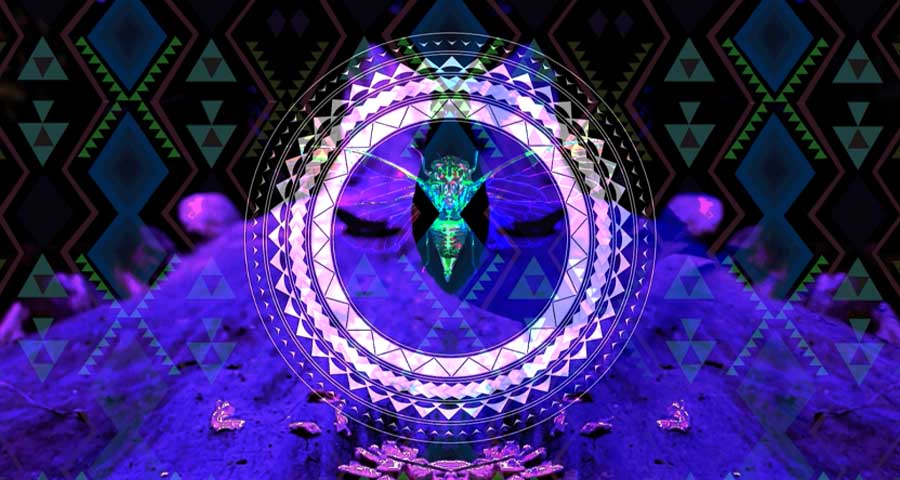
He kūaha whetū refers to a stellar gateway and explores a threshold where past, present, and future converge, inviting a quiet encounter between the everyday and the celestial. Centred on the kihikihi (cicada)—a tohu (symbol) of Raumati, endurance, and renewal—the work weaves DNA-derived sound, cicada chorus, and mōteatea (lamentation) into sensory portals. Guided by Matariki, a constellation signalling a time of renewal and change, Kihikihi: He Kūaha Whetū unfolds slowly through a journey into the values of remembering, celebration, and dreaming forward.
Te Pito
By Keri-Mei Zagrobelna, Aotearoa (Māori), 2023, 9 min, 24 sec
Original version in English. (Single channel video with sound.)
In Te Pito, the movements of dancer Jahra Wasasala Ragar signal the umbilical cord connecting us to our surroundings and whenua. As a descendant of the tribal group Te Ātiawa that holds links to the Whakatū region in Aotearoa New Zealand, Zagrobelna imbues the work with the role of guide, facilitator, and creative portal for others seeking to reclaim identity and reconnections to whakapapa (lineage).
Mā te Moana
By Kahurangiariki Smith, Aotearoa (Māori), 2024, 14 min 22 sec
Original version in English. (Single channel video with sound.)
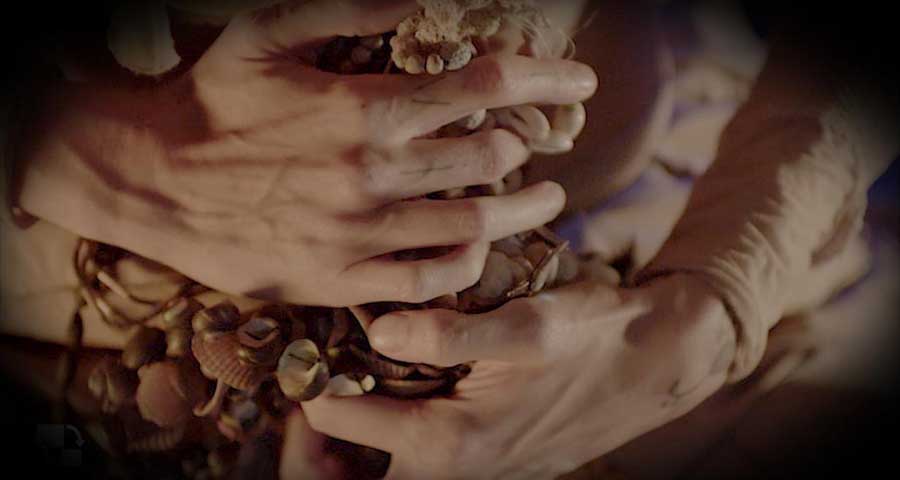
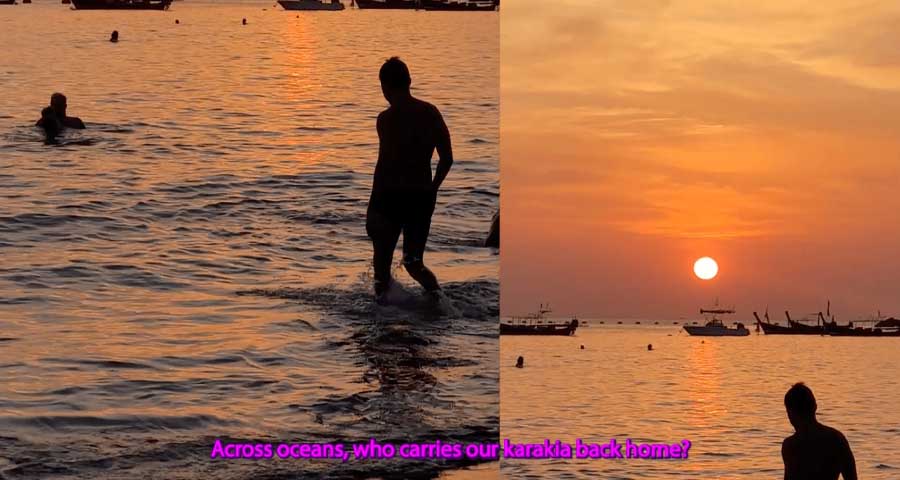
This work is about the push and pull of one’s home(s), similar to the arrival and retreat of ocean tides. Kahurangiariki’s story sits alongside the words of Buntheun Oung, who speaks in this work of returning to his homeland of Cambodia. A descendant of Te Arawa waka, Kahurangiariki made this work while in Rarotonga, living close to the departure point for many ancestral waka that came to Aotearoa. Photographs documenting Buntheun’s journey are juxtaposed with phone footage and animated kaperua (symbolising doubling and repetition) and takarangi (spiral forms) motifs.
Fāgogo
By Pati Tyrell, Aotearoa (Samoan), 2017, 9 min 4 sec
(Single channel video with sound.)
Fāgogo in Sāmoan refers to fables that are handed down. The receiver of a fāgogo is vested with an expectation to pass on the story, making it their own and then sharing it. This oral tradition acts as a transmission of ideology but also as a genealogical archive for a shared historical and cultural context. A fāgogo can mirror the real world through cultural imperatives that pre-date Western beliefs and value systems. Often considered a place where heritage and tradition fall away from colonial distortions, and, in some instances, from linear narrative conventions, a fāgogo can build our perceptions of the world while simultaneously presenting us with perspectives that are ethereal.
what was or could be today (again)
By Shannon Te Ao, Aotearoa (Māori), 2019, 11 min 38 sec
Original version in English. (Single channel video with sound.)
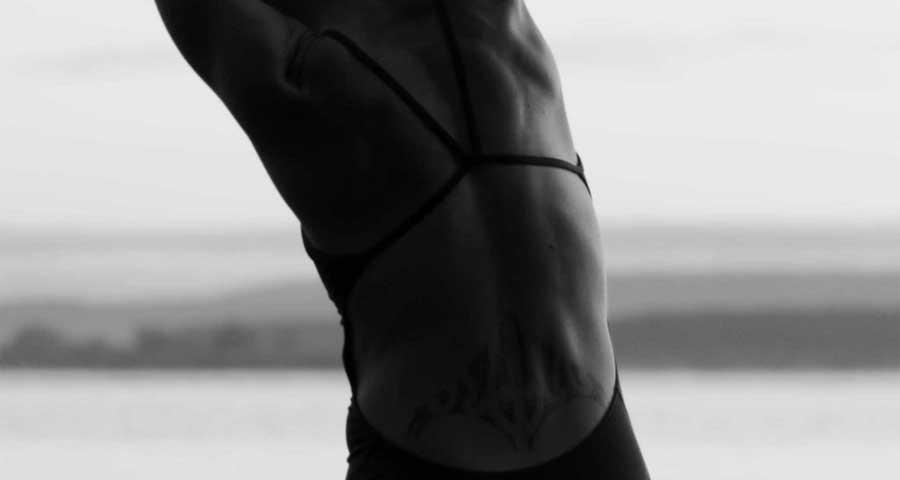
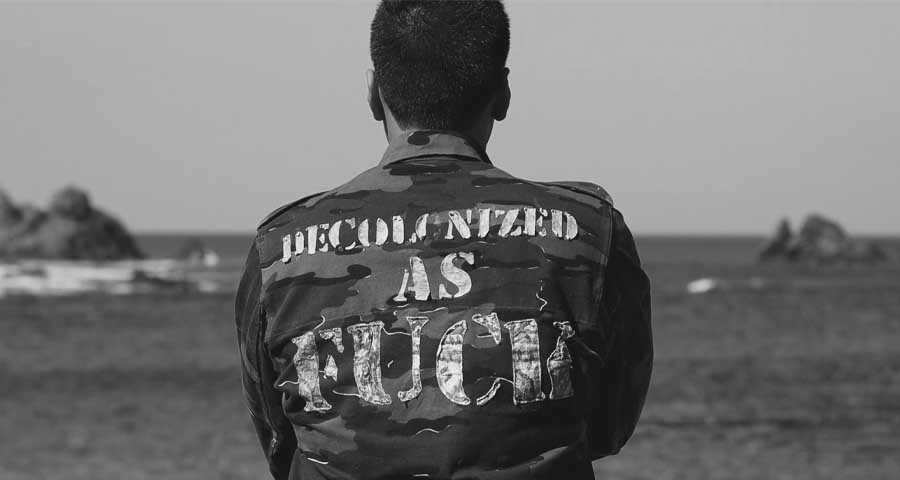
what was or could be today (again) follows elite athlete Ngarama Milner-Olsen as she swims across Aotearoa’s largest body of water, Taupō-nui-a-tia (Lake Taupō). The film borrows its title from an inscription found on the reverse of the painting by Te Ao’s grandmother, depicting a small wetland reserve that is closely tied to the artist’s family. Linking together various stories, Te Ao presents an exploration of place experienced through sensory and bodily memory.
Ka Tangi te Kārearea a te Rangi Uaheke
By Riki Pirihi, Aotearoa (Māori), 2024, 5 min 23 sec
Original version in English. (Single channel video with sound.)
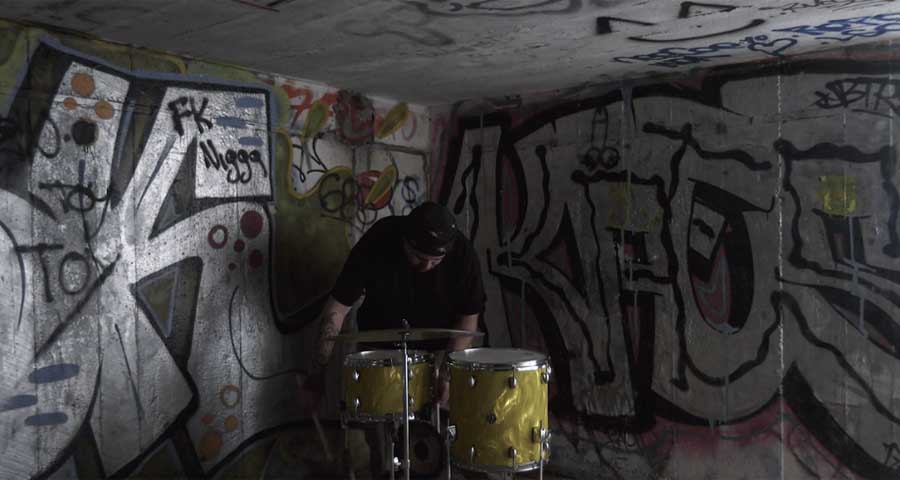
This solo performance by Pirihi was recorded at the summit of Moe-i-te-rā (Brooklyn Hill) in Wellington New Zealand, a nesting spot for Kārearea (native falcon). The composition is for drums, gongs, and cymbal, and the accompanying sky which was also filmed on the day of the performance. This semi-improvised sound piece uses a graph of Wellington temperature readings for 2023 as a rhythmic motif and a graphic score by correlating the linear points of data with tempo, pitch, and timbral variance.
The Pleasures of Unbelonging
By Chris Ulutupu, Aotearoa (Samoan, Niuean), 2023, 9 min 37 sec
Original version in English. (Single channel video with sound.)
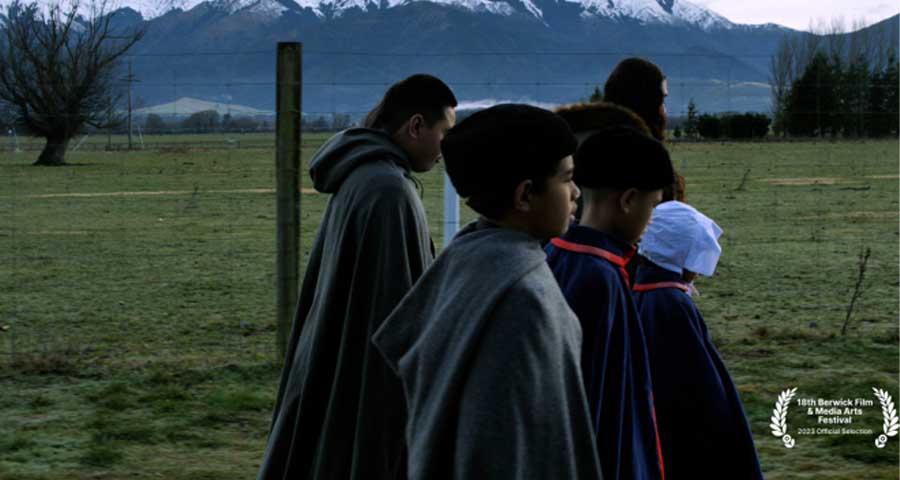
The Pleasures of Unbelonging focuses on a mother and her children walking through various landscapes to seek refuge and clarity. The work responds to James Baldwin’s text Stranger in a Village from the book Notes from a Native Son (1955) and Ulutupu’s own experiences. In a series of gentle tableaux shot in the South Island of New Zealand, known as the location of The Lord of the Rings, Ulutupu amplifies the otherness that can exist for Indigenous communities in certain places.
Diaspora
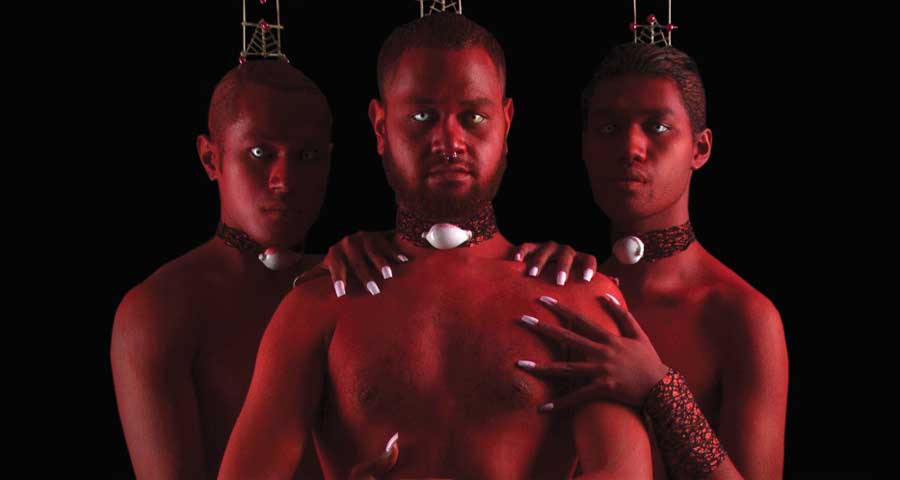
By FAFSWAG Arts Collective, Aotearoa (Moana Oceania), 2021, 10 min
Original version in English. (Single channel video with sound.)
In the midst of the pandemic, FAFSWAG as storytellers wanted to remind the diverse communities of Aotearoa that they all have a shared history. The things that connect us are the things that we can draw strength from and help us to navigate such a confusing period. DIASPORA is a devised moving image work, inspired by personal testimonies, lived experience and frictional points of view. Told through the body and articulated through the interpersonal space found between fluid motion and stillness.
Aratohu
By Lisa Reihana, Aotearoa (Māori), 2025, 11 min 4 sec
Original version in English and Māori. (Two channel video with sound.)
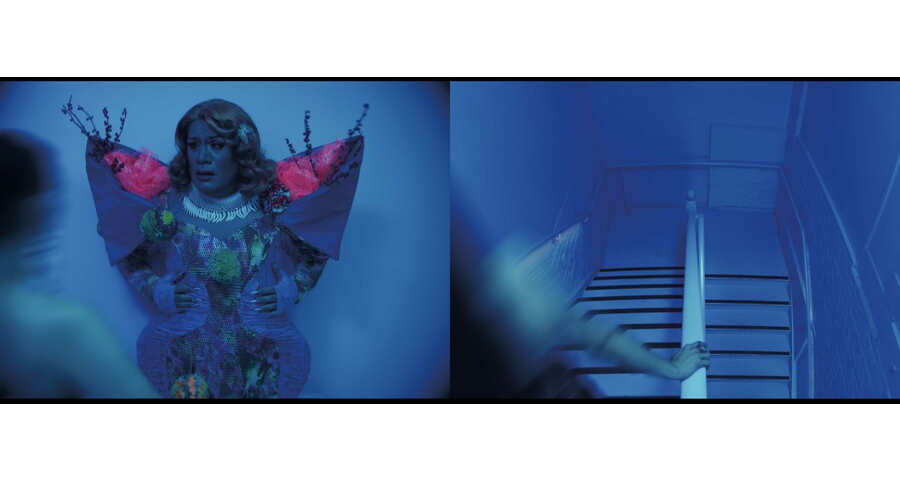
This film is a time-bending, surrealist fable that explores destructive influences and the potential for healing. For lead character Wairangi, a fun night out turns into a journey of self-discovery as the lines between reality and hallucination begin to blur. Following an encounter with Stealer, a sinister figure representing risk and temptation, Wairangi meets Aratohu, an ancestral taniwha-like being offering an alternative pathway underpinned by renewed strength in her Māori identity.
Speakers
Armando Perla
Armando Perla, LL.B., LL.M., is a queer, non-binary Nahua-mestizo curator, educator, and human rights lawyer working across Indigenous transnational museology, curatorial practice, and decolonial research. Born in Kuskatan/El Salvador, their work is grounded in land-based responsibility, relational practice, and sustained collaborations with Indigenous communities across Mesoamerica and its diasporas.
Perla is co-curator of the Contemporary Native Art Biennial (BACA). Previously, they served as Artistic Director and Chief Curator at the Textile Museum of Canada, where they led multilingual, community-centered exhibitions grounded in Indigenous knowledge systems. Their curatorial practice extends transnationally through projects such as Material Diplomacy (2026) in Aotearoa New Zealand and Imborrable: La Tierra de Nuestras Memorias (2022) developed for the United Nations Development Programme and the Office of the High Commissioner for Human Rights.
They have held leadership roles with the City of Toronto, the Canadian Museum for Human Rights, the City of Medellín, and the Museum of Movements in Sweden, and were awarded the King Charles III Coronation Medal in recognition of their contributions to the Canadian and international museum sectors.
Karl Chitham
Karl Chitham is a curator, educator, and commentator based in Aotearoa New Zealand. He is Māori, of Ngā Puhi and Te Uriroroi descent, and aspires to support and raise the profile of contemporary Māori art practice nationally and internationally. He has held curatorial roles in universities, museums and public galleries and is currently Director of the Dowse Art Museum.
Chitham is on the Board of Wairau Māori Art Gallery, the first dedicated Indigenous public art gallery in Aotearoa New Zealand. He was co-author of the ground-breaking publication Crafting Aotearoa: A Cultural History of New Zealand and the Wider Moana Oceania and has been a selector for dozens of national awards including as a panel member for the New Zealand Pavilion at the Venice Biennale (2022).
Recent curatorial projects include Whetūrangitia/Made As Stars (2021), Shannon Te Ao: Ia rā, ia rā (rere runga, rere raro) for the 15th Gwangju Biennale (2024), Tākiwa Hou: Imagining New Spaces for the inaugural Malta Biennale (2024) and Paerangi: Venice a series of activations by Māori artists during the Venice Biennale (2026).

In collaboration with

Be an insider!
Subscribe to our newsletter to get the inside scoop on upcoming exhibitions and cultural events.
Subscribe now