

Aunties’ Work
The Power of Care
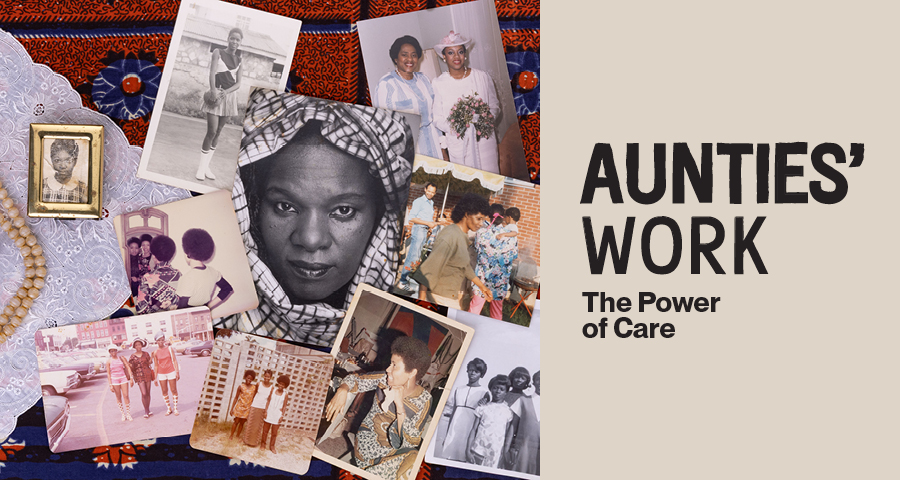
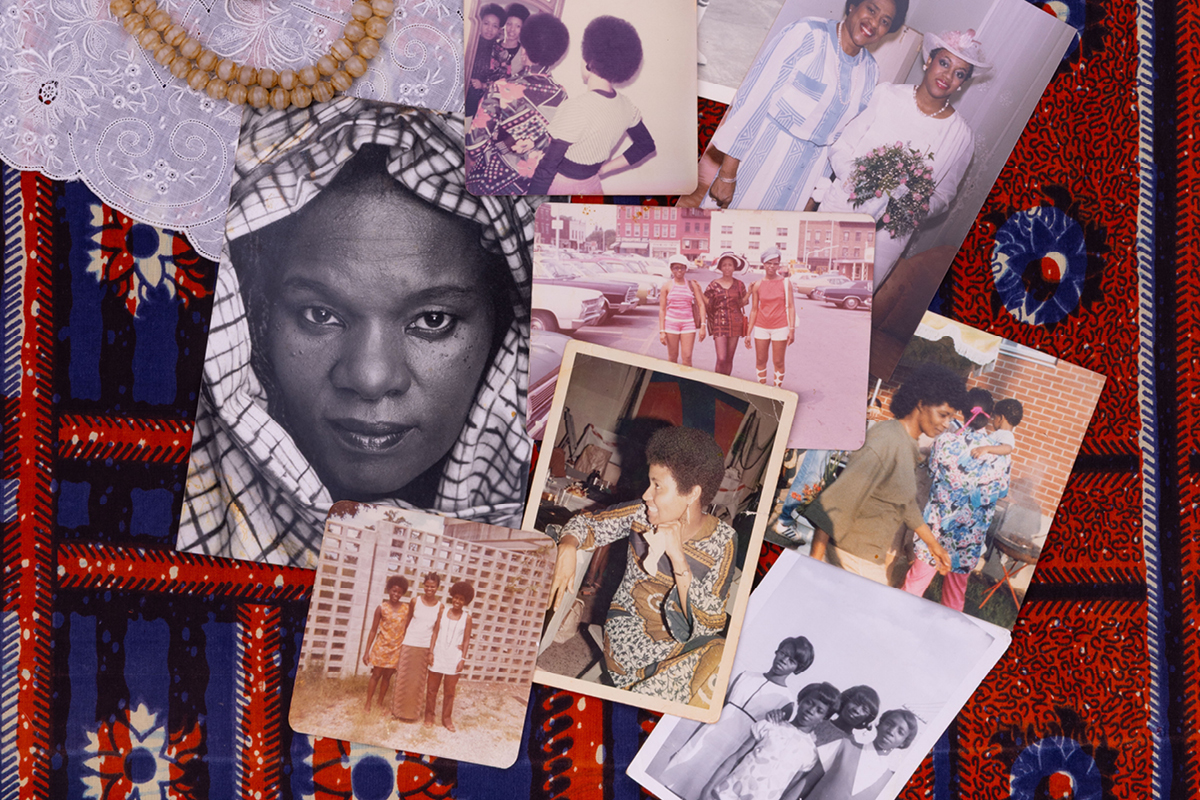
Aunties’ Work: The Power of Care, created by curator Nadia Bunyan, is a heartfelt tribute to the support systems created by the matriarchs of Montreal’s Black communities. The exhibition focusses on the cultural context surrounding the women known as ‘Aunties.’ The cornerstone of an entire community, these women have worked for generations to fortify movements of social change, nurture and sustain safe spaces, pass on critical knowledge, and share their lived experiences.
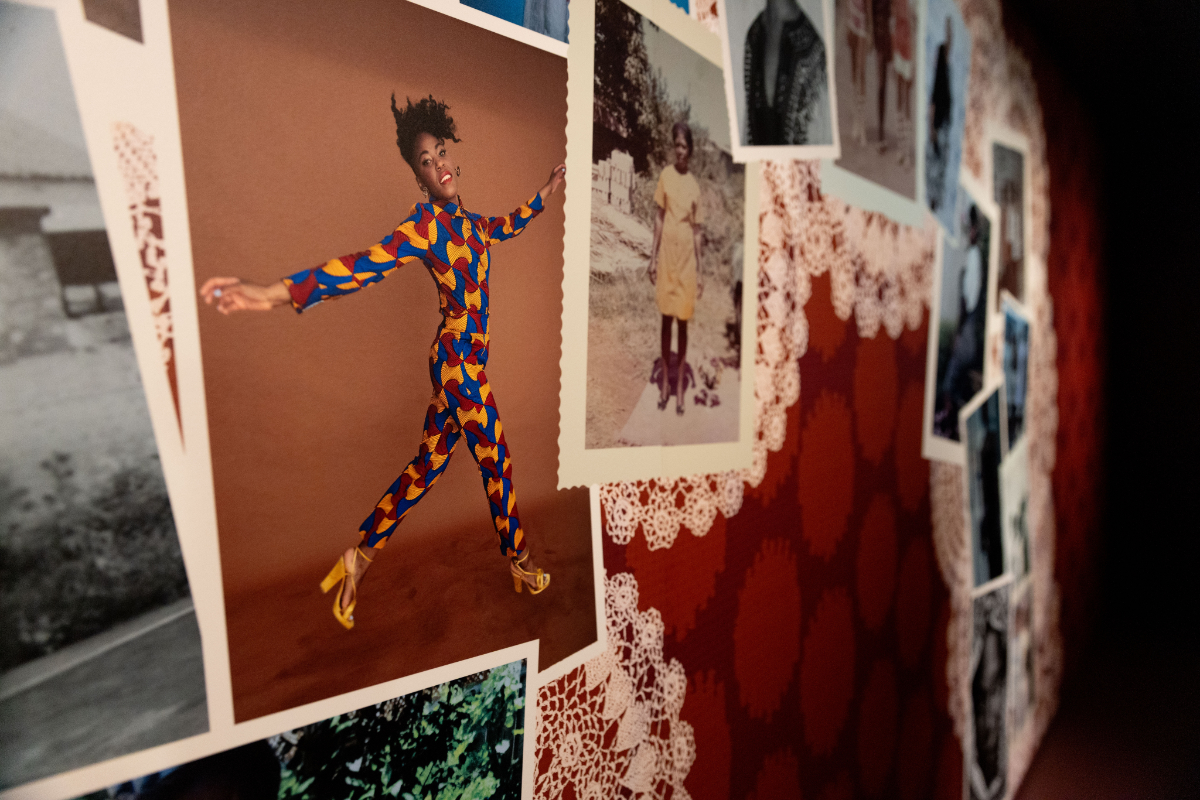
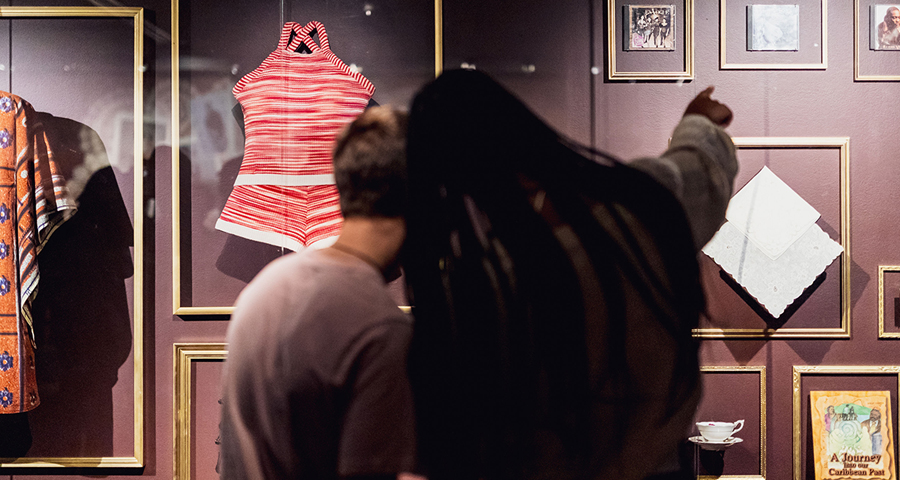
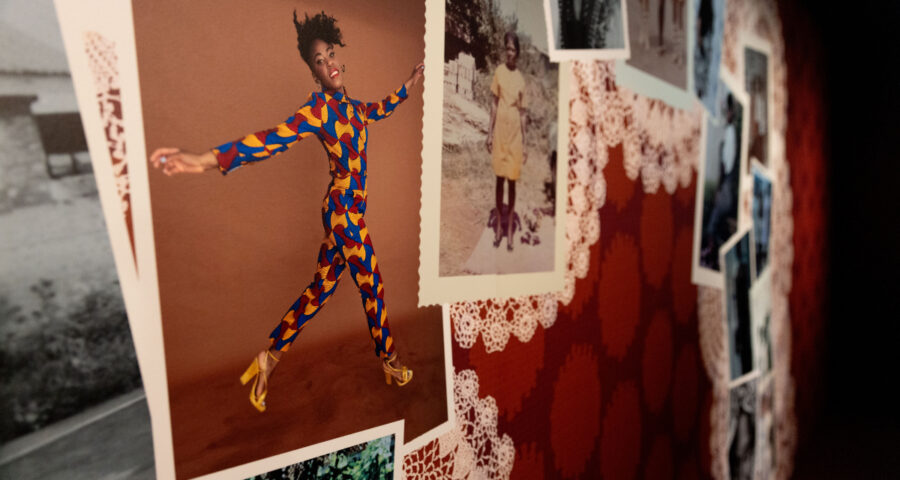
Learn about the vital role Aunties play in their communities through shared personal reflections and dozens of photographs and objects representative of these women loaned by community members.
Guest curator: Nadia Bunyan
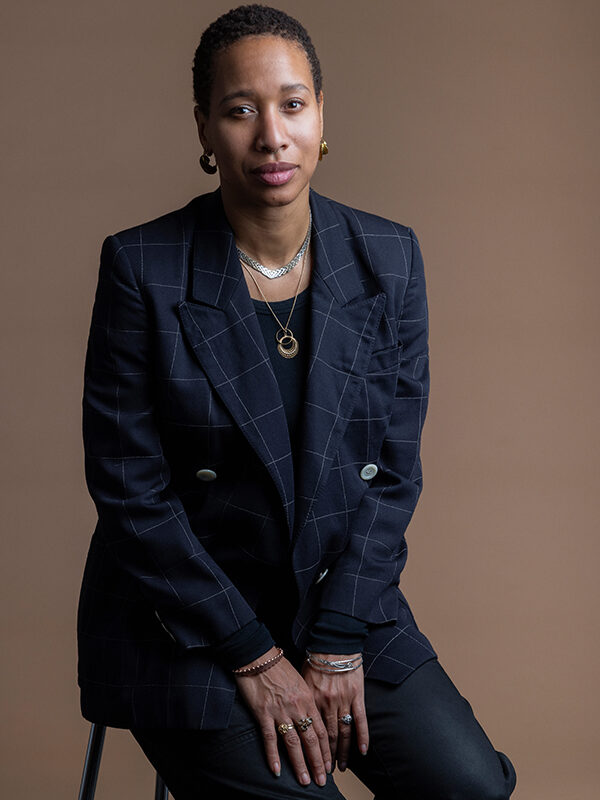
Nadia Bunyan is a fashion designer, researcher, and community organizer. She believes we must begin with education and care to see change in the fashion industry and beyond. These core values led her to cofound Growing A.R.C. a nonprofit using the prism of material culture and its fashion systems, to explore activities grounded in the farm-to-closet process.
Beginning with agriculture for textiles and natural dyes, Growing A.R.C. creates activities such as playdates for people to activate, reciprocate and cultivate their relationships with all beings. The organization reinforces connections to the local environment by focusing on material culture and bioregional design. It also expands the understanding of biodiversity to include the diversity and perspectives of marginalized folks.
Nadia believes to raise awareness about a relational approach to sustainability knowledge and lived experiences must be shared. This is one facet of changing conversations on sustainability to a cultural practice.
“This project has been gifted with so many beautiful moments and stories from the community that I get to be part of. To those I had the fortune to connect with for Aunties’ Work, thank you for your generosity. This exhibition was made possible thanks to the contributions you shared, and I will carry these stories and moments with me forever.”
– Nadia Bunyan
4 things to know
Care: An invisible yet essential force
For Aunties, caring for an individual is always a profoundly communal act. They know that their dedication nourishes families, neighbourhoods and the wider community. Every shared moment—both a privilege and a responsibility—becomes a lesson in care. As a force of social cohesion, they create spaces of safety and solidarity that hold families together and deepen collective roots, in daily life as well as in struggles for justice.
An intergenerational bond
Aunties pass on knowledge, values and traditions through their daily gestures, storytelling and steadfast presence. Their role extends beyond the family framework: they are memory-keepers and carriers of continuity. From them, we learn to honour those who came before us, and to preserve the essential bonds between generations. Their care sustains the family nucleus while strengthening collective roots.
The symbol of the iceberg
The exhibition uses the metaphor of the iceberg to highlight the depth of labour happening beneath the surface: a hidden world of care, presence and dedication whose scope is only gradually revealed. It symbolizes the profound ties these matriarchs weave with their communities, often without public recognition. By unveiling what lies beneath, the exhibition honours their vital role.
A community-driven exhibition
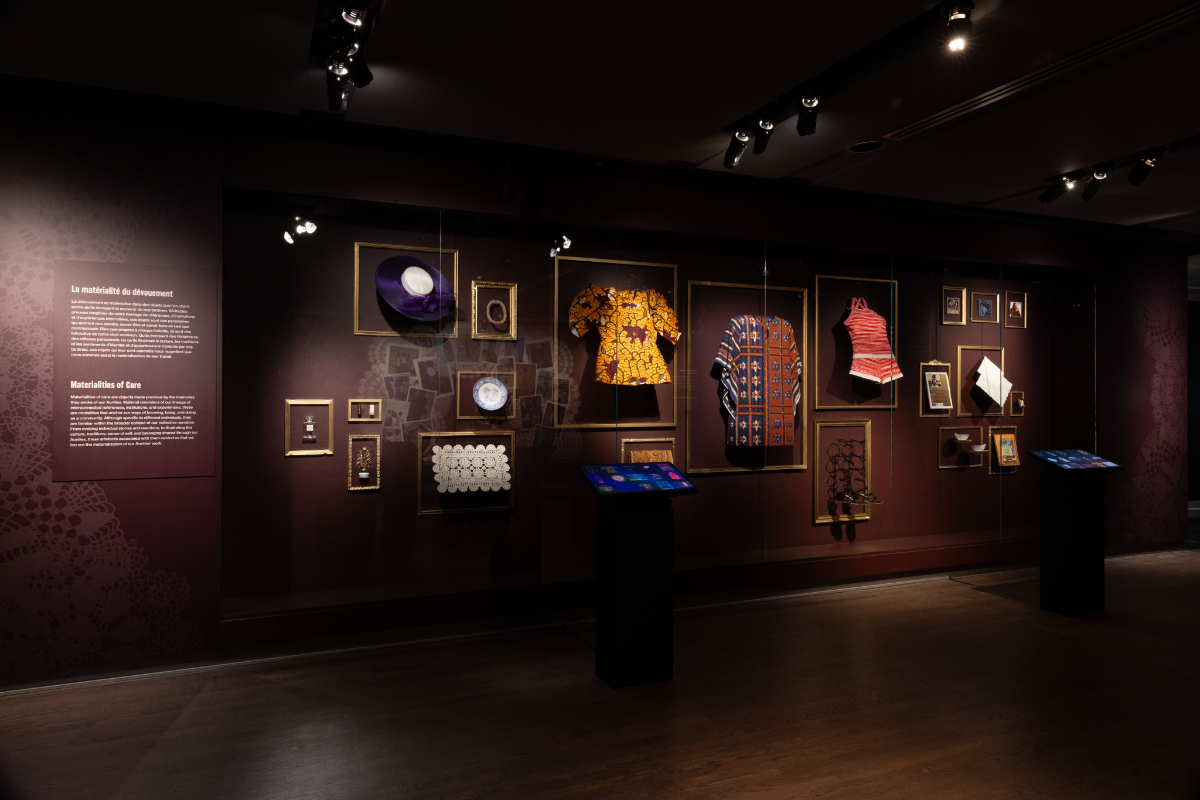
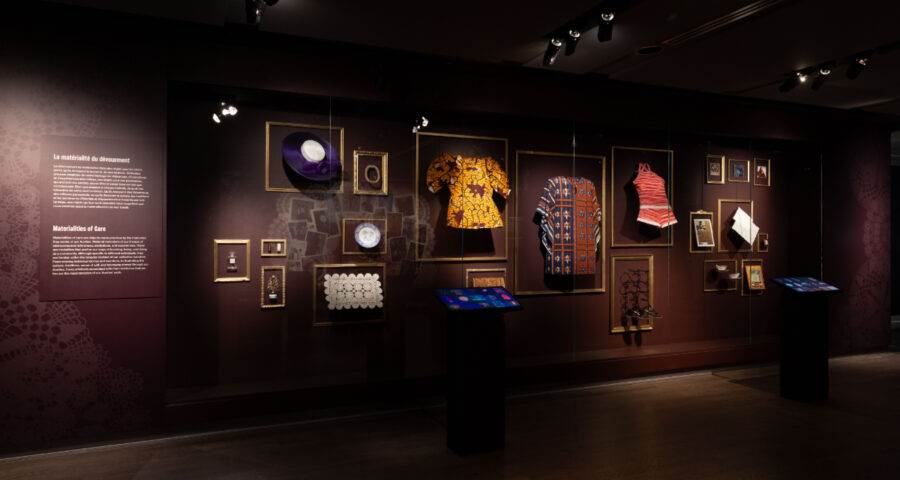
This exhibition is built on direct community contributions: photographs, clothing and objects loaned by Aunties, their loved ones or their chosen families. These artefacts tell stories of affection and tradition, revealing a collective fabric where care is recognized and celebrated. Through recorded interviews and intergenerational discussion circles—bringing together about ten participants—these narratives find their place within the Museum and become part of the exhibition itself.
An eco-design approach
Reducing the environmental footprint
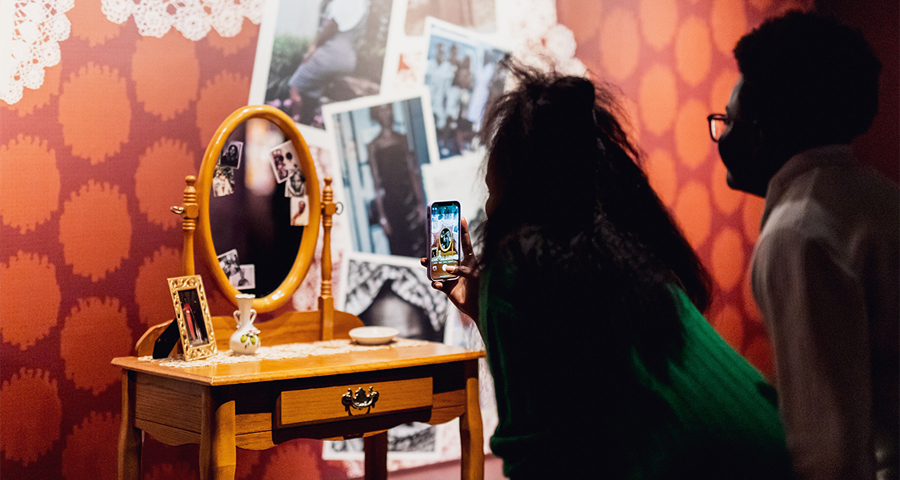
Environmentally aware and convinced that museums can play a part in the transition to a more sustainable future, the McCord Stewart Museum has set itself the goal of minimizing the amount of waste generated by its exhibitions. When the exhibition Aunties’ Work was in the planning stages, the Museum considered a variety of eco-design strategies to reduce its environmental impact that were then implemented during production. Apart from a dresser purchased secondhand, all the furnishings used for the exhibition were sourced from the Museum’s existing stock of materials: display cases, platforms, audiovisual equipment, benches and frames.
The Museum has special expertise in using custom-made buckram mannequins to create invisible mounts. However, it is very difficult to reuse a mannequin custom-made for a specific costume because no two garments in the collection are the same size with the same silhouette and physical condition. In addition, these mannequins are cut to follow the neckline of the garment. For this exhibition, three mannequins were selected from the Museum’s preserved inventory. After being modified somewhat, they were ideal for the outfits on display. Two of the mannequins are being used for the third time!
The paint used is 100% acrylic, free of volatile organic compounds, and produced 100% in Quebec.
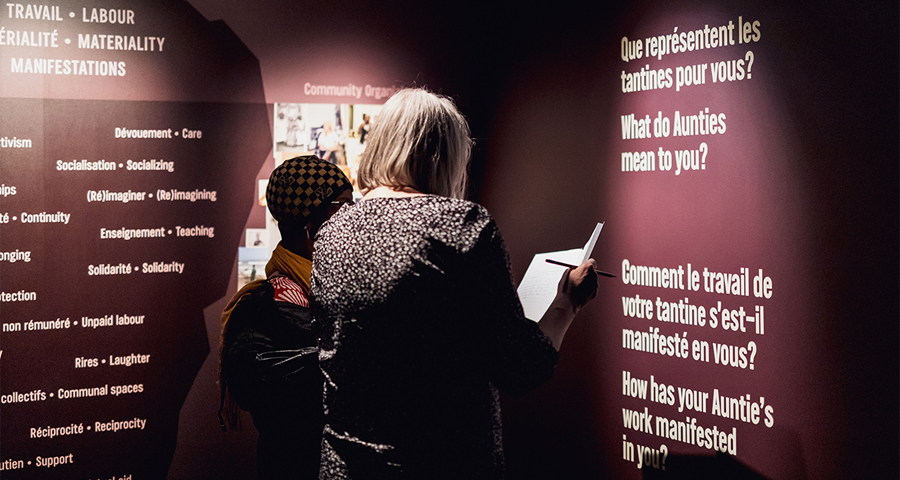
Graphic production remains a challenge for the Museum. All the exhibition texts were printed on new material: the self-adhesive vinyl will be thrown away (it may not be reused or recycled), but the expanded PVC panels will be reused in other projects.
Learn more about the Museum’s sustainable development process.
Acknowledgements
The Museum would like to thank its team and all the individuals, institutions and organizations who have contributed towards the presentation of this exhibition.
An exhibition produced by the McCord Stewart Museum
Guest Curator
Nadia Bunyan
Curatorial Consultant
Alexis Walker, Associate Curator, Dress, Fashion and Textiles
Project Management
Caroline Truchon, Senior Project Manager, Exhibitions
Graphic Design
David Martin
McCord Stewart Museum team
Mélissa Jacques, Supervisor, Technical Services, Exhibitions
Olivier LeBlanc-Roy, Technician, Exhibitions
Eugénie Bonneville, Technician, Exhibitions
Siloë Leduc, technicien, Technician, Exhibitions
Sonia Kata, Conservator
Caroline Bourgeois, Conservation Assistant
Amélia Desjardins, Technician, Conservation
Karine Rousseau, Head, Collections Management
Anne-Frédérique Beaulieu, Officer, Digital Outreach, Collections and Exhibitions
Roger Aziz, Photographer
Leïla Afriat, Officer, Community Relations
Catherine Morellon, Head, Communications
Sabrina Lorier, Manager, Digital Engagement
External team
Editing and Translation
Edith Skewes-Cox, English
Pascale Guertin, French
Graphic Production
Pro Séri
Video Direction and Production
Tomi Grgicevic
Soundscape
Mishka Stein
Graphic Design
Chris A. Boucicaut
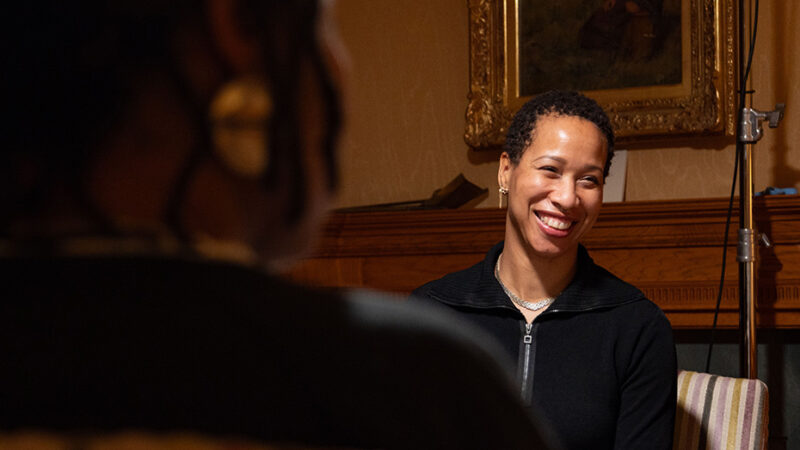
Learn more about Nadia Bunyan’s approach

Not to be missed!
See also
Blog | Behind-the-scenes access
Discussions of Care
Dive into discussions of care. Community members delve into their relationships with their Aunties, and their understanding of the concept of Aunties’ work.
Watch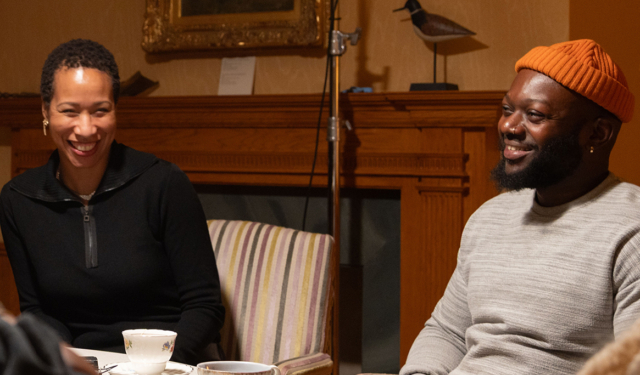
Presented by

Thanks to our partners




Be an insider!
Subscribe to our newsletter to get the inside scoop on upcoming exhibitions and cultural events.
Subscribe now