
 Article | Tour duration – 60 min
 The Mountain at the Heart of Montreal – 150 Years of Mount Royal Park
History at your fingertips! The Urban Tours provide a fun way to learn more about the history of certain Montreal sites.
May 25, 2026
Take an exclusive outdoor tour thanks to historical images from the Museum’s collections.
Using your phone, explore the various tours and discover the history of many city sites and images that bear witness to the Montreal of the past.

Mount Royal Park holds a special place in the lives and hearts of Montrealers. A welcoming green space overlooking the city, it is a landmark, a refuge for nature, and a place for gatherings and everyday activities.
Mount Royal itself is larger than the park’s borders, with two additional peaks in nearby Westmount and Outremont. Mount Royal Park surrounds the largest and tallest of the three summits, which, despite its relatively diminutive elevation of 233 metres, is often referred to by locals as simply “the mountain.”
The McCord Stewart Museum invites you to discover this symbolic gathering place for Montrealers. Be sure to look for this exhibition of images from the Museum’s collection at the Sir George-Étienne Cartier’s monument and Beaver Lake, and don’t miss the additional image panels at the Chalet and Smith House.
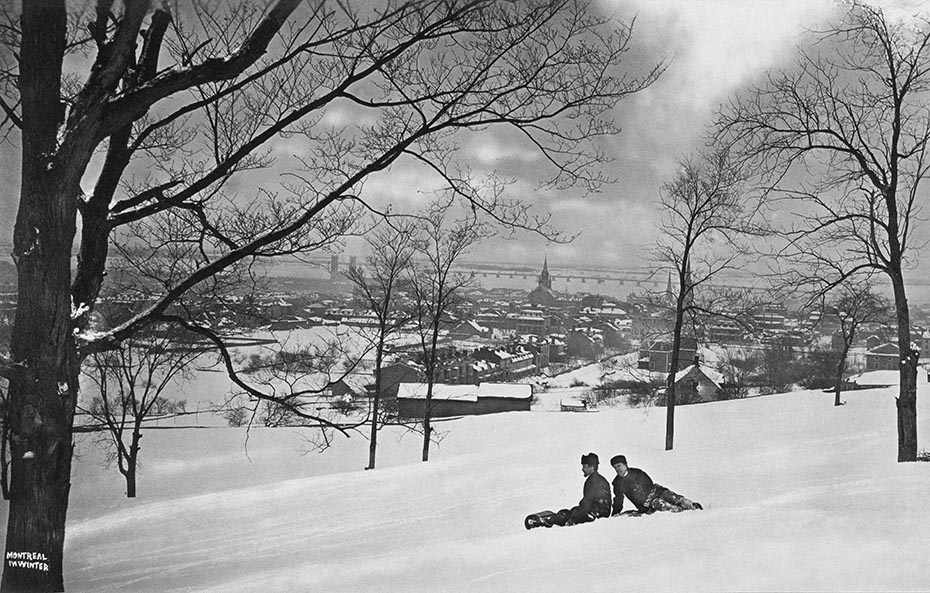
The Park
The idea of creating a public park on the mountain dates back to at least 1857, but it remained in the realm of discussion and planning for years. In 1868, Montreal city council finally voted to borrow money to purchase the necessary properties. Yet another four years elapsed without much progress, until March 1872. Indignant citizens demanded swift action from the city after a large swathe of land within the boundaries of the proposed park was clearcut for firewood by the owner.
The damaged landscape that accelerated the creation of the park is visible in the background of this photograph.
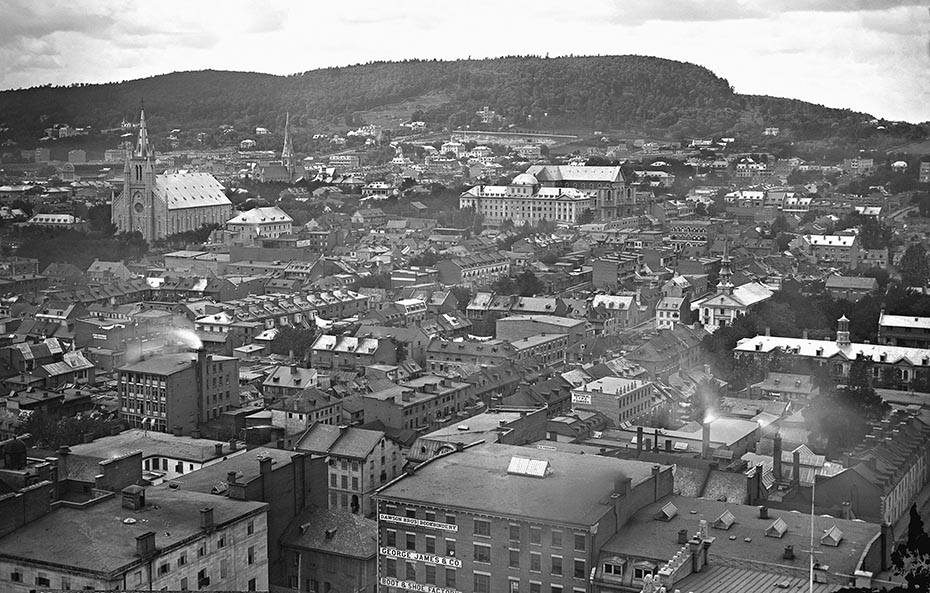
The natural scenery
The landscape, forever consoling and kind, Pours her wine
and her oil on the smarts of the mind.
– James Russell Lowell (1819-1891)
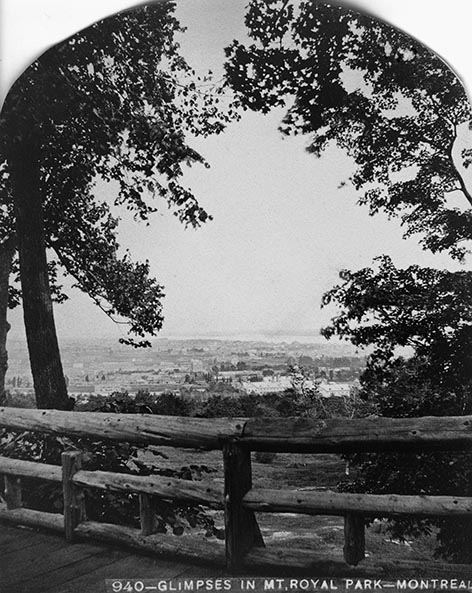
In hiring American landscape architect Frederick Law Olmsted to design Mount Royal Park, city officials chose someone who, like others of his time, was firmly convinced of the therapeutic value of natural scenery. Over and above the value of fresh air and exercise in a natural environment, Olmsted believed attractive landscapes and scenic views to be stronger than any medication in their power to soothe and heal mental ailments caused by the stresses of city life. In this way, Olmsted argued that the park itself was a form of wealth for the common good, enabling all citizens to establish sound minds in sound bodies.
Numerous recent studies on the physical and mental benefits of spending time in nature simply confirm the experiences of generations of visitors to Mount Royal Park.
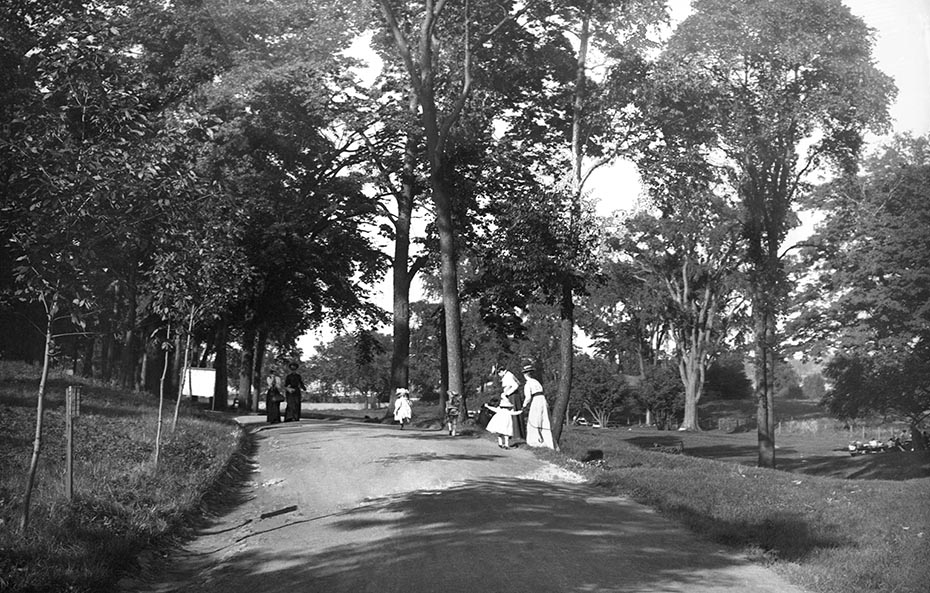
The Incline Railway
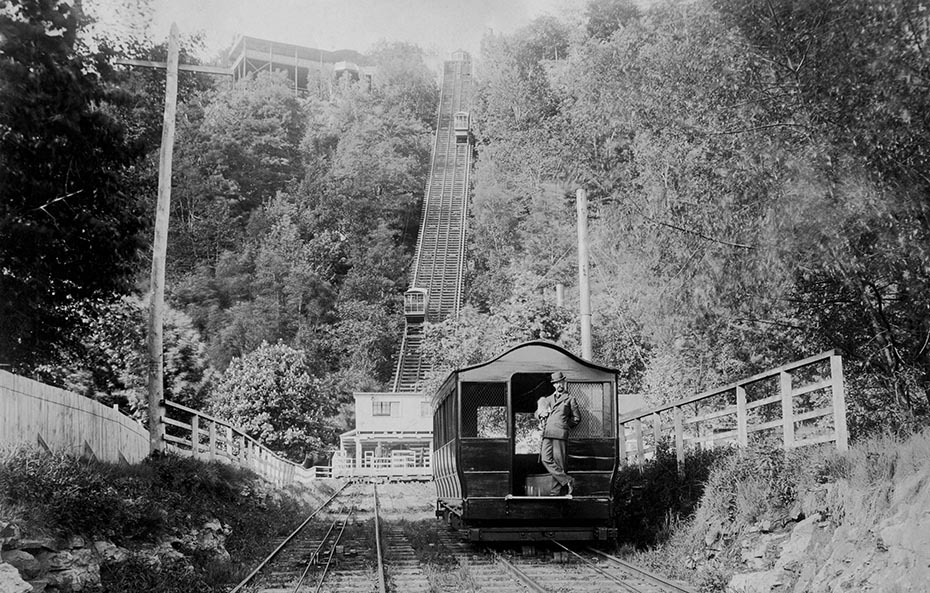
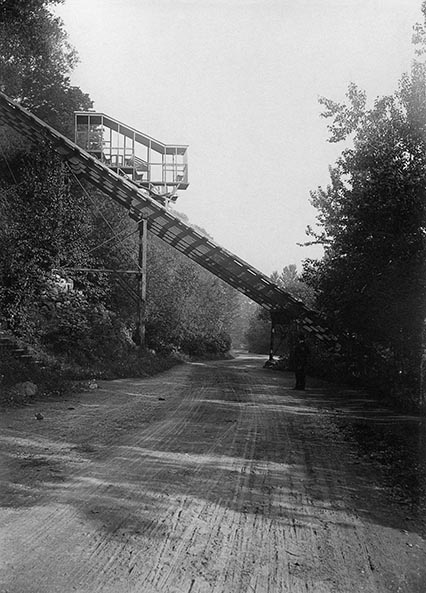
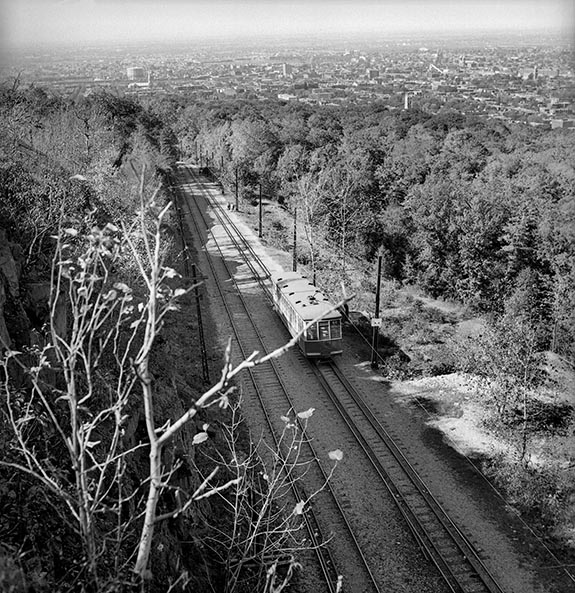
When the Mount Royal Park Incline Railway first opened in 1885, a ride up the mountain in a screen-sided, canvas-topped car cost 5 cents. The trip back down was 3 cents. The car on the flat section is on a second track extending towards Park Avenue, near Duluth. This addition made access easier for customers.
Although park designer Frederick Law Olmsted acknowledged that an inclined lift or elevator would make access easier for young children and adults with reduced mobility, he was not in favour of a quick trip up to a viewpoint and down again. In Olmsted’s opinion, a slow and peaceful journey along a gentle slope, with varied scenery along the way, allowed the visitor to leave the cares of the city behind, and return rested and refreshed.
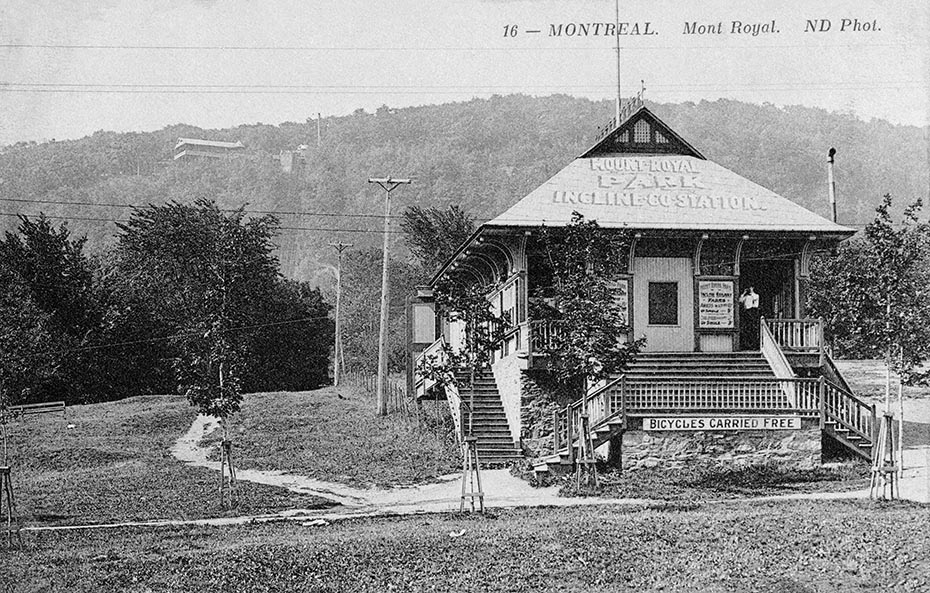
Sir George-Étienne Cartier's monument
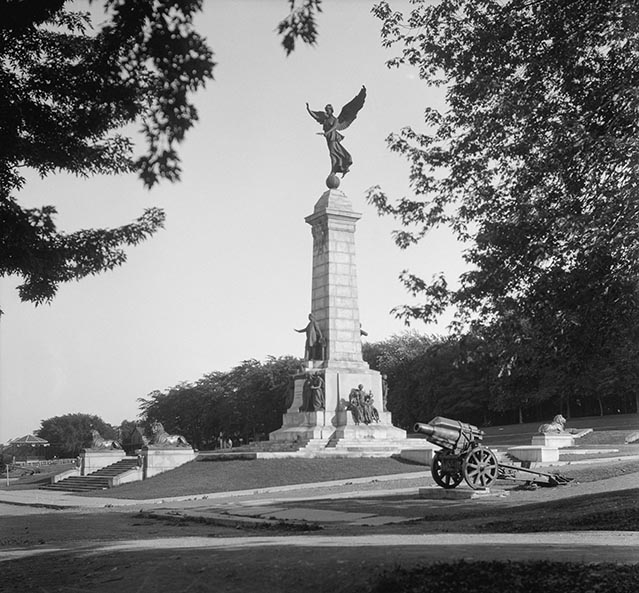
Sir George-Étienne Cartier’s monument was to be unveiled on Fletcher’s Field on the centenary of his birth in September 1914, but the Great War intervened. A number of the bronze figures, cast in a Belgian foundry and not yet shipped to Canada, remained hidden from German occupiers for the duration of the conflict.
This monument, constructed primarily to remember politician Sir George-Étienne Cartier, one of the Fathers of Confederation, also contains elements that point to his past as a French-Canadian nationalist who participated in the Lower Canada Rebellion. Most notable are the words of a song he composed, sung by the Patriots in 1837: “Avant tout, soyons Canadiens.” Did the monument’s planners intend to capture this duality?
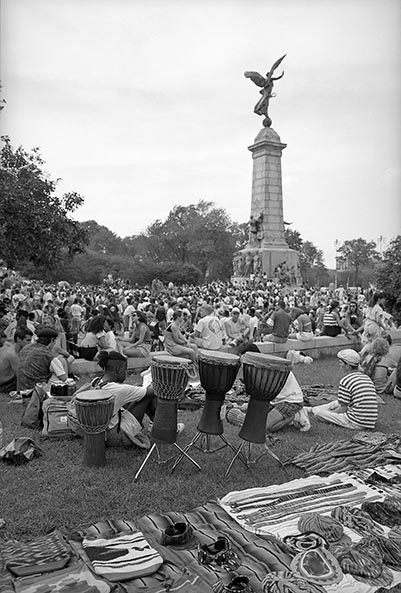
Different notions of Cartier’s legacy aside, today’s visitors to the monument on summer Sundays are united in their enjoyment of the informal gathering of drummers and spectators.
Montreal Tandem Club
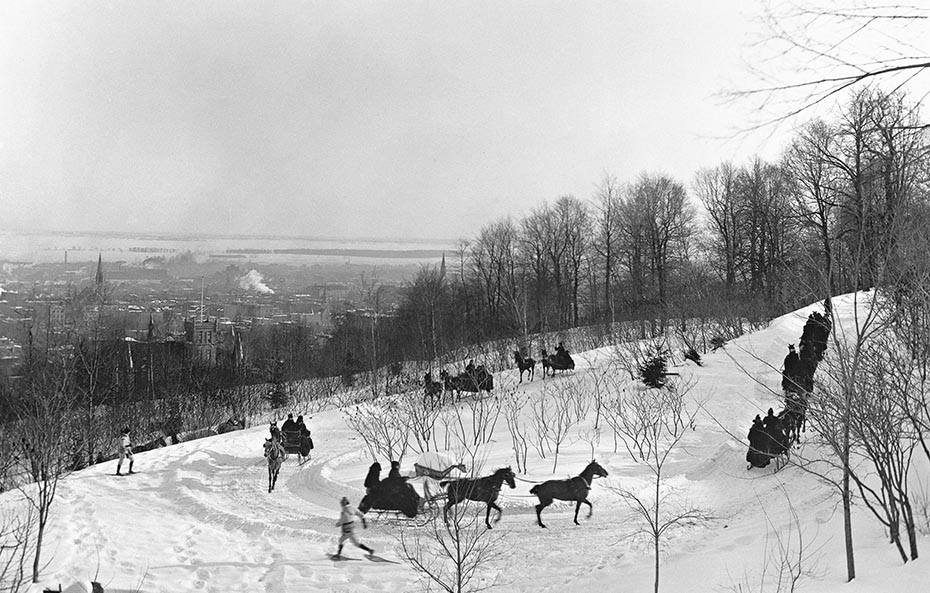
These sleighs ascending Mount Royal Park’s serpentine road at the top of Peel Street likely belonged to members of the exclusive Montreal Tandem Club. Assembling with their well-turned out horse-drawn sleighs in Dominion Square on Saturday afternoons, members participated in a showy winter event that aimed to impress. Local English-language newspapers informed readers of the names of drivers and passengers, and the route they’d taken—often on or around Mount Royal Park. English surnames from Montreal’s wealthiest families predominated, along with the occasional French name. Surprisingly, for the times, there was usually at least one woman in the driver’s seat.
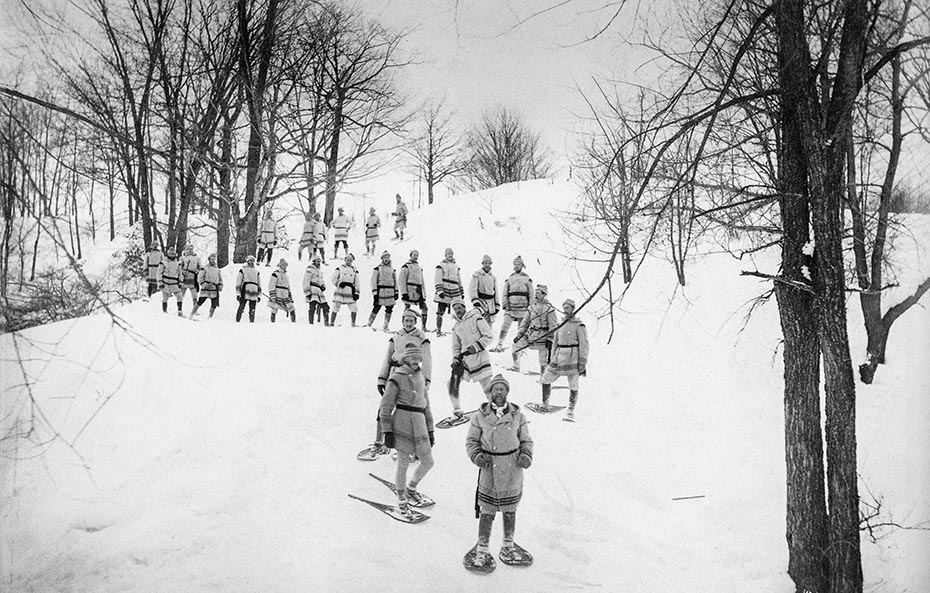
Le Montreal Snow Shoe Club
Within the past two or three years, snow shoeing has become the most popular of our winter’s amusements, and to form any idea of the number that engage in this glorious and healthy exercise, one cannot do better than to take up a position on the side of our mountain any evening during the week, when he will have the satisfaction of seeing one or two Clubs pass in their picturesque uniform, besides innumerable parties from two to a dozen, among whom are not a few of the fair sex. .
– Montreal Snow Shoe Club
These words appeared in the Montreal Snow Shoe Club’s annual report in 1879, the same year this unidentified group was photographed in their tuques, blanket coats and sashes. The first such club in the city was started in 1840; there were twenty by 1880, though not all were within easy reach of the mountain. Newspapers report the founding of a women’s snowshoe club in Montreal in November 1879, but most clubs were male-only.
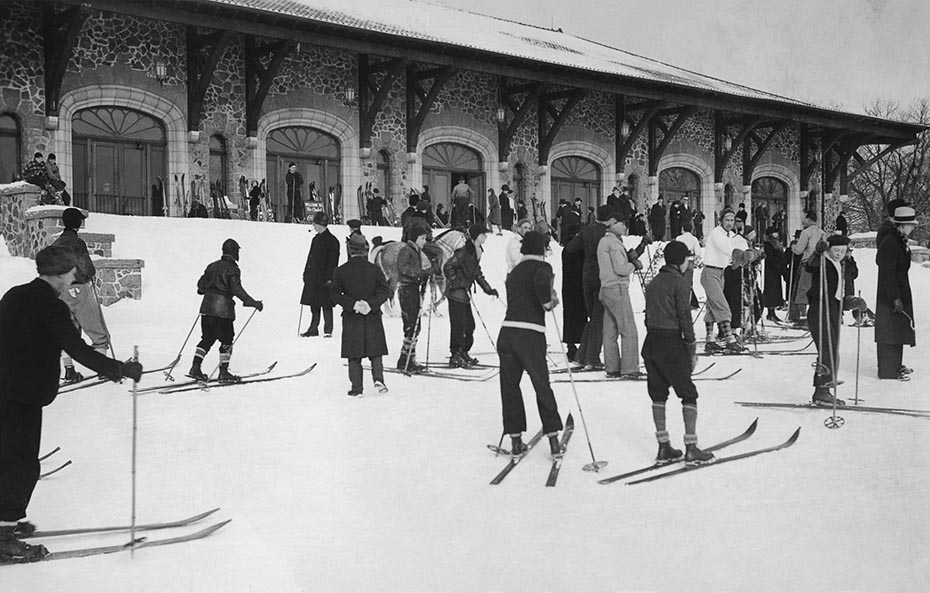
The chalet
The chalet at the lookout, designed by the architect Aristide Beaugrand-Champagne (1876-1950) and constructed beginning in 1931, was one of the city’s many Depression-era relief works. For some time afterwards, citizens and elected officials hotly debated how to best utilize the large space, and whether automobiles should be allowed to drive to the chalet.
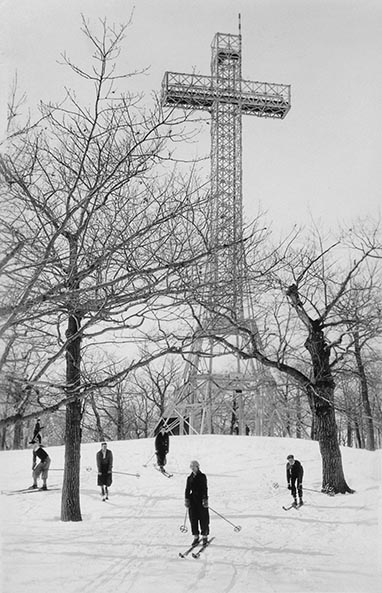
The number of skiers in the foreground on this postcard suggests a change in usage of the mountain. In its early years, Mount Royal Park was frequented by relatively small numbers of people, most of whom lived nearby. Since Montreal’s renowned Golden Square Mile backed onto the grounds, the park was sometimes labelled the playground of Montreal’s elite. With the growth of the city and densification of housing in the area below the mountain, as well as the increased population in the nearby Plateau, Mount Royal Park became an outdoor recreation destination for a wider range of residents.
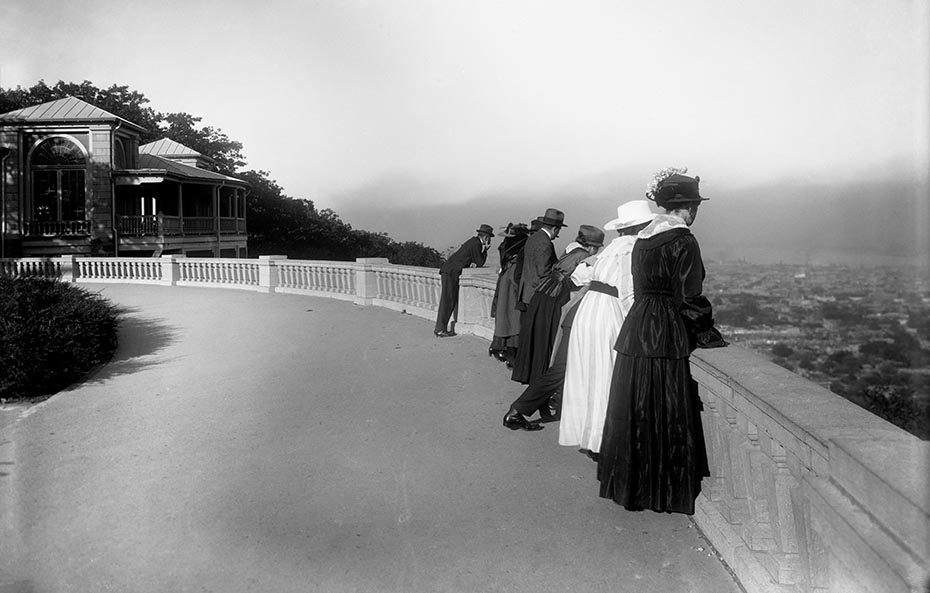
The Kondiaronk lookout
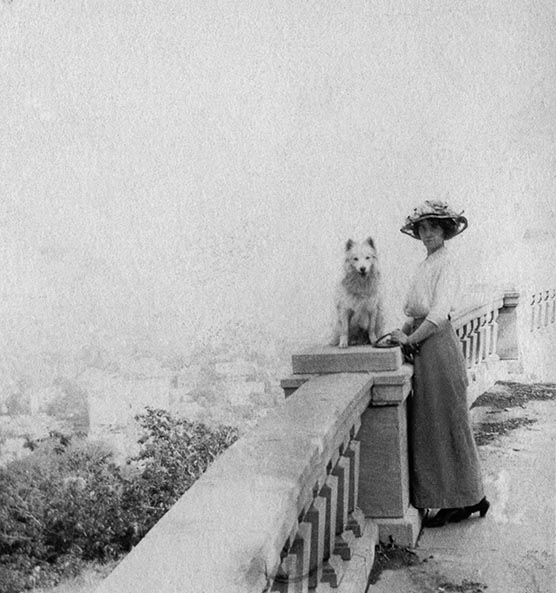
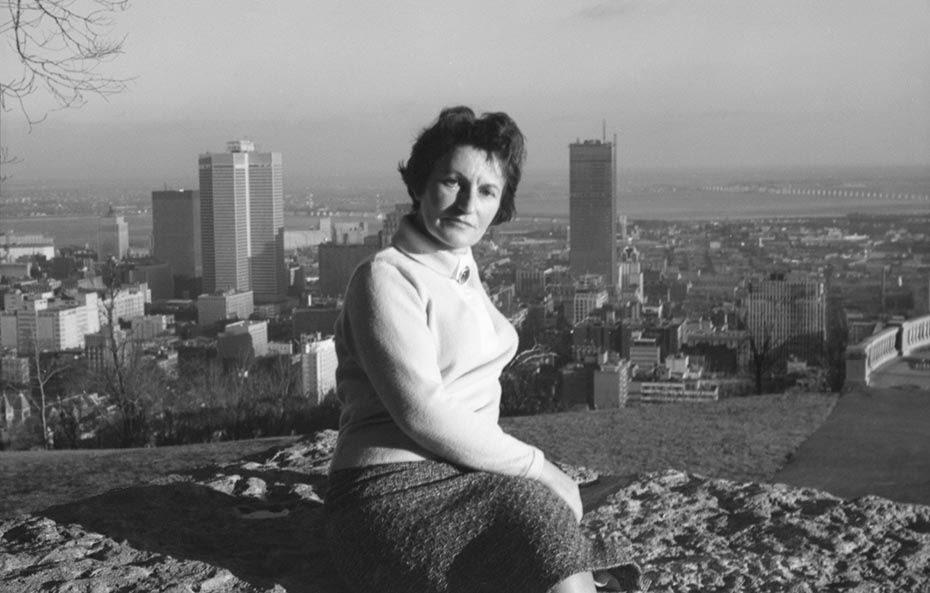
Plans to upgrade the wooden structure of the Mount Royal Park lookout were firmed up by city officials in the spring of 1906. An uncovered terrace was chosen as the best design option, so as not to detract from the look of the mountain when seen from the city. Begun in July, the curved stone balustrade and pavilion on the left neared completion by November. Over the intervening years, the balustrade has been the site of countless portraits and selfies taken by locals and tourists alike.
In 1997, the lookout was named after Kondiaronk (1625-1701), the Wendat chief at Michilimackinac who was instrumental in negotiating the Great Peace, signed in Montreal in 1701.
The Montreal Golf Club
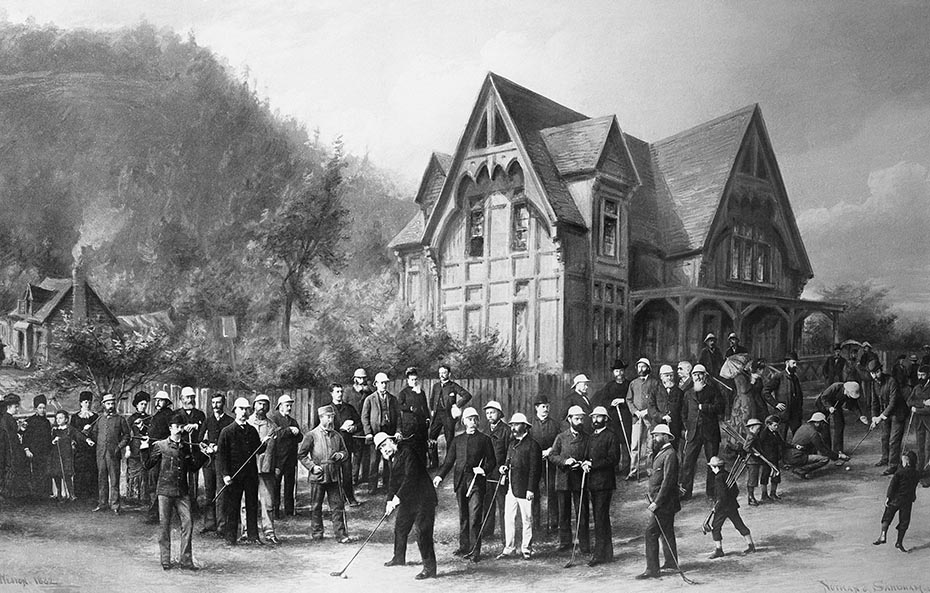
This composite photograph of members of the Montreal Golf Club is made up of individual studio portraits cut out and pasted on a painting of the park ranger’s lodge on Fletcher’s Field. The club leased facilities in the building, located near today’s Park Avenue and Duluth Avenue, to store equipment and, later, to hold events.
Fletcher’s Field presented extra challenges for golfers, who had to avoid picnic parties and children playing. Once Park Avenue was created, members even played over the city street. As the city grew and the number of park visitors increased, the club decided to purchase land in Dorval and moved there in 1896.
The Ice Palace
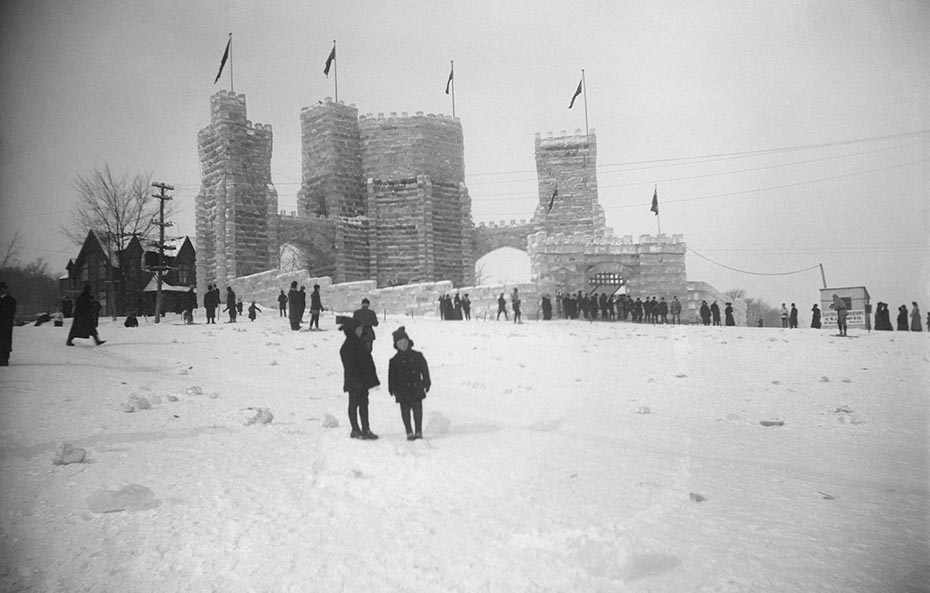
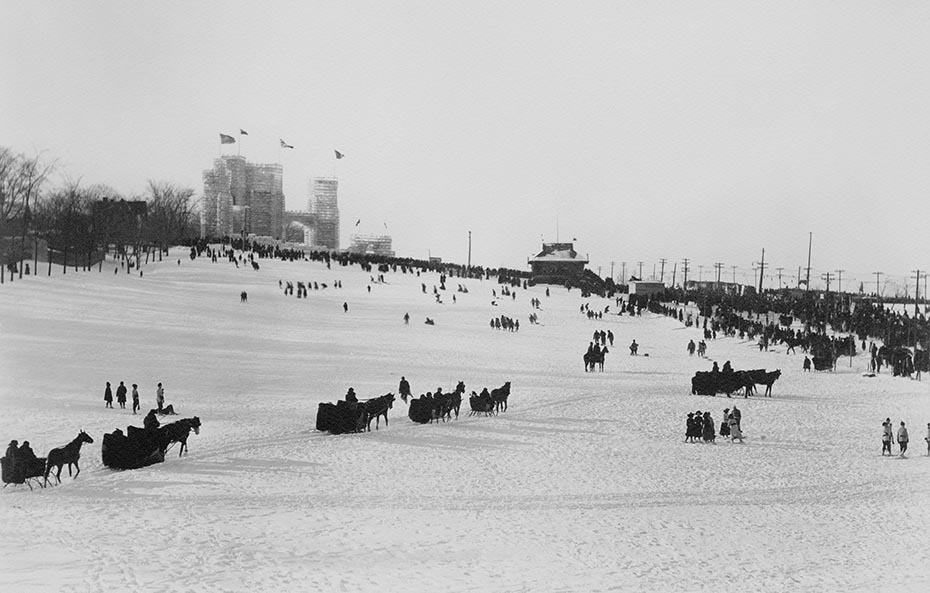
During Montreal’s 1909 Winter Carnival, the Ice Palace on Fletcher’s Field was a popular attraction for children and adults alike. On the night of February 11, a record-breaking crowd estimated at 100,000 flocked to the park, filling the grounds between Pine and Mont-Royal avenues. Some 2,000 torch-bearing snowshoers descended from the top of the mountain to storm the palace with fireworks. The palace, illuminated with coloured electric lights, responded with its own defiant display of fireworks, the spectacle captivating the audience for over an hour.
It was not the last time that this area of the park would be filled to capacity. In September of the following year, even greater numbers of Roman Catholic attendees packed the grounds for an open-air mass and benediction during the first International Eucharistic Congress held in North America.
The Mount Royal cross
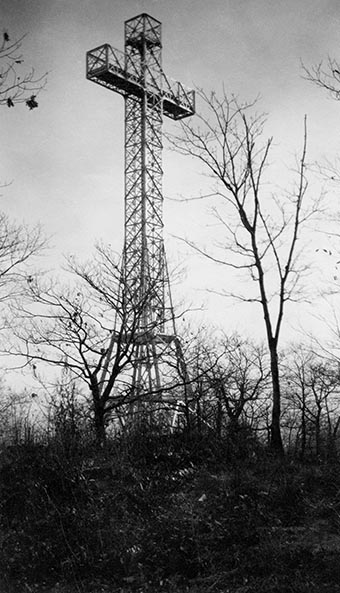
The Mount Royal cross has been lighting up the night since December 24, 1924. It was constructed to commemorate a wooden cross that Paul de Chomedey de Maisonneuve, the city’s co-founder, had placed on the mountaintop in 1643. The Saint Jean Baptiste Society initiated the project in the year of its 90th anniversary, and its fundraising efforts included the sale of souvenir stamps. The Society appealed to would-be donors by suggesting that the cross would be “a testament to the Canadian nation, composed of men of different races and creeds, and to the prosperity of a country that developed under the aegis of the cross.”
In addition to the unifying ideals, there was undoubtedly an element of national pride in constructing a prominent reminder of the city’s French and Catholic origins.
The tram line
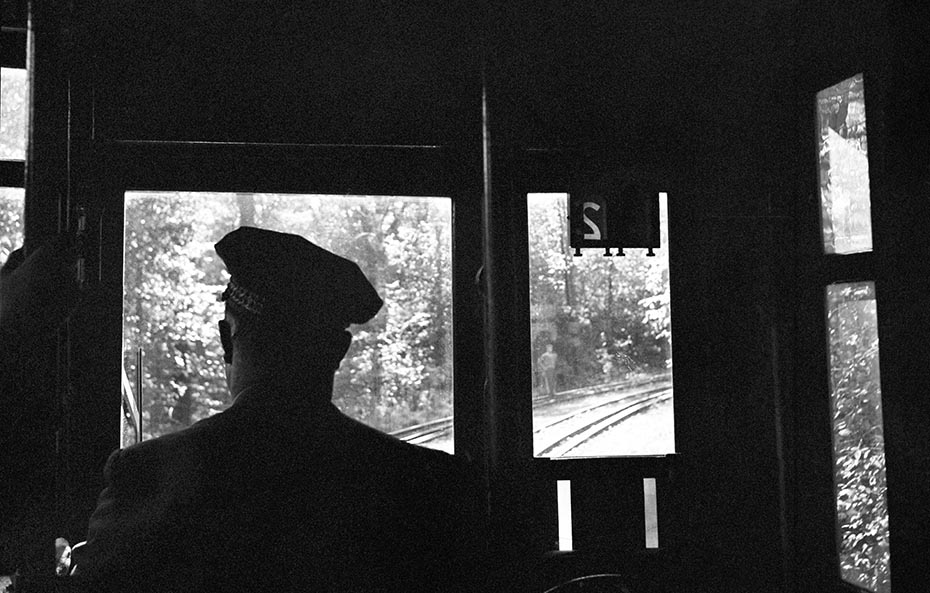
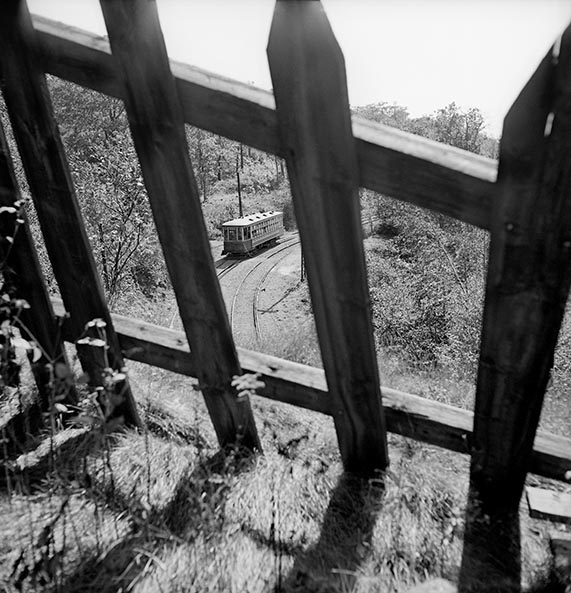
When the tram line began operating from the corner of Mont-Royal Avenue and Côte-Sainte-Catherine to below the summit of Mount Royal Park in 1930, it was a victory for those advocating access for the city’s working-class citizens in the east end of Montreal. A branch line from Côte-des-Neiges eastwards along today’s Remembrance Road had existed since 1924, but it was a long way around for many residents of the Plateau and beyond. It was also a tedious climb on foot, particularly on a hot summer day with children in tow.
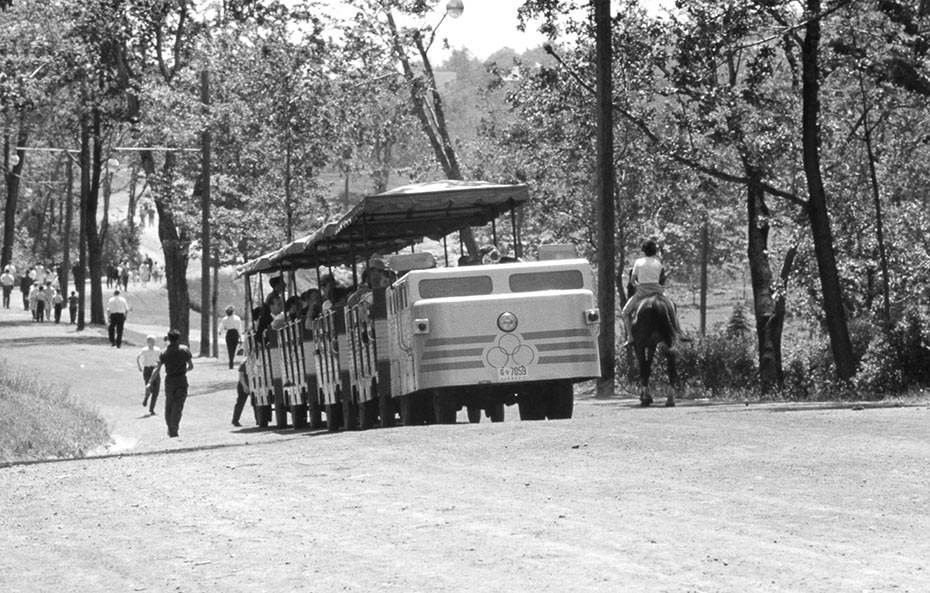
In the late 1950s, the electric streetcars were replaced by motorized buses, and Camilien-Houde Way and Remembrance Road replaced the tram line up the mountain. However, not everyone was in favour of relieving congestion on east-west arteries in this manner. Indeed, contemporary debates about closing the road to automobiles along Camilien-Houde are part of a long series of conflicts over access to and through the park.
The High Steps
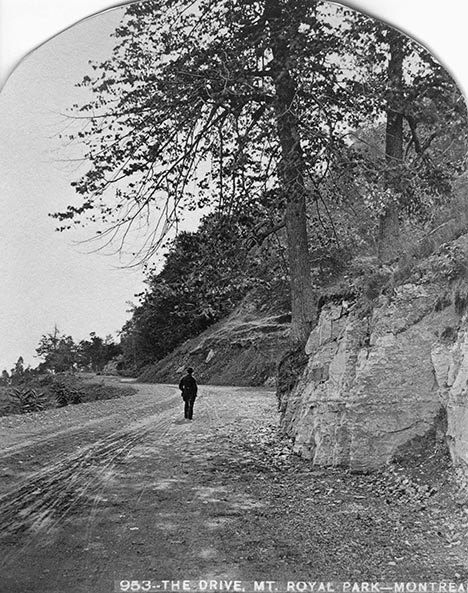
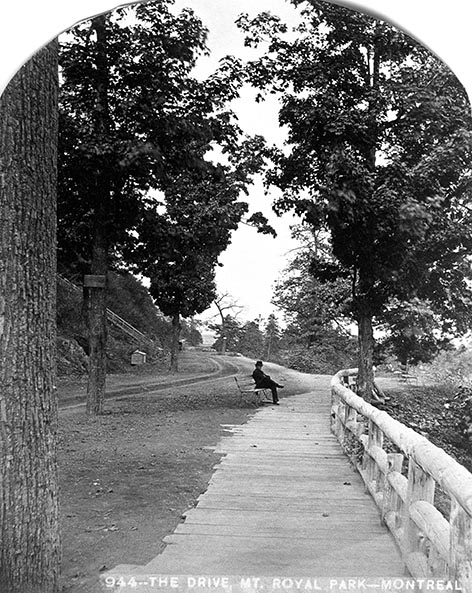
Park designer Frederick Law Olmsted was particularly interested in enhancing the beauty of the park’s landscape through the judicious planting of trees best suited to their locations, and the pruning or even removal of sickly or damaged ones. For Olmsted, matching different types of trees and shrubs to the diverse types of soil and growing conditions on the mountain enabled visitors to experience a variety of landscapes throughout the park.
Maintaining the park’s forested areas in the present day still involves careful decisions by park management. While Olmsted’s focus was on creating attractive scenery that looked naturalistic, his suggestions for plantings often included vegetation and trees that were not native to the area. Today, park managers concentrate on maintaining healthy, biodiverse woodlands and removing invasive trees, shrubs and plants where possible to help ensure local species’ survival.
The landscape architecture
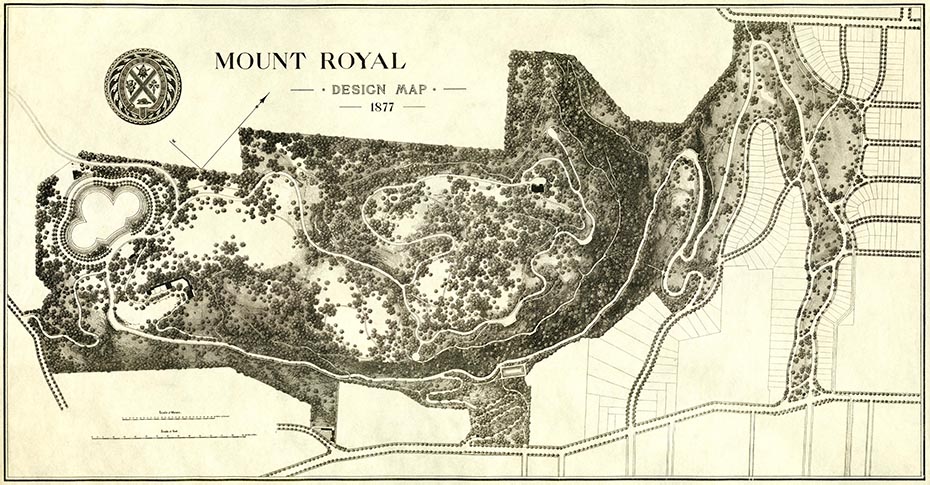
In choosing an expert to draft a plan for the layout of Mount Royal Park’s grounds, city officials had the foresight to hire Frederick Law Olmsted (1822-1903), well-known at the time for his work on New York City’s Central Park. Olmsted, a pioneer in the field of landscape architecture, would later be recognized for his work on public parks across the United States. Olmsted delivered his detailed plans for Mount Royal Park, including this map, in 1877, after nearly three years of negotiations with city officials.
To Olmsted’s chagrin, city officials did not always follow through with the plans upon which his designs had been based, nor did they feel obliged to heed all of his recommendations. For instance, the city chose to construct Park Avenue straight through the park, instead of following his plans for a winding, tree-lined access road.
The park superintendent's house
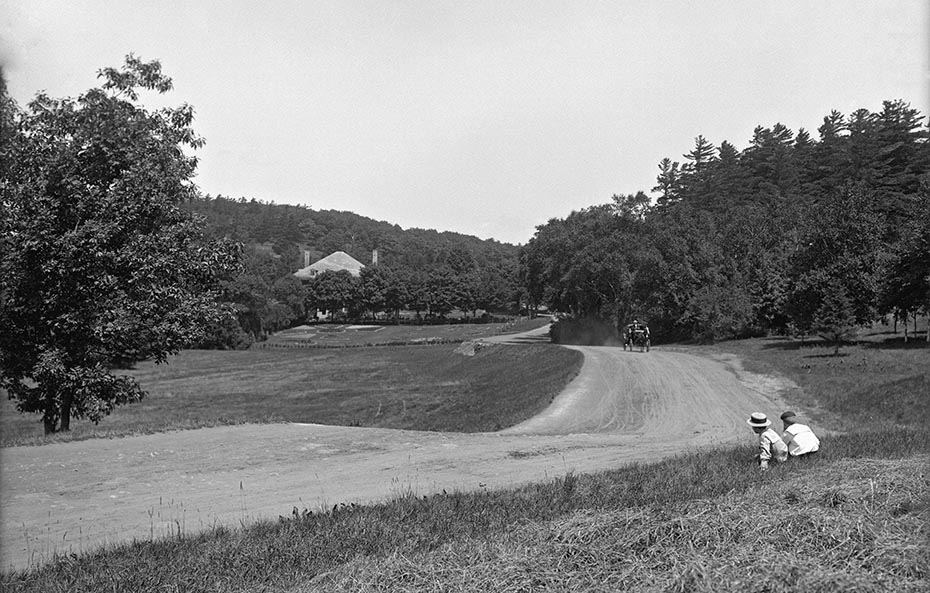
The roof of the park superintendent’s house, known today as Smith House, is seen in the distance in this view of the mountain meadow park designer Frederick Law Olmsted called “the Glades.” His plans called for a gently sloped carriage road and similarly structured footpaths throughout the park. Olmsted wanted visitors to experience a variety of picturesque landscapes and viewpoints as they travelled in a leisurely fashion through diverse terrain, without having to return on the same paths.
Olmsted firmly believed in the therapeutic value of attractive natural scenery, arguing that the City’s investment in its mountain park would reap important long-term benefits in terms of its citizens’ mental health and physical fitness.
A public space
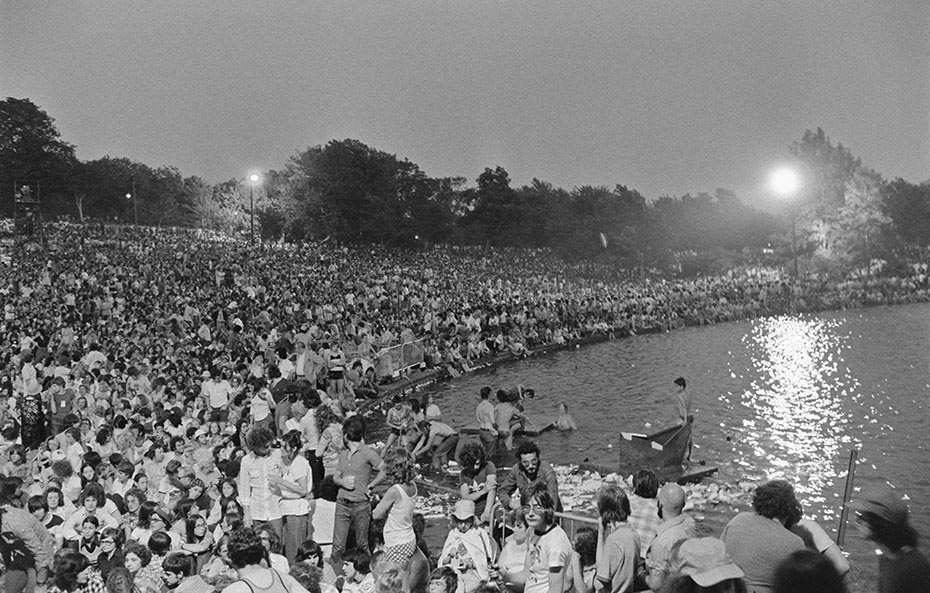
Mount Royal Park hosted an estimated 400,000 visitors on the evening of June 23, 1975. It is unlikely that Frederick Law Olmsted, the park designer, or any of the city officials who spoke at the Park’s inaugural ceremony on May 24, 1876, could have foreseen the use of the park by so many people at one time!
Olmsted did understand, however, that once it became a public space, the park was never going to be a completely natural one. The challenge then, as now, would be to strike a balance between the needs of humans for a place to relax, and the ability of the vegetation to thrive.
While some people might see fenced-off areas as infringing on their rights to access a public place, the restoration of vegetation and prevention of erosion is an essential part of protecting the park for future enjoyment.
“Québec fête”
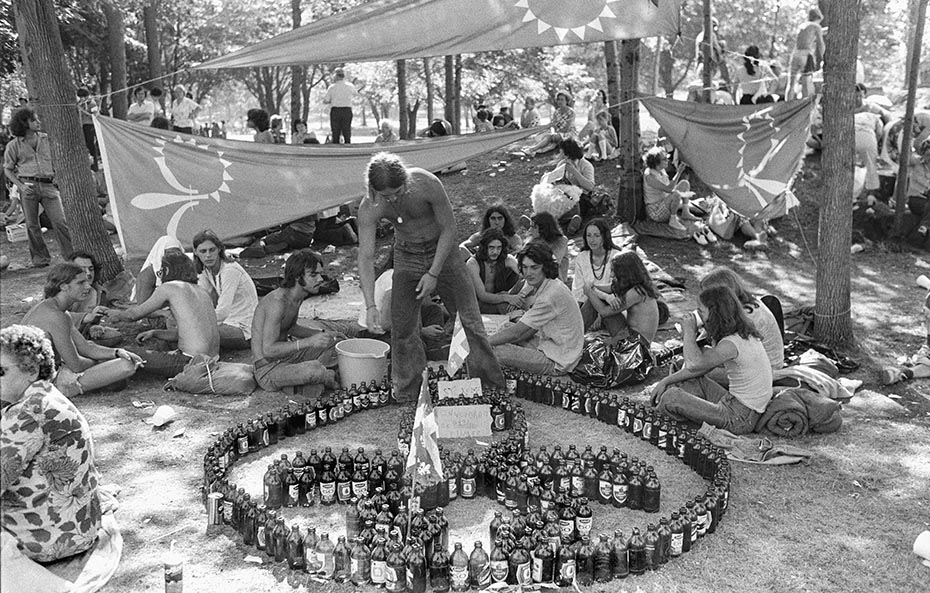
Music was in the air from morning to night when Mount Royal Park hosted the iconic celebration of St. Jean Baptiste Day, dubbed “Québec fête,” from June 20 to 24, 1975. Performances by well-known Quebec artists as well as local groups took place on four outdoor stages. The weather was perfect, the crowds were peaceful, and it was estimated that over a million people visited over the five days.
On the evening of June 20, about 100,000 spectators surrounding Beaver Lake witnessed the historic performance of Gilles Vigneault, who introduced the audience to the song he composed to replace the English-language “Happy Birthday.” An immediate success, this anthem of national pride with the refrain “Gens du Pays” has been sung ever since.
“Québec fête” is widely remembered amongst Montrealers as a turning point for nationalist sentiment in Quebec, boosting a feeling of pride, confidence and enthusiasm for the future of the French language and culture.
The security
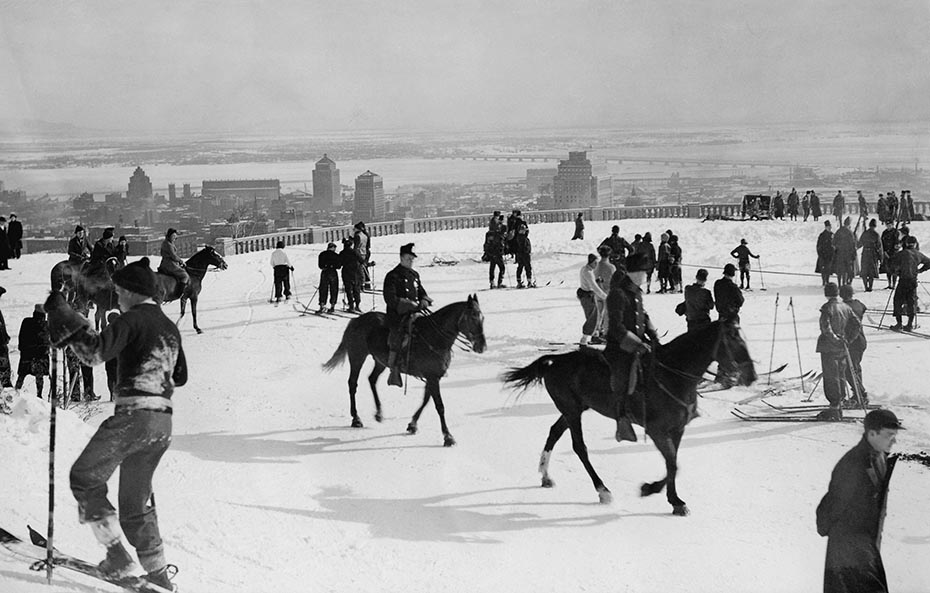
Frederick Law Olmsted’s belief that people tend to adapt their behaviour to the circumstances formed the basis of his suggestions for the security and management of the grounds. By keeping the park neat and tidy, the city, by the “silent influence of example,” would encourage most visitors to respect their surroundings. Facilitating the regular use of the park by families, school groups, and women and children would discourage vandalism and rude behaviour. In Olmsted’s view, “no men are reckless in their conduct in a place in which good women and children seem to be at home.” The recurring presence of “guardians moving briskly” through the grounds would also reassure visitors, and the cost of policing could be minimized.
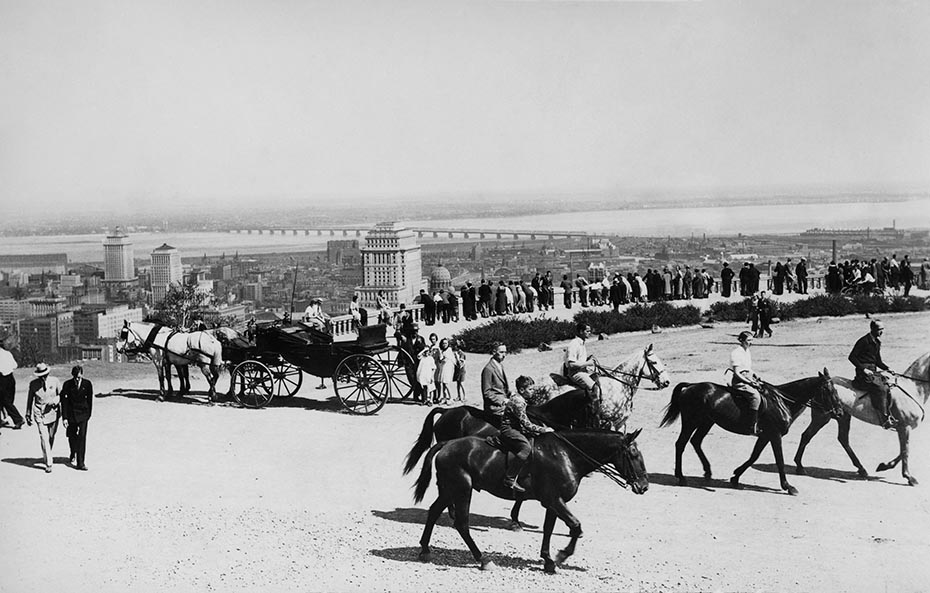
The Service de police de la Ville de Montréal (SPVM) cavalry was created in 1885 to patrol public places such as Mount Royal Park. Officers on horseback still circulate through the park regularly.
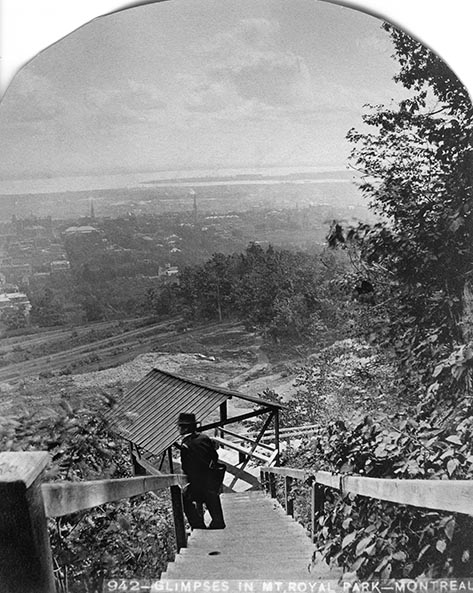
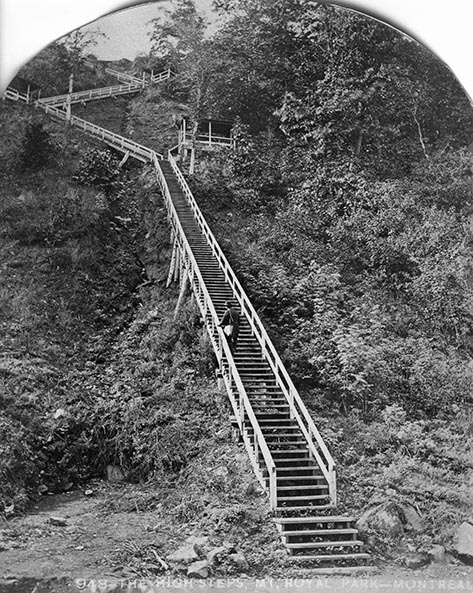
The High Steps
Necessarily, in a resort for thousands, there must be much that is not natural and not in itself poetic […]. It simply requires that all available means shall be taken for making the necessary artificial things of the park as inconspicuous as is consistent with a frank avowal of their purpose.
– Frederick Law Olmsted
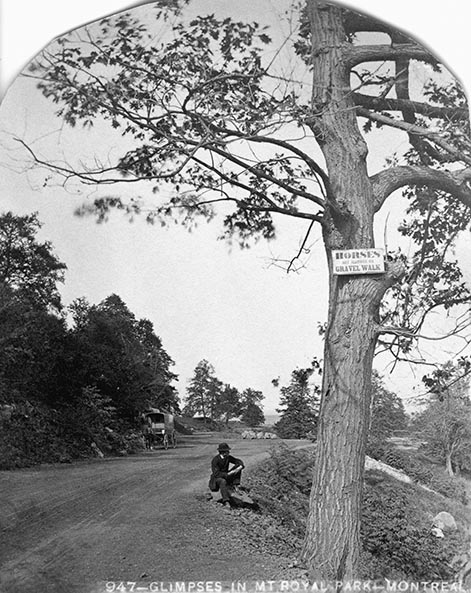
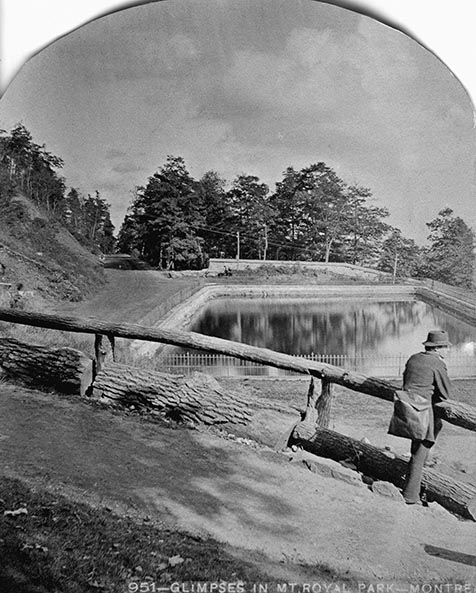
Designer Frederick Law Olmsted acknowledged the need to provide practical facilities for the park’s thousands of potential visitors. Access stairs required frequent landings, while seats and drinking fountains needed to be provided at regular intervals throughout the grounds, along with covered shelters in case of rain. Olmsted suggested using wood expertly crafted to blend into the natural surroundings.
Open Air Playhouse
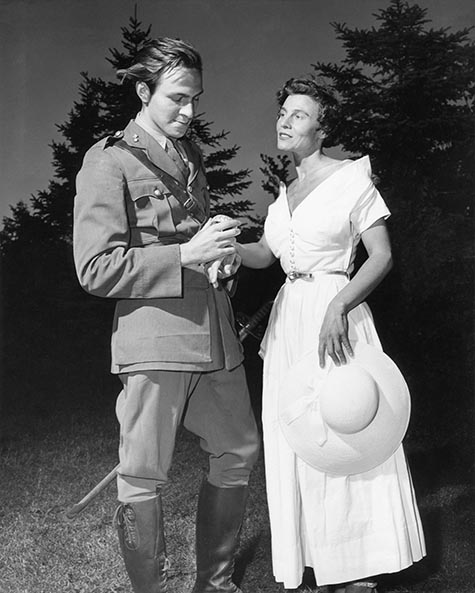
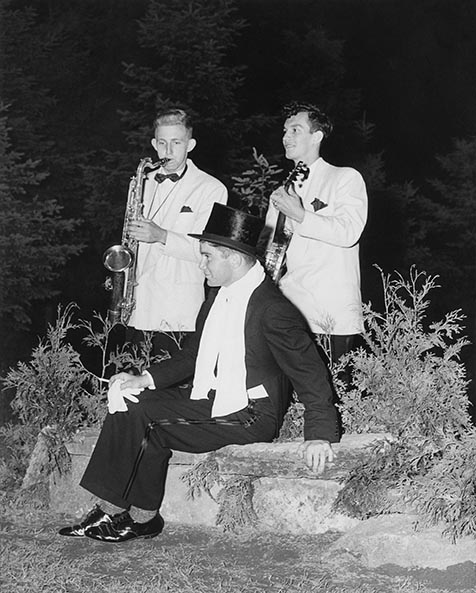
The Open Air Playhouse performed Shakespeare’s Cymbeline in modern dress in Mount Royal Park in 1950. It was the fourth year that the company, founded by Rosanna Seaborn, presented a Shakespeare play in a natural amphitheatre next to Beaver Lake. Summer was a relatively quiet time in Montreal’s busy theatre scene, enabling the company to hire accomplished local acting personalities. Two young men in the cast who would later pursue international careers were Christopher Plummer and William Shatner.
Open-air performances in the park were not limited to English-language theatre. For example, the outdoor amphitheatre was used to present L’Illusion comique by Les Compagnons de Saint-Laurent in 1949, and Le Réveil de la Belle au Bois by the Théâtre d’Arlequin in 1951.
Snow days
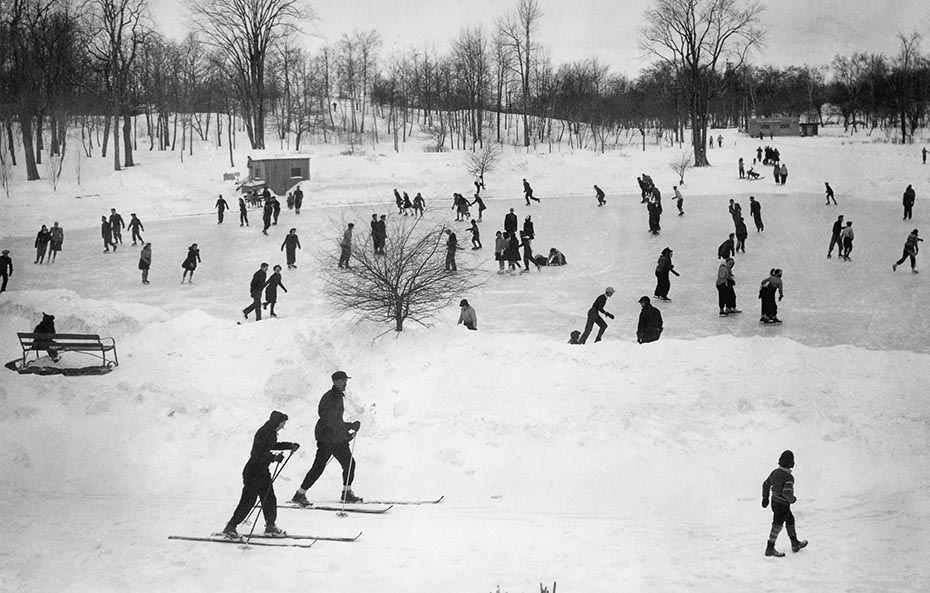
Many generations of Montrealers have fond memories of snowy winter days in Mount Royal Park. Snowshoeing, tobogganing, and sleigh rides were popular activities in the park in the nineteenth century, while skiing caught on in the twentieth.
After Beaver Lake was excavated, the newly constructed pond was kept cleared for skaters to enjoy in the winter, beginning in January 1939. The city later added heated wooden shacks for changing into and out of ice skates, but it was not until 1958 that visitors could warm up afterwards in the bright, modern space of the new Beaver Lake Chalet.
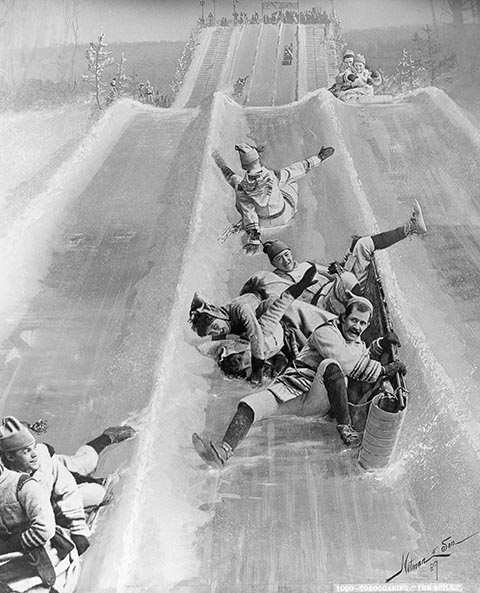
The Toboggan Slide
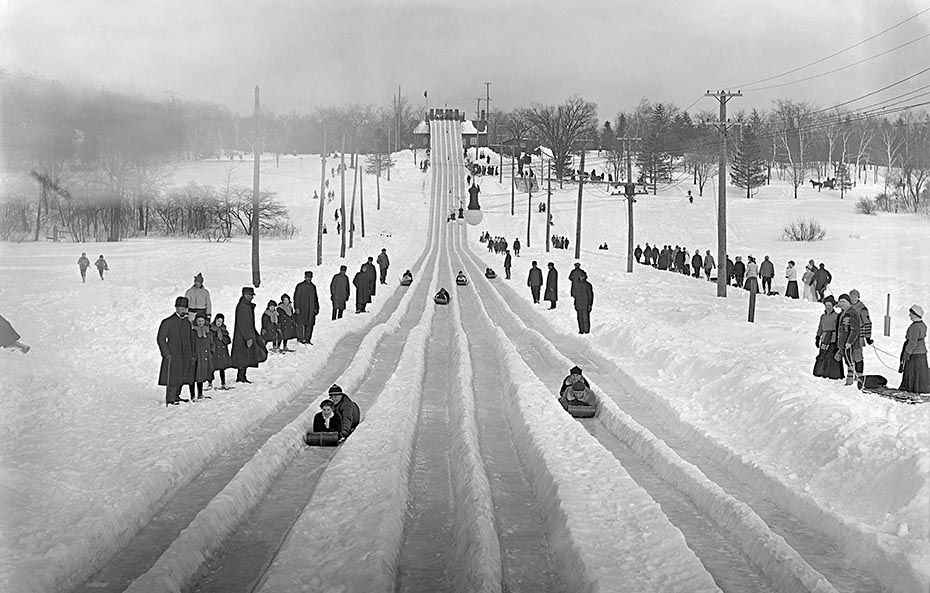
In 1910, when the photograph on the left was taken, the Park Toboggan Slide crossed the level terrain of today’s Beaver Lake. A privately-run club constructed and managed the slides, leasing the location from the city. Membership was limited to 1,000, and a badge was worn to access the slide. Despite the protests of those who felt that the slides should be operated by the city for the benefit of all citizens, the club continued (with a few pauses) until the late 1940s.
Artists employed by the Notman & Son studio teamed up to create the image on the right in 1889. It was difficult to obtain good photographs of groups in action with the technology of the day, so photographers often turned to the magic of composite photography. Each person spilling out of the toboggan was photographed individually in the studio, and the cutout images were then pasted onto a painted background of the mountain slide.
Mount Baldy
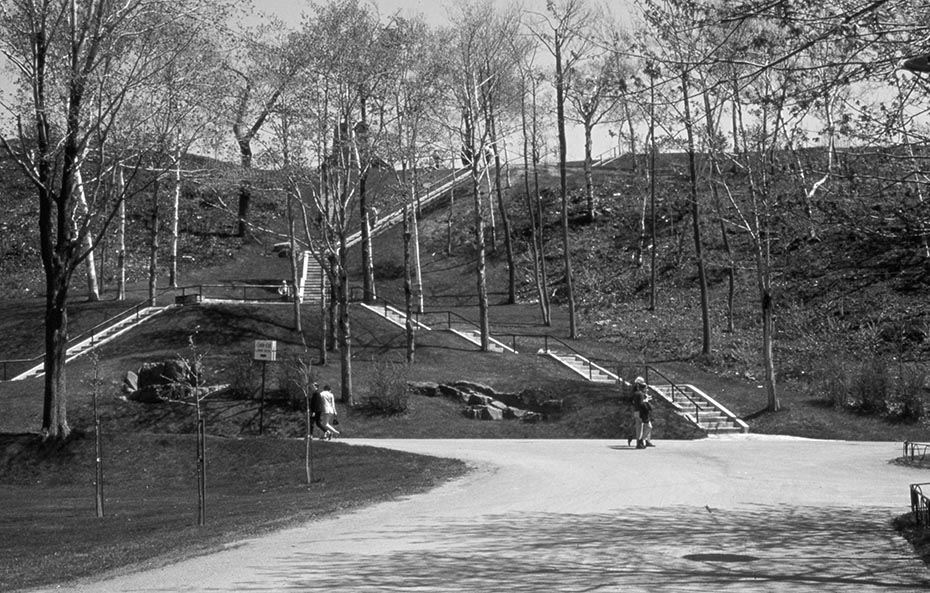
For various reasons, Mount Royal Park’s forest has long been a source of concern and contention for residents and municipal administrators alike. In the late 1950s, concerns about public safety and morality led to a sweeping deforestation of part of the mountain, particularly in the densely wooded area nicknamed the “Jungle” on the east side. In a process that is now known as the “Morality Cuts,” thousands of trees were removed, along with the underbrush, allowing for easier surveillance of potential illegal activity.
With the mountain now dubbed “Mount Baldy,” the forestry division of the City’s parks department planted trees to counteract the extensive erosion that ensued and stabilize the soil. Unfortunately, the quick-growing varieties chosen were often non-native, invasive species such as the Norway maple.
The benefits
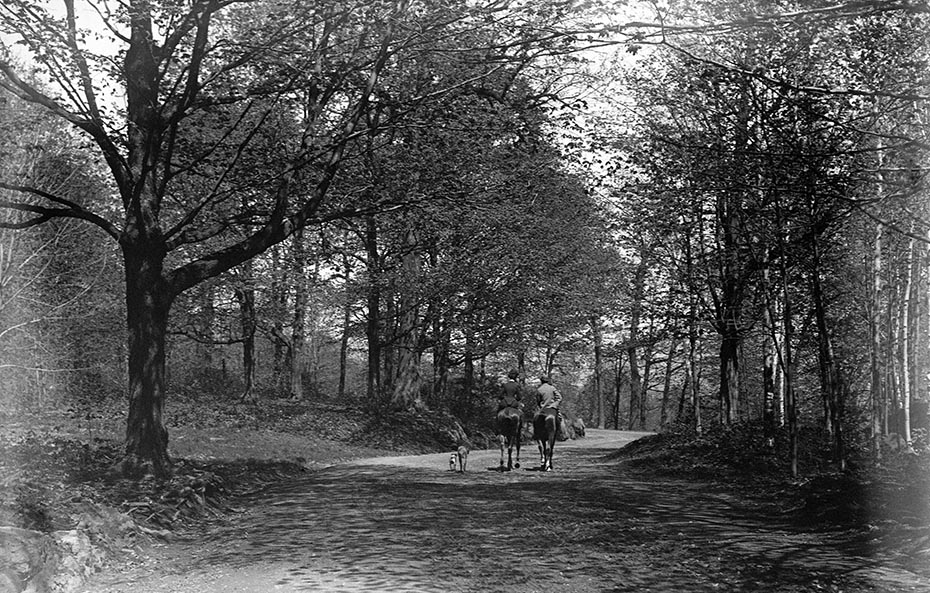
Frederick Law Olmsted (1822-1903) was an American journalist and author interested in social reform and the abolition of slavery, who also became one of the foremost landscape designers of his time after starting to plan Central Park in New York City alongside Calvert Vaux in 1857. Olmsted designed city parks, public spaces and parkways across the United States that are, like Montreal’s Mount Royal Park, a cherished legacy. One of Olmsted’s primary design concerns was to enhance the experience of the natural landscape for the visitor.
Olmsted’s belief that all classes of people should have access to the benefits of natural scenery led him to plan gently sloped routes that could be navigated in a wheelchair, or in a carriage drawn by one pony, rather than a vehicle requiring two horses.
Mount Royal Park is located on unceded land long used by Indigenous peoples. The Museum recognizes its duty to help raise awareness of Indigenous cultures and to support their continued vitality.

See also
 Article
 Article
 Article