 Article | 4 min
 I was there
Behind the scenes of broadcasting at the 1976 Olympic Games in Montreal: an insider’s memories.
June 8, 2026
I was there. I wasn’t there. That’s how I’d describe being at the 1976 Olympics. I was 27 years old, working with the CBC Radio team. I had been with CBC for a few years, starting in Montreal as a researcher for the national open-line radio program, Cross Country Checkup. Then I went to Toronto to help produce stories for a program broadcast across the country every weekday morning. These were dream jobs for a young guy recently out of college.
When I got the call to come back to Montreal to work with the broadcasting team for the Olympics, I was thrilled. A small group of us worked behind the scenes. We researched stories, wrote scripts, prepared guests for interviews, and helped with hourly reports on every aspect of the Games. I’d like to say that I remember everything that went on, but I don’t really. Thankfully, the exhibition now on at the Museum sparks wonderful memories.
| Visit the virtual exhibition Beyond the Games – Montreal’s Olympic Story! |
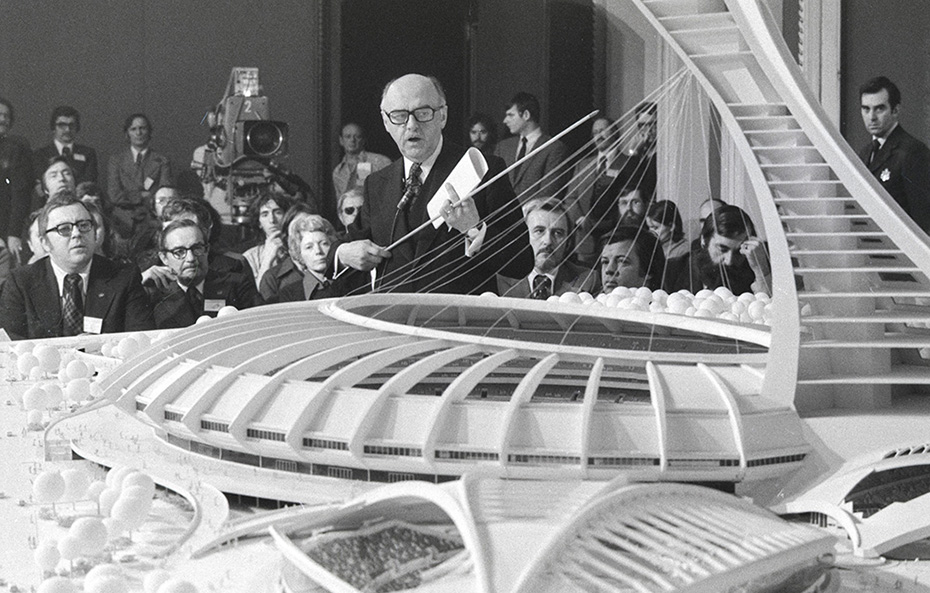
The city was a mess. Although the Olympic broadcasts didn’t begin until opening day, we were quite aware that Mayor Jean Drapeau had been unable to pull it off, and that Premier Robert Bourassa had to appoint his Minister of Municipal Affairs and the Environment, Dr. Victor Goldbloom (a pediatrician!), to take over and make it happen. And he did!
Just before the Games were to start, the Mayor decided he didn’t like the dozens of art installations created especially for the Olympics that ran along Sherbrooke Street from Atwater Avenue to the Olympic Stadium. Overnight, he had them torn down.
Then, 29 African nations withdrew from competition because New Zealand had played rugby in South Africa—a country banned from participating in the Olympics since 1964.
What a feast for journalists: Corruption! Destruction! Disruption!
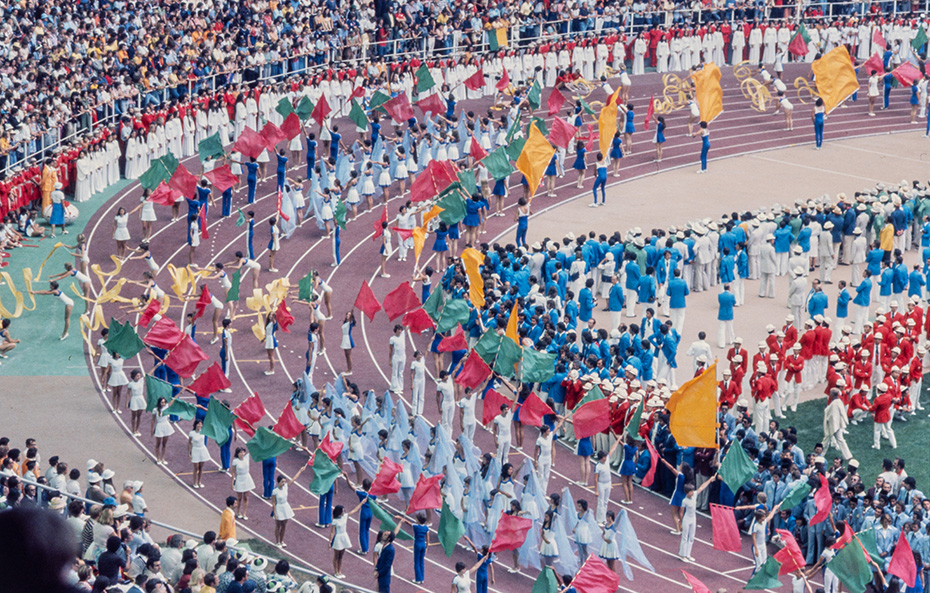
So where was I when the Games began? Was I at the Olympic Stadium watching the opening ceremonies, listening to Vic Vogel play March of the Athletes as each team strode in? Was I at the Velodrome (now the Biodôme) helping the CBC Radio team get ready for cycling events the next day? Maybe I was at the Forum (today the Cinéma Cineplex Forum) hoping to see Nadia Comǎneci practicing on the uneven bars? It is easy to forget that not all events were held at the Olympic Park.
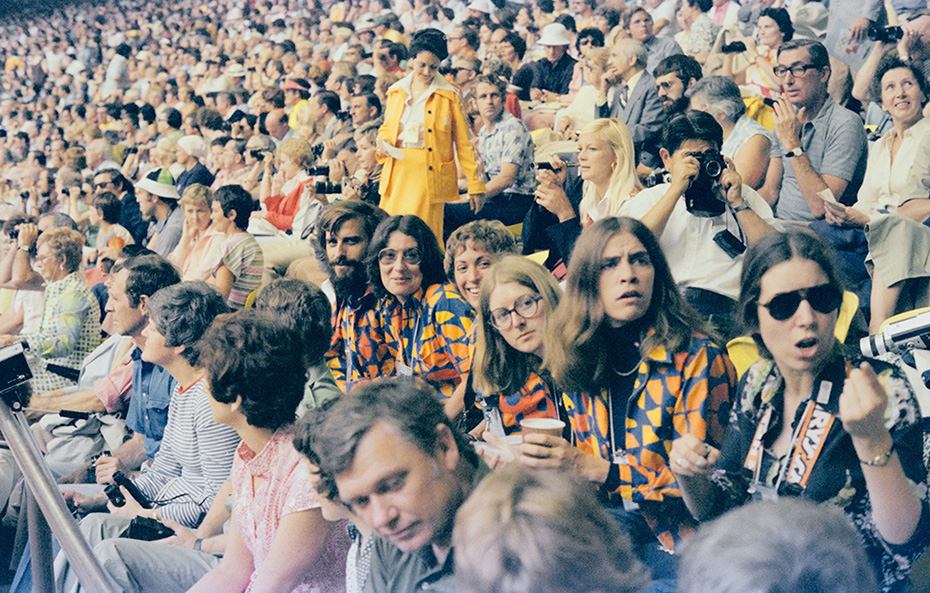
Since 2024, I have been a volunteer guide at the Museum. When I give tours of the exhibition, wearing my snazzy CBC “exploding pizza” shirt, which has been in the closet for 50 years waiting for this moment, I point out that most of the events and activities took place outside the Olympic Park. For example, sailing was at Kingston on Lake Ontario, field hockey at Molson Stadium where the Alouettes now play, equestrian events in Bromont, and archery in Joliette.
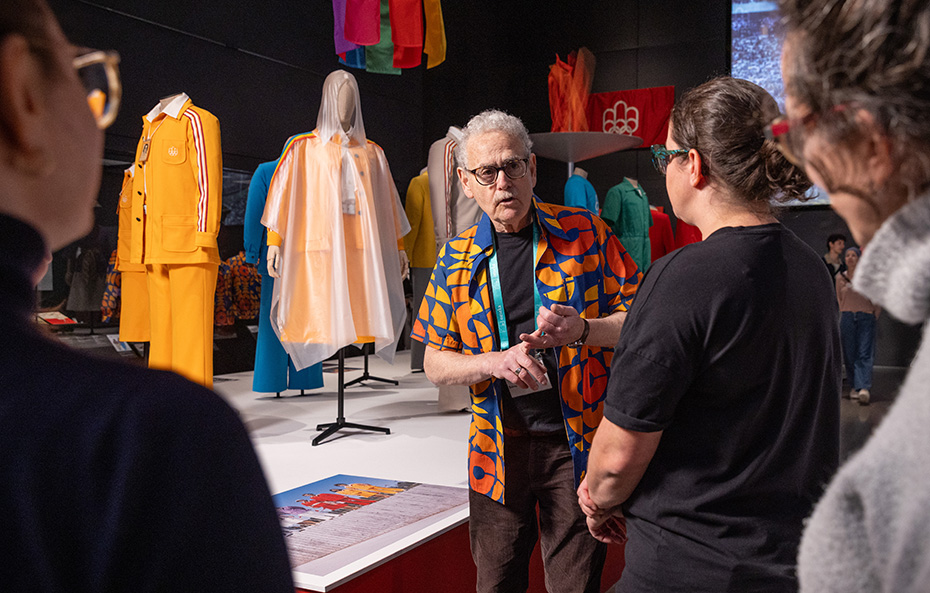
But did I see any of this? Well, on screens, on TV, like everybody else, sure, I saw it all. But not from the stands.
Instead, I was in the basement of the Maison de Radio-Canada on René-Lévesque Boulevard hunkered down with much of the French and English radio and television crews. Broadcasters and technicians were on site, but daily programs were in this building, in the basement studios, hermetically sealed off.
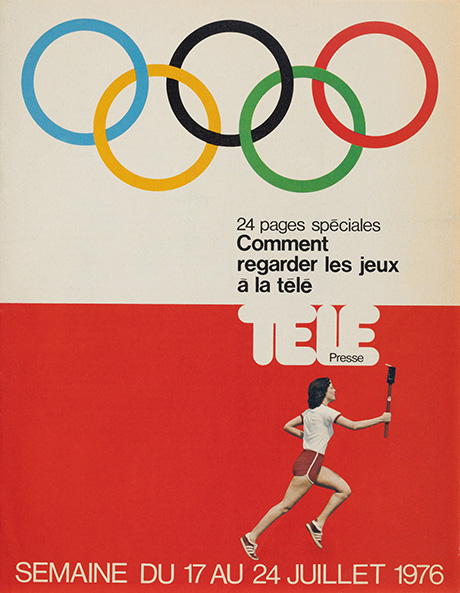
If we were lucky, we were able to attend some events. My friend Tom Puchniak, whose CBC shirts are in the exhibition, saw Nadia Comǎneci get perfect scores in gymnastics.
Now, to be frank, I too might have had time to go. My big interests then were cycling and judo. But I disappeared for a few days in the middle of the Games to attend a college roommate’s wedding in New York City. My boss was not pleased, and she was right!
So I was there, but I wasn’t there.
However, I did have one big Olympic moment. One night, coming home from the CBC, I found myself downtown, walking along De Maisonneuve Boulevard near Crescent Street. I heard music. A marching band. This wasn’t Vic Vogel’s band. Apart from composing and arranging music for the Olympics, Vic was a hugely popular musician and bandleader. What I heard was an impromptu group of brass musicians, from Germany I think, just marching down the street, having a blast.
If the scene at the Olympic sites was ritualized spectacle viewed from the perspective of competition, the streets of Montreal were party central and the band played on. I had my tape recorder with me and began marching with them, recording the music and conversations about how wonderful it was to be in the city, and it was! I broadcast the story the next day.
Somewhere in the depths of the CBC archives, this recording may still be there.
So I was there and I wasn’t there, but in some way I was.


 Video
Video