
News
October 21, 2025
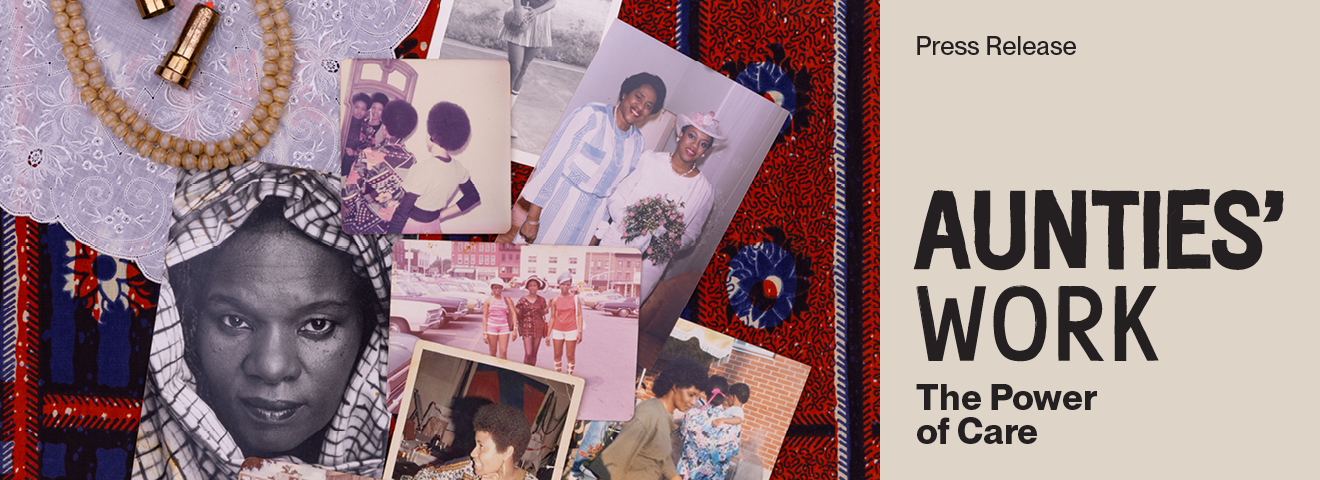
Aunties’ Work: The Power of Care
Press Release
A tribute to the matriarchs of Montreal’s Black communities
Montreal, October 21, 2025 – The McCord Stewart Museum will present Aunties’ Work: The Power of Care, an exhibition created by curator Nadia Bunyan, from October 23, 2025, to April 12, 2026. A heartfelt tribute to the support systems created by the matriarchs of Montreal’s Black communities, the exhibition focusses on the cultural context surrounding the women known as ‘Aunties.’ The cornerstone of an entire community, these women have worked for generations to fortify movements of social change, nurture and sustain safe spaces, pass on critical knowledge, and share their lived experiences. The public will learn about the vital role Aunties play in their communities through shared personal reflections and dozens of photographs and objects representative of these women loaned by community members.
As curator Nadia Bunyan explains, “This exhibition addresses the need to have a conversation about recognizing this work, and the importance of continuing it. I would like visitors to walk away with a sense of understanding, belonging, and connection. I want them to feel like it’s familiar, like the things they grew up with are important to who they are. They matter to our community and are key to the connections we make outside of our communities. I want this exhibition to be a place of reflection, to open the door to a deeper understanding of self, but also to welcome new connections. I hope that this exhibition is a space for communities to come together.”
Care: An invisible yet essential force
For Aunties, caring for an individual is always a profoundly communal act. Every shared moment—both a privilege and a responsibility—becomes a lesson in care. The exhibition shows how Aunties, through their daily gestures, storytelling and steadfast presence, pass on knowledge, values and traditions to the next generation. A force of social cohesion, they create spaces of safety and solidarity that hold families together and deepen collective roots. The exhibition uses the metaphor of an iceberg to highlight the depth of labour happening beneath the surface: a hidden world of care, presence, dedication, and profound ties with the community that often goes unrecognized.

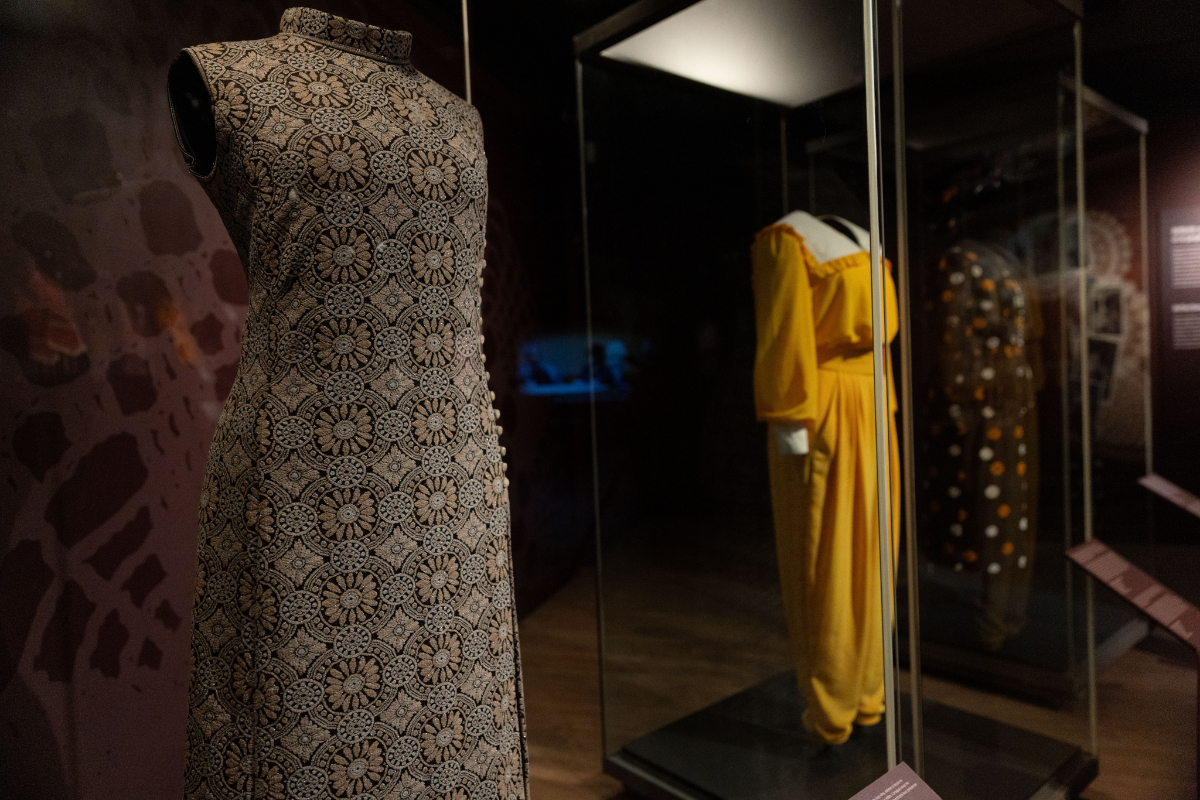
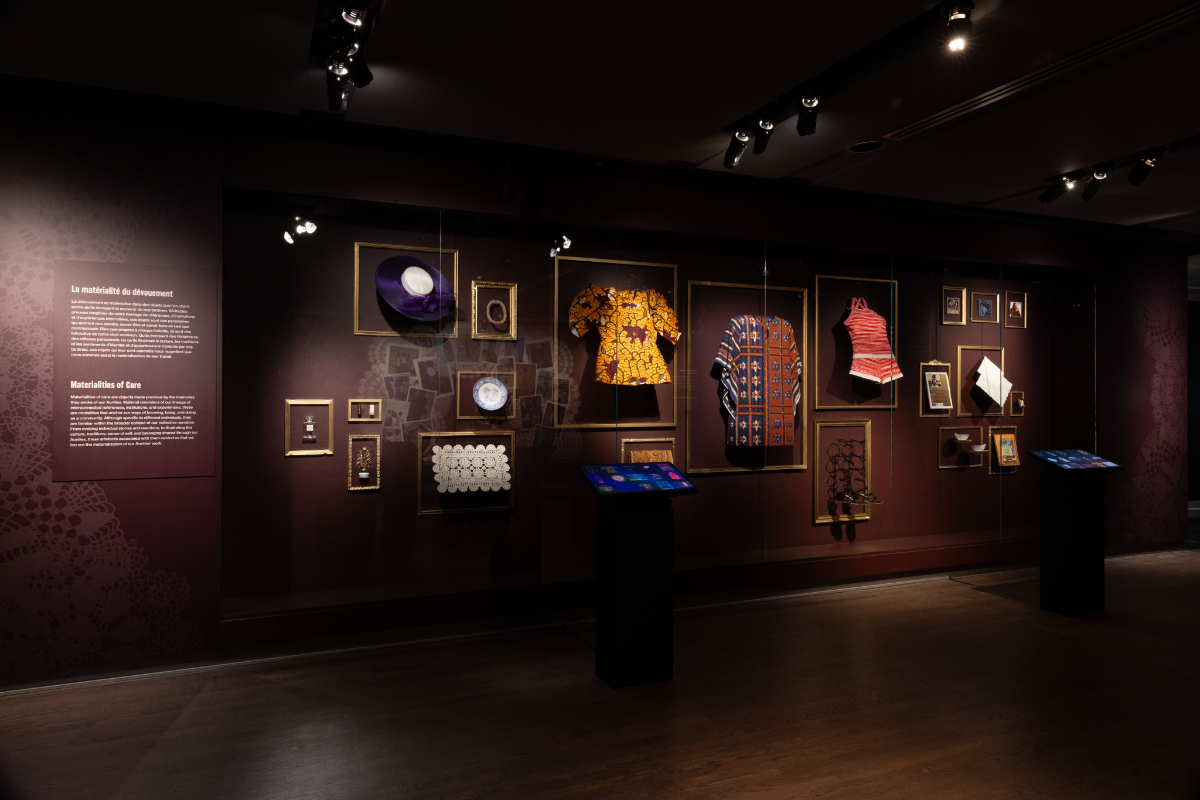
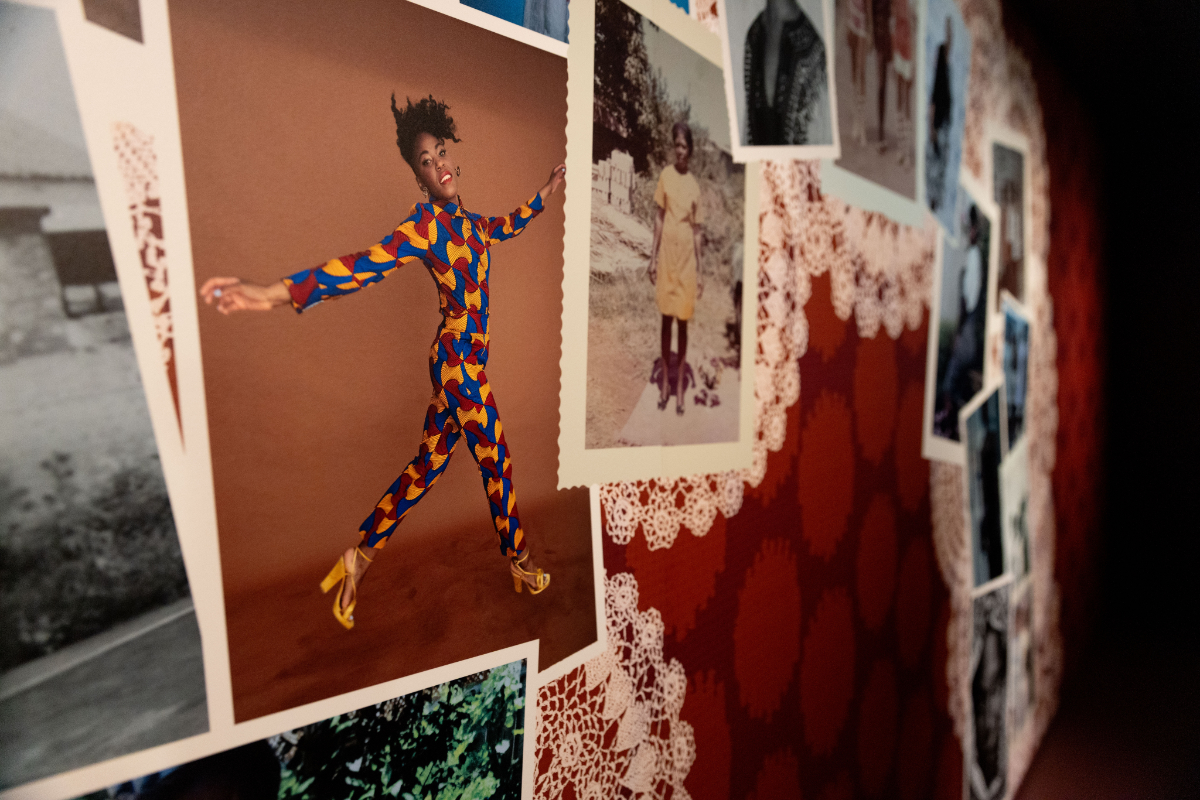
Download exhibition views
A community-driven exhibition
The exhibition Aunties’ Work: The Power of Care is built on a variety of contributions from members of Montreal’s Black communities. Aunties, their loved ones and their chosen families have lent artefacts and shared personal reflections illustrating many stories of affection and tradition, revealing a collective fabric where care is recognized and celebrated. As part of the research process, Nadia Bunyan recorded numerous individual interviews and organized intergenerational discussion circles. Brought into the museum space, these collected stories enable the public to hear the voices and see the faces of people reflecting on the invisible work done by Aunties with such passion and conviction, aware that these acts of care help strengthen families, neighbourhoods and the entire community.
“The longstanding work done by Nadia Bunyan has given tangible form to the vital contributions of women working in the shadows to strengthen solidarity within many Black communities. In a time of social isolation and polarization, the care and dedication these women devote to the members of their community are a source of inspiration and gratitude. The Museum is honoured to have this opportunity to celebrate them and their work in an exhibition that reflects its mission to tell the stories of the communities that make up the city,” notes Anne Eschapasse, the Museum’s President and CEO.
Highlights
- More than 20 people interviewed by Nadia Bunyan during the research process
- More than 70 photographs displayed in the exhibition
- 23 objects and 6 ensembles or articles of clothing loaned by community members
Nadia Bunyan
Biography
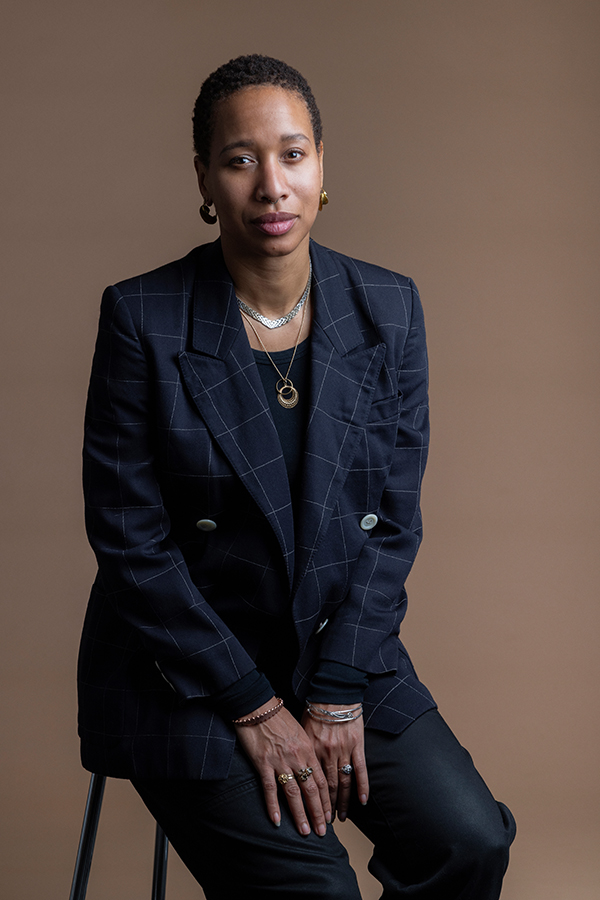
Nadia Bunyan is a fashion designer, researcher, and community organizer. She believes we must begin with education and care to see change in the fashion industry and beyond. These core values led her to cofound Growing A.R.C., a nonprofit that uses the prism of material culture and its fashion systems to explore activities grounded in the farm-to-closet process.
Beginning with agriculture for textiles and natural dyes, Growing A.R.C. creates activities such as playdates for people to activate, reciprocate and cultivate their relationships with all beings. The organization reinforces connections to the local environment by focussing on material culture and bioregional design. It also expands the understanding of biodiversity to include the diversity and perspectives of marginalized folks.
Nadia believes that, to raise awareness about a relational approach to sustainability, knowledge and lived experiences must be shared. This is one facet of transforming conversations on sustainability into a cultural practice.
The exhibition
Production Team
Guest Curator: Nadia Bunyan
Curatorial Consultant: Alexis Walker, Associate Curator, Dress, Fashion and Textiles
Project Management: Caroline Truchon, Senior Project Manager, Exhibitions
Graphic Design: David Martin
This exhibition is presented by Power Corporation of Canada, Premier Partner Montreal Stories.
Aunties’ Work: An Eco-design Approach
Environmentally aware and convinced that museums can play a part in the transition to a more sustainable future, the McCord Stewart Museum has set itself the goal of minimizing the amount of waste generated by its exhibitions. When the exhibition Aunties’ Work was in the planning stages, the Museum considered a variety of eco-design strategies to reduce its environmental impact that were then implemented during production. Apart from a dresser purchased secondhand, all the furnishings used for the exhibition were sourced from the Museum’s existing stock of materials: display cases, platforms, audiovisual equipment, benches and frames.
The Museum has special expertise in using custom-made buckram mannequins to create invisible mounts. However, it is very difficult to reuse a mannequin custom-made for a specific costume because no two garments in the collection are the same size with the same silhouette and physical condition. In addition, these mannequins are cut to follow the neckline of the garment. For this exhibition, three mannequins were selected from the Museum’s preserved inventory. After being modified somewhat, they were ideal for the outfits on display. Two of the mannequins are being used for the third time!
The paint used is 100% acrylic, free of volatile organic compounds, and produced 100% in Quebec.
Graphic production remains a challenge for the Museum. All the exhibition texts were printed on new material: the self-adhesive vinyl will be thrown away (it may not be reused or recycled), but the expanded PVC panels will be reused in other projects.
To learn more about the Museum’s sustainable development process, visit its website: https://www.musee-mccord-stewart.ca/en/sustainable-development-process/.
Activities related to the exhibition:
Conversation - This Womxn’s Work: Fashioning a Diaspora
Wednesday, November 19, 2025, 5:30 to 7:00 p.m. — At the Museum – Free activity – As part of the Black Atlantic Networks: Heritage, Knowledge, Solidarities symposium. In collaboration with Nigra Iuventa
Conversation - Rethinking the Decolonial Museum
Thursday, November 20, 2025, 6:00 to 7:00 p.m. — At the Museum – Free activity – As part of the Black Atlantic Networks: Heritage, Knowledge, Solidarities symposium. In collaboration with Nigra Iuventa
Crochet: Networks of Care – Creation Workshop and Discussion
Saturday, February 11, 2026, 1 to 4 p.m. – At the Museum – Free activity – In collaboration with the Concordia University’s Black Perspectives Office and Growing A.R.C.
Hours and Admission
Hours
Regular opening hours
Tuesday through Sunday from 10 a.m. to 5 p.m., except for Wednesday (10 a.m. to 9 p.m.)
Horaire spécial :
| Monday, December 22 | 10 a.m. to 5 p.m. |
| Christmas – Thursday, December 25 | Closed |
| Boxing Day – Friday, December 26 | 12 p.m. to 5 p.m. |
| Monday, December 29 | 10 a.m. to 5 p.m. |
| New Year’s Day – Thursday, January 1 | Closed |
| The day after New Year’s – Friday, January 2 | 12 p.m. to 5 p.m. |
| March Break – Monday, March 2 | 10 a.m. to 5 p.m. |
Admission
Online ticketing (+$2 at the door): Adults: $20 | Seniors: $19 | Students (18 to 30): $15 | Indigenous persons: free | 17 and under: free*
Wednesday evenings: free (3rd-floor exhibition –Aunties’ Work: The Power of Care – and permanent exhibition) or $10 (+$2 at the door) (2nd-floor exhibitions).
First Sunday of the month: Pay what you can.
The McCord Stewart Museum would like to thank BMO Financial Group for the free Wednesday evenings, the Fondation J.A. DeSève for free admission for children aged 12 and under, the Rossy Foundation for free admission for young people aged 13 to 17, and the Azrieli Foundation for their generous contribution to the accessibility program on the first Sunday of every month.
*Free admission for ages 17 and under on presentation of ID. Offer valid for general public visits only. Groups of more than 15 people and organized groups must refer to the group rates.
*Free for children 12 and under. Maximum of three children per adult. Offer valid for general public visits only. Organized groups must refer to the group rates.
The McCord Stewart Museum
About
A landmark in the heart of Montreal for over 100 years, the McCord Stewart Museum bears witness to the history of Quebec’s metropolis as well as its influence in Canada and around the world, celebrating the vitality, creativity and diversity of the communities that make it up.
The Museum amplifies their voices by interpreting and disseminating the remarkable heritage under its custody: six expansive collections of 3.2 million images, objects, documents and works of art that make it one of North America’s leading museums.
In keeping with its commitment to decolonization and sustainable development, it creates stimulating exhibitions and educational, cultural and community-engagement activities that look at the social history and contemporary issues affecting its audiences through a critical and inclusive lens, inspiring them to take action for a fairer society.
Documents and press images
Information and interview requests
Marc-André Champagne
Officer, Public Relations
514 861-6701, ext. 1239
marc-andre.champagne@mccord-stewart.ca

More News
See all

On view
Until April 12, 2026
Aunties' Work: The Power of Care
Aunties’ Work: The Power of Care honours the systems of support created by matriarchs of Montreal’s Black communities through the cultural context that surrounds them.
Learn more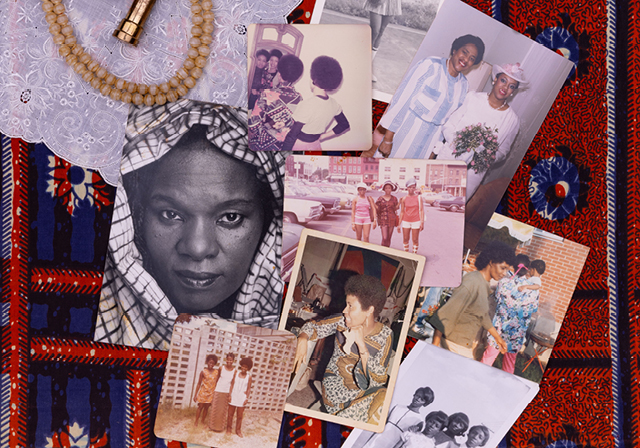
Presented by

Thanks to our partners