
Discussion
November 20 | 6 p.m. to 7:45 p.m.
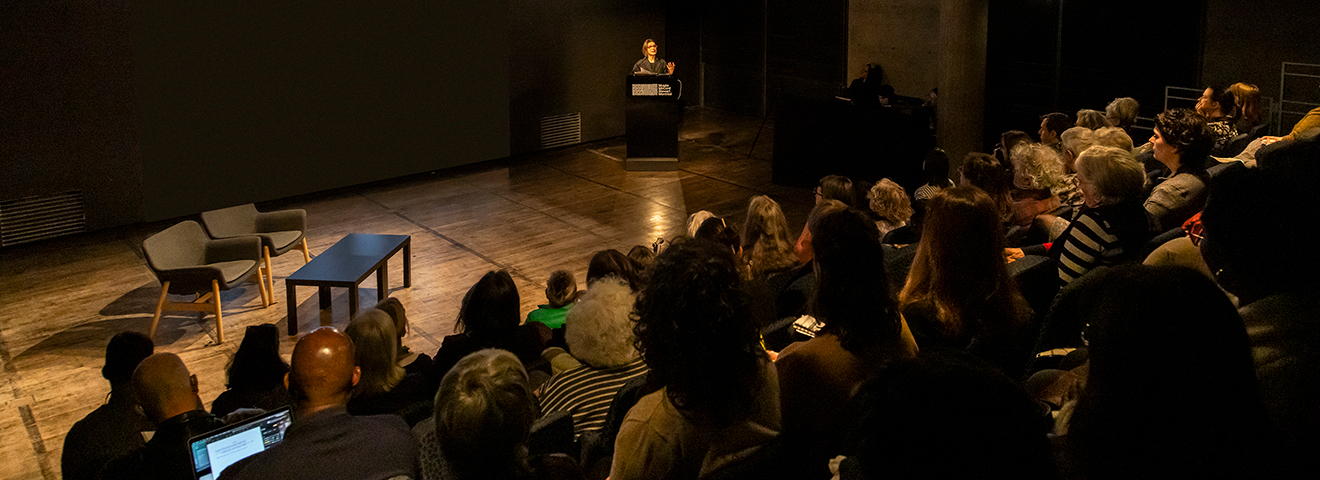
Rethinking the Decolonial Museum
Free Activity • In French | Space is limited, Reservation required
The McCord Stewart Museum, in collaboration with Nigra Iuventa, presents Rethinking the Decolonial Museum. This activity is part of the symposium Black Atlantic Networks: Heritage, Knowledge and Solidarity.
For a number of years now, museums have been asked by their audiences and stakeholders to rethink how they operate in light of their Western and colonial biases. This roundtable discussion focuses on the changes that have resulted from this and their impact.
What does a decolonial approach imply for the display of collections, as well as their conservation and restitution? What forms of knowledge and expertise are highlighted in museums, and how? What do so-called decolonial collaborations look like, and do they enable profound structural transformations? Are museums succeeding in developing strategies adapted to their specific cultural and historical contexts? How can we understand the role of new museum initiatives in geopolitics?
Drawing on their practical experience in various museum projects as artists, curators, researchers, and mediators, Moridja Kitenge Banza, Léuli Eshragi, and Michèle Magema will offer avenues for reflection and debate around these questions.
Speakers
- Michèle Magema (she/her)
- Moridja Kitenge Banza (he/him)
- Léuli Eshrāghi (they/them)
Moderator: Abigail E. Celis (she/her)
Followed by Restituting African Heritage: Challenges and Reflections
President Emmanuel Macron’s 2017 speech at the University of Ouagadougou was the catalyst in France for a profound change in the understanding of certain parts of the public collections held throughout the country. This awareness—whether slow or rapid, voluntary or forced—has materialized in recent months through numerous new initiatives and measures.
This conference offers an overview of the progress made, first politically, then legally and professionally, reflecting genuine ethical shifts that have long been awaited by countries formerly colonized by France. Several examples of projects carried out in a French museum context, in partnership with African institutions, will be presented, covering the sharing of inventories, the cross-study of collections preserved in France, and the challenges of returning heritage to the African continent.
Lecture by Émilie Salaberry (Musée d’Angoulême) followed by a discussion with Daphnée Yiannaki (Université du Québec à Montréal).
Information
- Free activity in French, presented on Thursday, November 20, from 6 to 7:45 p.m.
Space is limited, Reservation required - Duration: 1:45 minutes
- Location: Atrium
Meet the panelist
Michèle Magema
Born in the Democratic Republic of the Congo in 1977, Michèle Magema is a Franco-Congolese visual artist whose interdisciplinary practice—spanning video, performance, photography, drawing and installation—explores colonial histories, oral traditions, and intersectional and decolonial feminisms. Winner of the Grand Prize at the Dakar Biennale (2004), she has exhibited internationally (Brooklyn Museum, NY; Centre Pompidou, FR; Hayward Gallery, GB; Mori Art Museum, JP; Bozar, BE), and her works are held in major collections including the AfricaMuseum (Belgium), Musée Rietberg (Switzerland), Fondation Sindika Dokolo (Angola) and FRAC Réunion (France).
Moridja Kitenge Banza
Moridja Kitenge Banza is a Canadian artist of Congolese origin, born in Kinshasa in 1980. A graduate of the Académie des Beaux-Arts de Kinshasa, the École supérieure des beaux-arts de Nantes Métropole, and the Faculty of Humanities and Social Sciences at La Rochelle Université, he received the Grand Prize at Dak’Art, the Biennale of Contemporary African Art, for his video Hymne à nous and his installation De 1848 à nos jours. He is a recipient of the 2020 Sobey Art Award and has presented solo exhibitions at the Art Gallery of Ontario (AGO) and the PHI Foundation for Contemporary Art.
Léuli Eshrāghi
Léuli Eshrāghi belongs to the Sāmoan clans Seumanutafa and Tautua, and lives and works in Montreal, Quebec. Through their approach they prioritize Indigenous, Black and Asian sensual and spoken languages as well as artistic, ceremonial and political practices. Eshrāghi has presented major works at Tate Modern, Cinéma Moderne, the Staatliche Kunsthalle Baden-Baden, FRAC des Pays de la Loire, the Museum of Contemporary Art Australia, the Queensland Art Gallery | Gallery of Modern Art, the Galerie de l’Université de Montréal, and the Australian Centre for Contemporary Art, among others.
Abigail E. Celis
Abigail E. Celis is an assistant professor in Art History and Museum Studies at the Université de Montréal (Tiohtià:ke). Her research focuses on the afterlives of colonialism and decolonial imaginaries as witnessed through contemporary visual culture, artistic creation and museum practice.
Émilie Salaberry
Émilie Salaberry, who holds advanced degrees in art history (École du Louvre and Panthéon-Sorbonne University, specializing in African arts), worked at the UNESCO World Heritage Center (Africa Unit) and then as curator of non-European collections at the Angoulême Museum. Now director of the Angoulême museums, archives, and art library department, she carries out her curatorial work in an international collaborative setting, notably with several African countries. She is involved in research on the history of non-Western collections, their provenance, and the issues surrounding restitution of cultural heritage.
Daphnée Yiannaki
Daphnée Yiannaki, museologist and historian of non-Western art, is pursuing a doctorate in museology, mediation, and heritage on the processes of indigenization and decolonization in art museums. Recipient of a FRQSC scholarship, she is, among other things, secretary of the Cahiers du CIÉRA and research assistant for the CIÉCO Partnership.

In collaboration with